Safety on Every Floor
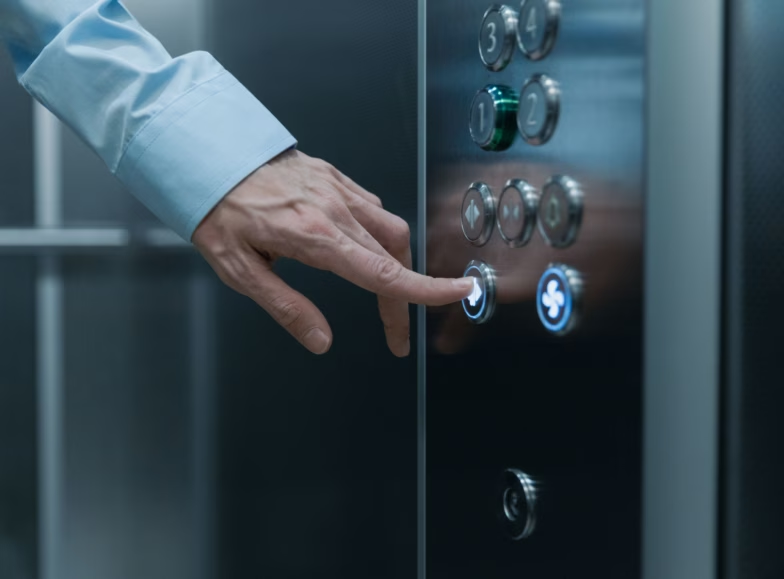
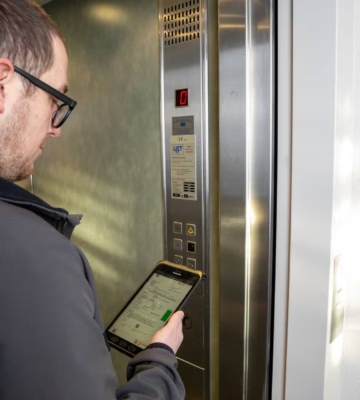
Elevators and goods lifts are essential systems for the transportation of people and goods within buildings. To ensure the safety of users and workers, it is crucial to regularly verify their proper operation and compliance with applicable regulations.
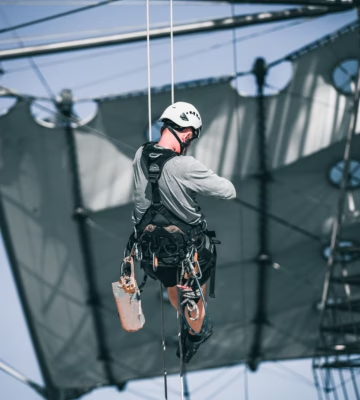
Lifeline systems and permanent fall protection systems, on the other hand, are designed to protect workers performing tasks at height, such as accessing, inspecting, and maintaining rooftops and building structures. Regular inspections and checks help ensure their effectiveness and the continued compliance with safety requirements over time.
Through independent inspections, Normec helps manage risks, prevent malfunctions, and ensure the safety of both equipment users and personnel working at height.
Services
Inspections for Elevators and Fall Protection
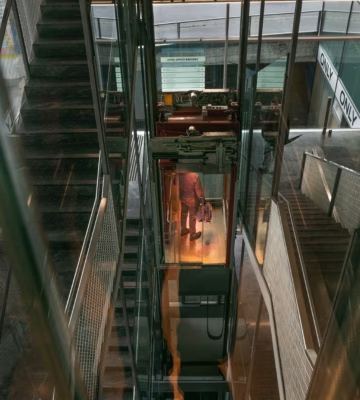
Our inspectors assess the technical condition, safety, and operation of a wide range of systems. In doing so, we consider not only applicable regulations but also the practical safety and reliability of the system.
Within this area of expertise, we provide support for, among other things:
- Passenger elevator inspections
- Inspections of freight elevators
- Inspections of lifelines and permanent fall protection systems
- Safety inspections of elevator systems
- Independent assessments of existing and new systems
This gives you insight into the condition of your systems and ensures they can be used safely.
For a safe work environment
Well-maintained and regularly inspected elevators and fall protection systems reduce the risk of malfunctions and accidents. This not only contributes to the safety of users and maintenance staff but also to the continuity of your organization.
With Normec’s independent inspections, you’re assured of expert assessments and practical advice. This ensures your elevators remain ready for daily use.
Ready to improve quality and reduce risks?
Discover how our testing, inspection, certification, and compliance services help you create safer environments and meet the highest quality standards.
Frequently asked questions about oelevators and fall protection
-
Yes. Normec supports organisations that want to keep an overview of inspections, deadlines, reporting and follow-up for lifts across one or multiple locations.
-
A return-to-service inspection is required after work or modifications that may affect the safety of the lift. The lift may only be used again once the required inspection has been carried out correctly.
-
This assessment evaluates the safety level of the lift and determines whether modernisation work is required. A risk assessment must be carried out every 15 years to determine whether the lift meets the level of safety users can reasonably expect.
-
A slow-speed lift has a maximum speed of less than 0.15 m/s and may be subject to specific inspection requirements or recommendations in professional environments.
Is the lift installed in a professional environment, such as an office, healthcare facility, school, car park, warehouse or public building? In that case, it is important to look beyond the speed alone. The use, location, manufacturer’s instructions and the impact of a defect or shutdown also determine which inspection is appropriate.
At Normec, we assess the complete context. This allows you to determine whether an inspection is required, how to plan it in practice and which documentation you should keep.
-
This depends, among other things, on the type of lift and the maintenance company. For passenger lifts, for example, it also depends on whether maintenance is carried out by an ISO 9001-certified maintenance company.
-
Yes. For passenger lifts, periodic inspections, risk assessments and follow-up inspections after certain types of work are mandatory. The exact requirements depend on the type of lift, the maintenance situation and the context in which the lift is used.
-
If the EDTC inspector determines that the lift can no longer be used safely, they will inform the manager that the lift must be taken out of service. In that case, the lift may only be returned to service after the necessary work has been carried out and a re-inspection has been performed by the EDTC.
-
Yes. If repair work has been carried out that may affect the safety of the lift, regardless of whether the work forms part of a modernisation, the lift must be examined by an EDTC before it can be returned to service.
-
The risk assessment determines whether additional safety measures are required. If so, the lift must be modernised by a company specialised in lift technology.
This is followed by a post-modernisation inspection by an EDTC, which must be the same EDTC that carried out the risk assessment. This inspection must take place no later than 3 years after the risk assessment or a maximum of 18 years after the lift was first put into service or the previous risk assessment.
-
If the maintenance service is ISO 9001-certified, the lift must be inspected at least twice a year. If this is not the case, inspections must be carried out at least four times a year. A risk assessment must be carried out at least every 15 years.
-
The lift manager is responsible for the safety of the lift and ensures that it is inspected, maintained, modernised where necessary and provided with the required signage. They are also responsible for maintaining the safety file.
-
Yes. Private residential lifts must undergo a preventive inspection every year. A risk assessment must also be carried out at least every 15 years.