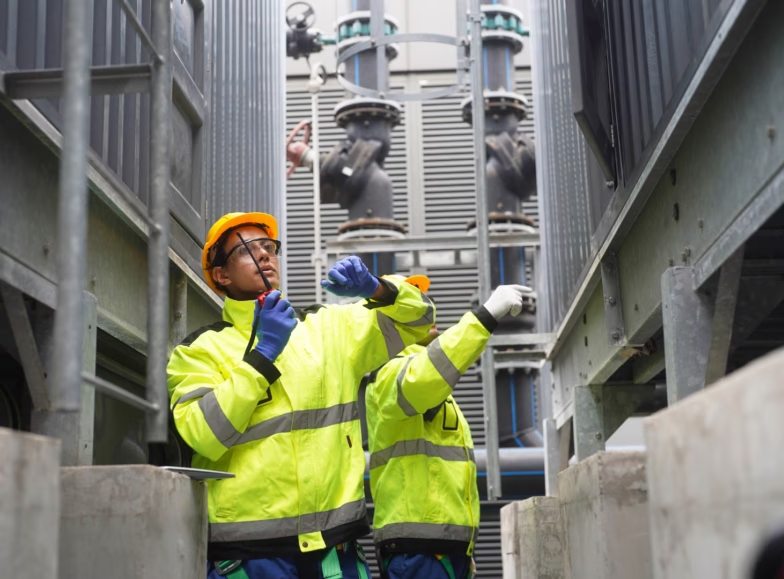
The driving force behind many industrial processes
From generating steam and storing gases or liquids to heat exchange: pressure equipment is an essential part of daily operations. To minimize malfunctions, downtime, and risks, periodic inspection is indispensable.
Services

Specialized inspections
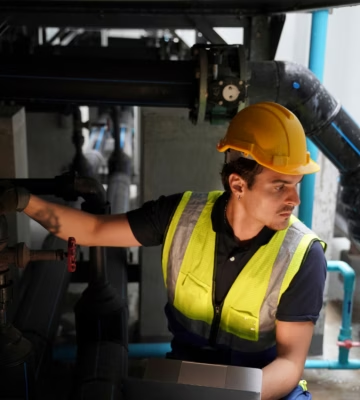
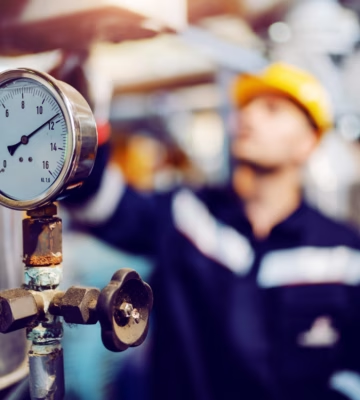
No two installations are alike. That’s why our inspectors tailor their assessment to the type of installation, its application, and the operating conditions. This gives you a clear picture of the technical condition and performance of your pressure equipment.
Within this area of expertise, we provide support for, among other things:
- Steam equipment
- Pressure vessels
- Storage tanks
- Dryer centrifuges
- Heat exchangers
- Underground and aboveground containers
Ready for long-term performance
Well-maintained pressure equipment lasts longer, performs more reliably, and reduces the risk of unexpected downtime. With Normec’s specialized expertise, you’ll have the insights needed to keep your systems running at peak performance—today and in the future.
Ready to improve quality and reduce risks?
Discover how our testing, inspection, certification, and compliance services help you create safer environments and meet the highest quality standards.
Frequently asked questions about pressure equipment
-
A compressed air system is the complete system that generates, treats, and distributes compressed air (including the compressor, filters, and piping), while a compressed air receiver (also called a tank) is just one specific component of that system.
-
Important documents include the EC Declaration of Conformity (CE certificate), documents related to commissioning or recommissioning, previous inspection reports, and, if applicable, the environmental or operating permit.
-
A water pressure test, also known as a hydrostatic test, is an additional test that may be required by the inspection authority, expert, or accredited body, depending on the condition or type of installation.
-
In Wallonia, a compressed air system with a storage tank is subject to inspection if its capacity is 150 liters or more.
-
In Brussels, a compressed air storage tank requires a permit if it has a capacity of 300 liters or more, or if the air compressor’s power exceeds 2 kW. The specific inspection requirements are included in the environmental permit.
-
In Flanders, a compressed air cylinder is subject to inspection as soon as the product of the rated pressure and the volume exceeds 3,000 bar-liters, provided that the rated pressure is more than 4 bar higher than atmospheric pressure.
-
That depends on the region. In Flanders, periodic inspections are conducted every 5 years. In Brussels, the inspection intervals are determined by the environmental permit. In Wallonia, a full inspection is conducted every 3 years, supplemented by an annual external inspection by a qualified expert.
-
Yes. Compressed air vessels are pressure-retaining systems and must be inspected, depending on the region and the technical characteristics of the system. The rules differ between Flanders, Brussels, and Wallonia.