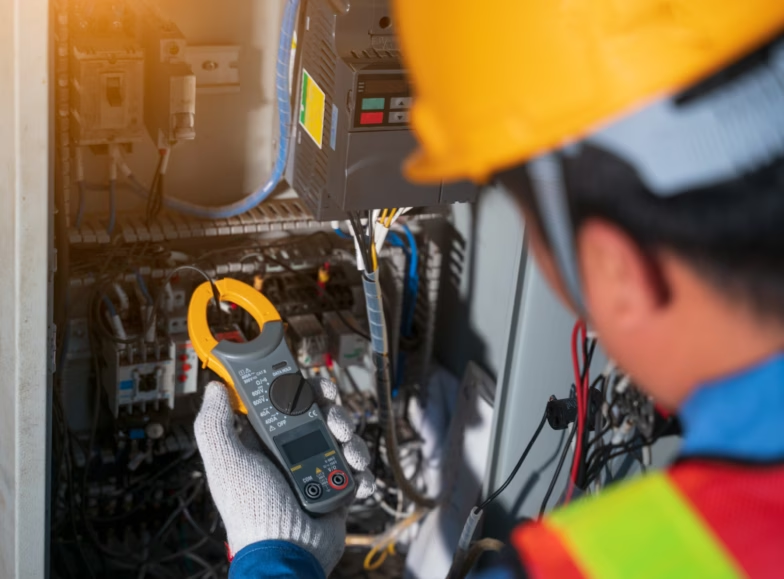
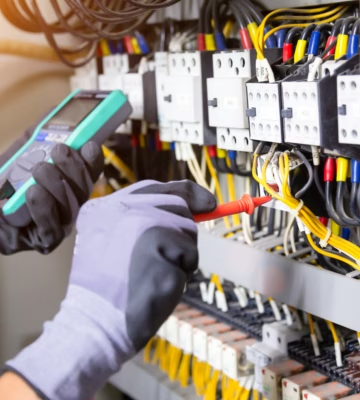
A Well-Functioning System
From energy supply to production processes and building-related systems: a safe and properly functioning system is essential for the continuity of your business operations.
Through independent inspections, Normec helps identify risks in a timely manner, prevent malfunctions, and ensure compliance with applicable laws and regulations.
Services
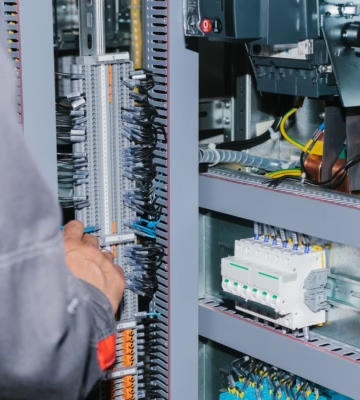
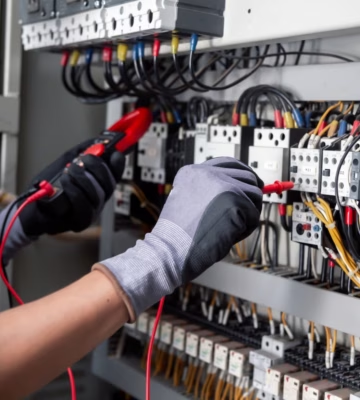
Inspections for Installations and Energy Systems
Our specialists assess the safety, technical condition, and performance of a wide range of electrical installations. In doing so, we look not only at the installation itself, but also at its reliability, energy supply, and compliance with relevant standards.
Within this area of expertise, we provide support in areas such as:
- Inspections of electrical installations
- Electrical safety inspections
- Inspections and assessments of energy systems
This gives you insight into the condition of your systems and helps you identify where optimization or additional measures are needed.
Peace of mind for today and the future
By regularly assessing installations and continuously monitoring performance, you reduce the risk of malfunctions, safety incidents, and unplanned downtime.
With Normec, you’re choosing an independent partner that combines technical expertise, safety, and compliance. This ensures you have reliable installations and energy systems that contribute to safe, sustainable, and future-proof operations.
Ready to improve quality and reduce risks?
Discover how our testing, inspection, certification, and compliance services help you create safer environments and meet the highest quality standards.
Frequently asked questions about electricity
-
If the current owner sells the property within 18 months without carrying out the necessary repairs, the most recent inspection report remains valid.
For the new owner, the 18-month period begins on the date the new deed is signed.
The seller must notify the General Directorate of Energy and the accredited body that performed the inspection that the repair work was not carried out.
-
T4 means that the maximum permissible surface temperature of the equipment is less than 135°C.
-
No. Book 1 of the AREI will be updated accordingly. In Note 10, the FPS has stated to the accredited bodies that, in the meantime, outlets that comply with the latest version of the standard may already be considered compliant.
-
In the case of non-residential installations, there is no limitation to first-category low voltage. Of course, it is still necessary to verify whether the electrical equipment (inverter, cables, etc.) is suitable for the maximum DC voltage that may occur based on the Voc parameter at –10 °C under standard test conditions (STC).
-
This is only permitted if the existing electrical wiring does not include a protective conductor (PE conductor) and if these outlets are protected by a residual current device (RCD) with a sensitivity of no more than 30 mA. Caution: Class I appliances must not be plugged into these outlets.
-
A home battery with a backup function can continue to supply electricity to certain circuits or even the entire home in the event of a power outage. The system is disconnected from the public grid and uses energy from the battery and, if available, electricity generated by solar panels.