
Accessibility links Skip to main content

Why Water Quality Is Crucial for Your Central Heating System

In building management, water quality plays a crucial role in the proper functioning of systems. Water is the foundation of every central heating system and directly affects comfort, performance, and operational continuity. If the water composition is not optimal, scale, corrosion, and contamination can occur. This leads to higher costs and increased maintenance.

Continue reading

Risks Associated with Poor Water Quality

Various substances occur naturally in central heating water. If these are not properly managed, problems can arise.

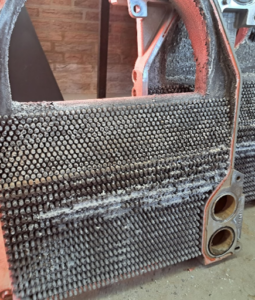
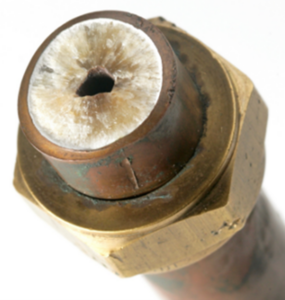
Limescale and sludge deposits reduce the efficiency of heat exchangers and lead to higher energy consumption.

In practice, this can lead to efficiency losses of up to 15%.

Corrosion and Consequential Damage

Corrosion poses a significant risk within systems.

This can result in damage, leaks, and system disruptions. Aluminum heat exchangers, in particular, are susceptible to damage when water quality does not meet the specified requirements.

Microbiological Contamination and Susceptibility to Malfunctions

Microorganisms can grow in systems, leading to contamination and an increased risk of malfunctions.

In addition, filters become contaminated more quickly, and reliability decreases.

Insight as the foundation for effective management

Analyzing water quality and conducting water scans provides insight into the condition of systems.

This enables targeted management and maintenance.

A systematic approach and continuity

A structured approach ensures that a system continues to function reliably.

This results in:

  • fewer malfunctions
  • lower maintenance costs
  • longer service life
  • improved energy performance of the building

Are you looking for an independent inspection partner?

Normec offers expert and independent inspections for safe buildings, systems, and facilities.

Contact us

Fill out the form and we will contact you shortly.

Naam
Privacy Policy 

Related Articles

Laboratory glassware, including measuring cups, pipettes, and test tubes, submerged in water and visible in a testing or analytical setting.
29 Apr 2026

Proposed Legislative Amendment on Legionella: What’s Happening and What Can You Expect?

The rules for Legionella prevention may change. Here’s what we know so far. A development is underway in Legionella prevention that may lead to changes in legislation. This process has been ongoing for about five years and is based on evolving scientific insights. One of the potential major changes is a shift in focus from broad-based Legionella sampling to a more targeted approach focused on Legionella pneumophila. Understandably, this raises questions. What direction is this heading in, and what might this mean for organizations working to ensure safe water? At Normec Aquaserva & Kalsbeek, we are closely monitoring these developments. In this article, we share the most important insights currently available.


Related services

G2 filter for central heating

A water sample is collected for water quality analysis in the laboratory.

Water Quality Analyses

A glass is filled with tap water as part of a study on drinking water use and water quality.

Potability Testing

Water Treatment Equipment

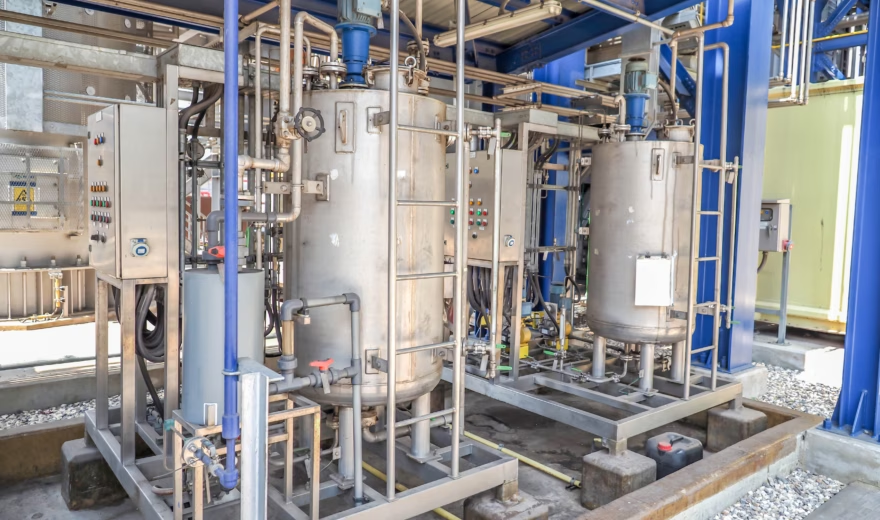
Chemical dosing for feed to HRSG boiler (Heat recovery steam generator) for keep quality of steam in drum before admit steam to steam turbine generator systems in Combined-Cycle Co-Generation Power Plant.

Chemical Water Treatment

Micronox installation