Discover where your building can save
Saving water and energy sounds simple. Using less means lower costs. But where can the real savings be found in your building? With a Water Scan, Normec assesses water consumption and the existing water and water treatment installations to identify relevant opportunities for savings. We take into account both the type of building and how it is used.
A hotel, for example, has a different consumption profile from a hospital, office or apartment complex. The best solution therefore varies depending on the situation.
A targeted scan of your water system
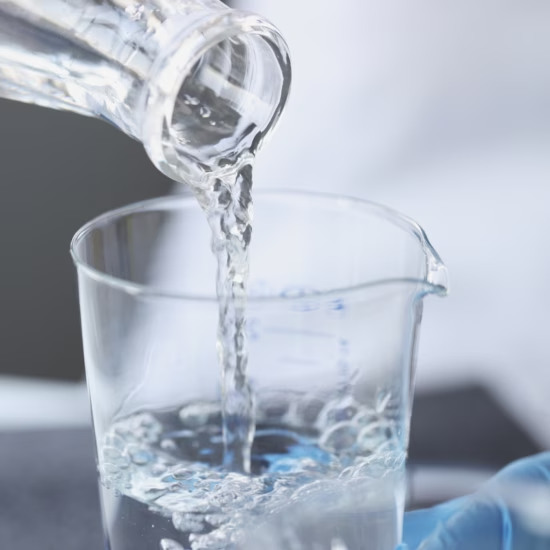
During a water scan, we assess the water system based on our expertise in water safety, drinking water systems, and management. While the technical condition is important, usage and management practices can also impact water safety. Our specialists compile relevant points of concern and highlight where potential risks lie.
We document the findings in a clear and organized manner. This gives you a practical foundation for making decisions regarding management, maintenance, and potential improvements.
Water safety is also a priority
Changes in usage, flow or temperature, for example, can affect water quality. That is why we always assess water-saving measures in relation to water safety. This prevents a measure designed to reduce consumption from causing unwanted effects elsewhere.
This provides you with tangible benefits:
- Gain insight into relevant opportunities to save water and energy
- Prevent water savings from compromising water safety
- Choose measures that reflect actual usage
- Reduce unnecessary consumption and associated costs
- Work towards more efficient and future-proof building installations
Look beyond a single installation
Water and energy are often closely interconnected within a building. Hot water systems, central heating systems and water treatment installations, for example, require not only water but also energy. A change to one installation can therefore affect the consumption of another.
Normec has expertise in water installations, water treatment systems and other building installations, including gas, electricity, ventilation and air systems. This enables us to assess potential savings from a broader perspective.
From savings advice to implementation
An attractive opportunity for savings on paper only creates value when the improvement is actually implemented. Normec has its own installers operating throughout the Netherlands. This means that technical measures resulting from our recommendations, such as the installation of water treatment equipment or the implementation of cleaning measures, can also be put into practice.
Would you like to know the condition of your water system?
You might also be interested in these services
Frequently asked questions about water scan
-
A water scan provides insight into your building’s plumbing system. Normec identifies potential risks and areas of concern and offers practical recommendations for possible improvements.
-
A water scan gives you a clear overview before problems arise. You’ll see what areas require attention and can make more informed decisions about management, maintenance, and improvements.
-
A water scan can be used in a wide variety of buildings, such as healthcare facilities, hotels, recreational venues, real estate properties, government buildings, and commercial buildings.
-
You’ll gain insight into the findings, potential risks, and areas of concern within the water system. You’ll also receive practical recommendations for any next steps.
-
In that case, we’ll explain what the appropriate next step is. Depending on the situation, additional testing or a targeted measure may be necessary, for example.
-
No. A water scan is intended to provide insight into the water system and identify potential areas of concern. A source investigation focuses on determining the cause when a specific problem or anomaly has been identified.
-
Yes. If the water scan indicates that further action is needed, Normec can provide support through additional testing, advice, and appropriate measures.