
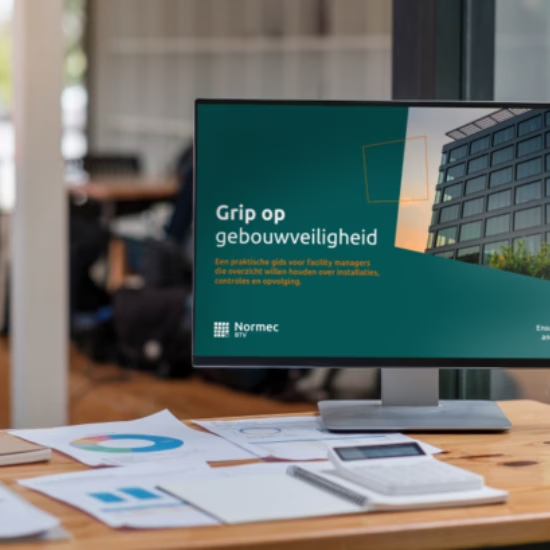
In this practical guide, you’ll discover how to bring more structure to installations, inspections, documentation, and follow-up.
You’ll receive a simple framework that helps you quickly identify:
- which systems require attention;
- which inspections are coming up;
- where the correct documentation is located;
- and who needs to take the next step.
This helps you keep building safety under control, even as buildings, systems, and responsibilities continue to change.
One building. Many moving parts.
As a facility manager, you manage much more than just technical systems.
You monitor schedules. You gather documentation. You coordinate with technical services, maintenance companies, safety teams, and management. Meanwhile, your buildings and systems are constantly changing.
For example:
- new charging stations;
- expansions of electrical systems;
- PV systems;
- new distribution panels;
- modified utility rooms;
- modernized elevators.
Any change can have implications for inspections, documentation, or further follow-up.
As a result, building safety quickly becomes about more than just scheduling appointments. You want clarity on four key points at all times:
- What’s currently in place?
- What’s coming up?
- Where is the documentation?
- Who takes the next step?
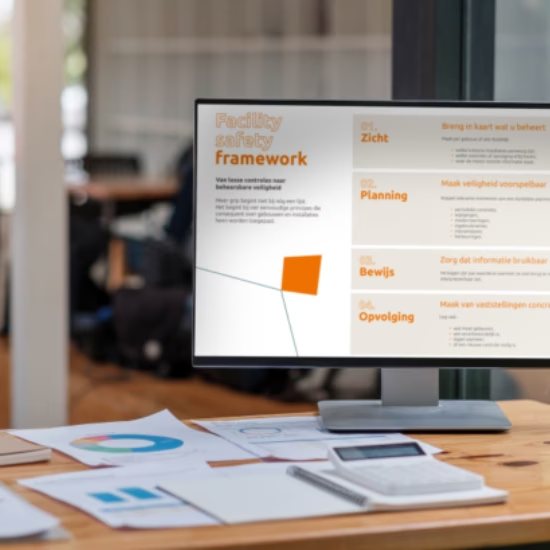
These are the four pillars of the Facility Safety Framework outlined in the guide: visibility, planning, evidence, and follow-up.

From fragmented information to greater control
Effective building safety management doesn’t start with yet another checklist.
It starts with a fixed structure that allows you to consistently manage the same information across different buildings and systems.
After all, building safety isn’t just about organization. You also need to be able to quickly demonstrate how a system was monitored when prevention authorities, management, an auditor, or an insurer requests this information.
So it’s not just about knowing which inspections have been performed, but also about what’s needed afterward for planning, documentation, and follow-up.
What will you discover in the free guide?
The guide “Taking Control of Building Safety in Facility Management” helps you take a critical look at your current approach to safety management.
Among other things, you’ll discover:
- where facility management typically loses control;
- how to identify critical systems for each building or site;
- how changes to electrical systems affect follow-up procedures;
- why follow-up doesn’t end once a technical inspection has been performed;
- how to link key milestones to a clear schedule;
- how to keep reports and technical information useful;
- how to translate findings into concrete actions.
In short: you’ll gain a practical framework to better integrate technical inspections, documentation, and follow-up.
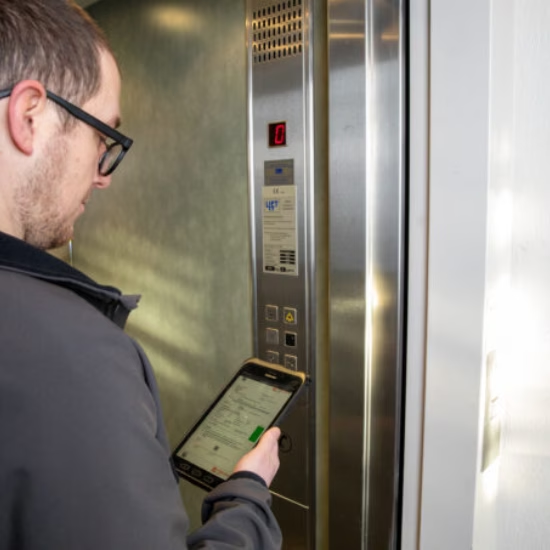
Your systems are changing; your overview needs to change with them
Building safety in facility management isn’t a snapshot in time.
Today, a system is being properly monitored. Tomorrow, the situation changes:
- a charging station is added;
- a distribution panel is expanded;
- an elevator is modernized;
- a utility room is repurposed.
For a facility manager, this means that inspections, documentation, planning, and responsibilities may also change.
Effective technical building management therefore requires an approach that adapts to your buildings.
It’s not just about knowing what has already been done, but also understanding what a change means for the next step.
Where can you gain more control today?
How quickly can you answer these four questions today?
- Which critical systems do we manage?
- What audits or actions are coming up?
- Where is the most recent documentation located?
- Who is responsible for pending actions?
This guide helps you organize this information based on four clear pillars:
- Visibility: Know what you manage.
- Planning: Know what’s coming up.
- Evidence: quickly find what has been done and documented.
- Follow-up: clarify what still needs to be done and who is responsible for it.
Expertise in Complex Building Safety
The more systems, buildings, and locations you manage, the more important a consistent approach becomes.
Normec BTV helps organizations keep complex safety issues under control. With recognized expertise, high-quality standards, and local expertise, our experts support organizations with technical inspections, clear reporting, and practical follow-up.
This ensures not only proper technical execution but also the documentation and overview that facility management, safety, and technical services need to move forward.
Frequently Asked Questions About Efficient Building Management
-
Building safety in facility management encompasses not only technical inspections but also oversight of systems, schedules, documentation, and follow-up on findings.
-
In technical building management, it helps to document, for each building or location, which critical systems are present, what inspections are required, when they are scheduled, and where the current documentation is located.
-
Which building and system inspections are relevant depends on the technical systems in place and the specific situation. Examples include electrical systems and elevators. Our free guide focuses primarily on how you can organize these various inspections and follow-up schedules in a clear and structured way.
-
When managing multiple buildings or locations, it helps to use the same structure for systems, inspections, scheduling, documentation, and follow-up at each location. This creates a single, consistent workflow and makes it easier to quickly see which actions or inspections are still pending.