Fire Safety with Fire-Suppressing Foam
Water is a commonly used fire extinguishing agent. It cools burning materials to below their flash point and can also have a smothering effect due to steam formation. However, water is not always suitable for fighting a fire.
With some flammable liquids, contact with water can have undesirable consequences. For example, when water dissolves in the liquid or causes a chemical reaction. Even if a flammable liquid floats on top of the extinguishing water, water is not a suitable solution. In these situations, a foam fire suppression system offers a solution.
The Building and Living Environment Decree (Bbl) contains the national regulations for the fire-safe use of buildings. Sometimes a foam fire suppression system is used as an equivalent solution to meet the requirements of building codes.
How does a foam fire suppression system work?
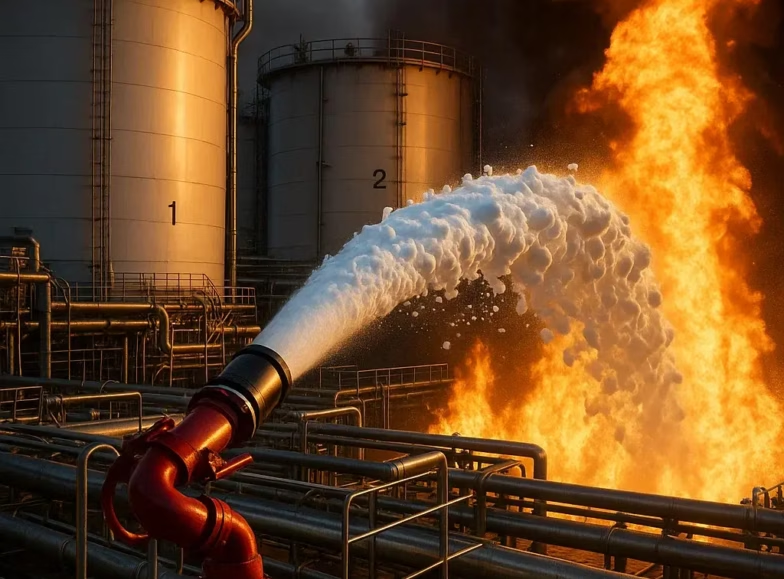
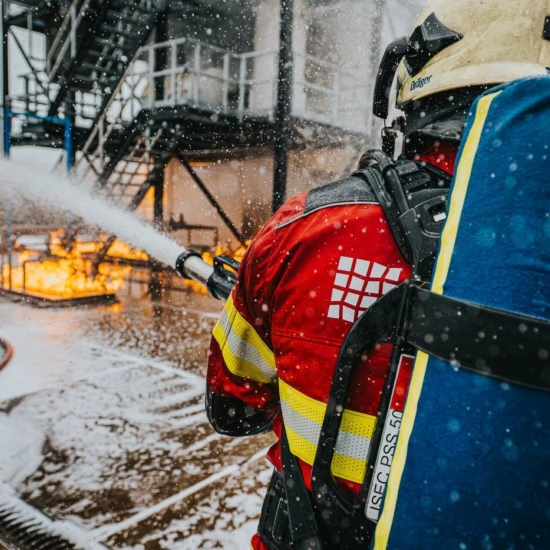
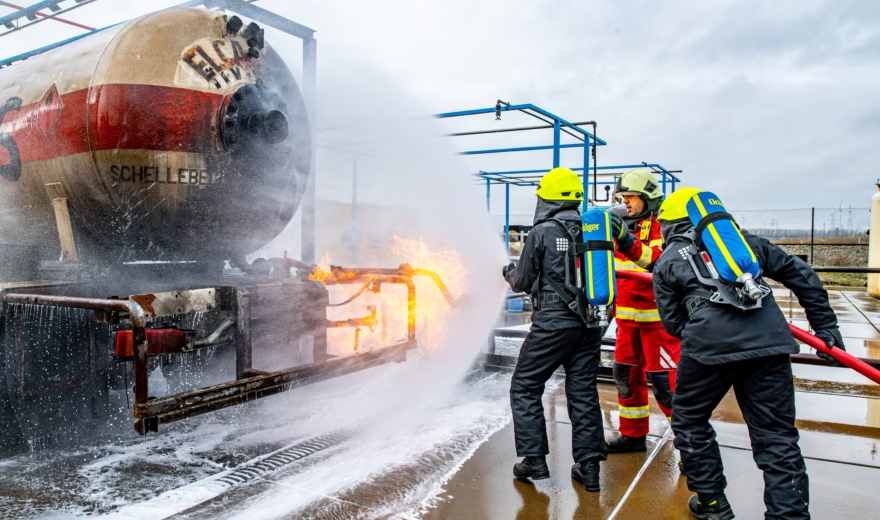
Firefighting foam is created by mixing water and a foaming agent and whipping the mixture with a non-flammable (inert) gas. The foam forms a blanket over the burning material. This restricts the supply of oxygen and allows the fire to be extinguished. Because the foam is lighter than water, it floats on top of the burning liquid.
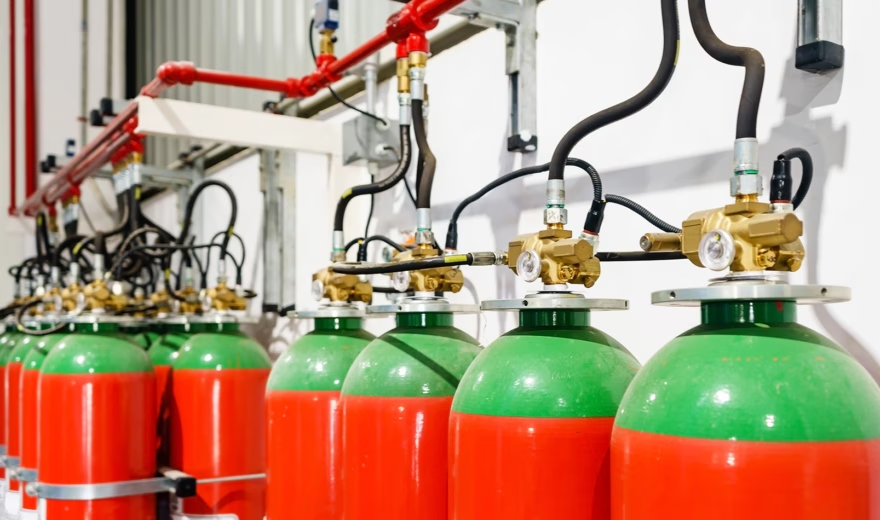
Foam fire suppression systems are used, among other places, in storage tanks containing flammable substances, tank pits, helicopter platforms, airports, and aircraft hangars.
Inspection according to the CCV schedule
During our inspection, we assess whether the system meets the predetermined objectives. These objectives must be traceable to the basic design, such as the Statement of Requirements (SOR).
Our inspectors check the installation and test the associated control systems. In addition, we assess the structural and organizational provisions, such as the management of the installation and the storage of materials. The exact inspection points are specified in the CCV inspection schedule.
What does an inspection mean for you?
- You gain insight into how the system works
- You’ll know whether the installation meets the established requirements
- You’ll gain clarity on the structural provisions
- You’ll have your fire protection system checked by experienced inspectors
- If the assessment is positive, you’ll receive an inspection certificate
Inspection Certificate as Proof
An inspection certificate demonstrates that the assessed fire protection system meets the established requirements. To this end, we examine not only the foam fire suppression system itself, but also the structural provisions and organizational measures. Are all components in order? If so, you’ll receive an inspection certificate from Normec. Among other things, you can use this to demonstrate to your insurer that your fire protection system meets the relevant requirements.
Why choose Normec?
Normec employs experienced inspectors, each with their own area of expertise and broad professional knowledge. We carefully assess your foam fire suppression system in accordance with the applicable inspection requirements. In addition, we are ISO 17020-accredited. This ensures the quality and independence of our inspections.
Periodic inspections remain important
The initial inspection is followed by a periodic re-inspection. During this re-inspection, we verify that the system still fulfills its original purpose and that it is being properly maintained. The inspection takes place annually, unless different requirements apply to the building or structure in question. This way, you stay informed about the condition of your foam fire suppression system and maintain control over fire safety.
Have your foam fire suppression system inspected
Related services
Frequently Asked Questions About Foam Fire Suppression System Inspections
-
Een schuimblusinstallatie is een brandbeveiligingssysteem dat blusschuim gebruikt om branden te bestrijden. Het schuim vormt een deken over de brandende stof, waardoor de toevoer van zuurstof wordt beperkt.
-
Blusschuim is geschikt voor situaties waarin water onvoldoende werkt of ongewenste reacties veroorzaakt. Bijvoorbeeld bij bepaalde brandbare vloeistoffen die op water blijven drijven of chemisch reageren met water.
-
Je vindt deze installaties onder andere bij opslagtanks met brandbare stoffen, tankputten, helikopterplatforms, luchthavens en vliegtuighangars.
-
We beoordelen of de installatie voldoet aan de vastgestelde doelstelling. Daarbij controleren we de installatie, testen we de aansturingen en beoordelen we de bouwkundige en organisatorische voorzieningen.
-
Als alle beoordeelde onderdelen aan de gestelde eisen voldoen, ontvang je van Normec een inspectiecertificaat. Hiermee kun je aantonen dat je brandbeveiliging aan de relevante eisen voldoet.
-
Na de eerste inspectie volgt een periodieke herinspectie. Deze vindt doorgaans jaarlijks plaats, tenzij voor het betreffende gebouw of object andere eisen gelden.
-
Met een herinspectie controleren we of de installatie nog steeds haar oorspronkelijke doelstelling vervult en of het beheer goed wordt uitgevoerd. Zo houd je zicht op de werking van je brandbeveiliging.