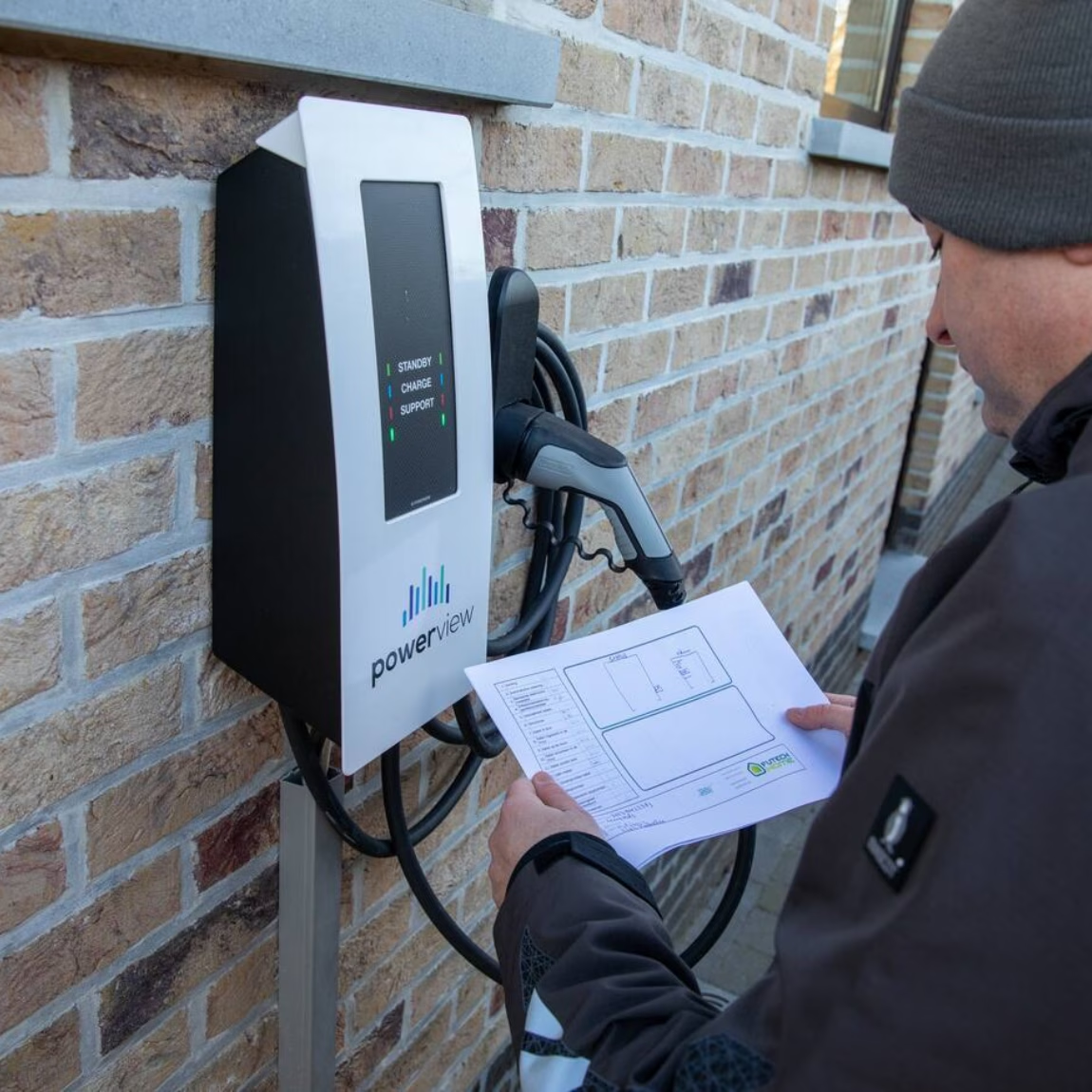
Why it’s important to have your electrical system inspected
A home battery with a backup function offers added convenience. In the event of a power outage, essential appliances such as lighting, the refrigerator, the internet, or certain heating systems can continue to operate. But how confident are you that your electrical system will continue to function safely even while relying on this emergency power supply?
When a home battery temporarily takes over the role of the public power grid, the operation of the electrical system changes. That’s why it’s important to examine not only the battery itself but also the safety and compliance of the entire system.
A timely inspection of the electrical system helps verify that all safety measures continue to function correctly, both during normal grid power and during battery power.
Would you like to know if your system is ready for a home battery with a backup function?
Have your electrical system inspected by Normec BTV.
What is a home battery with a backup function?
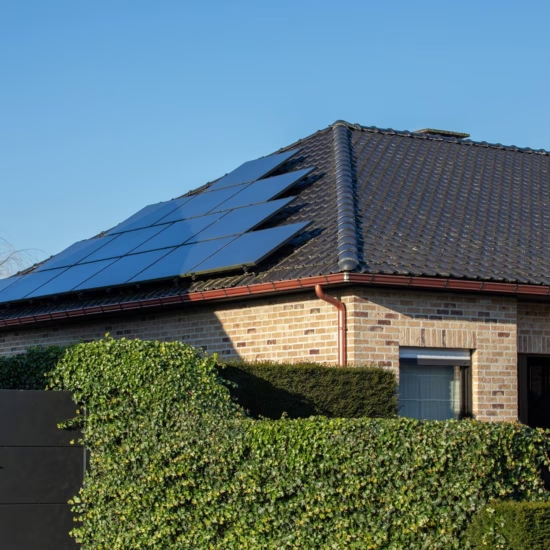
A home battery with a backup function can continue to supply electricity to certain circuits or even the entire home in the event of a power outage.
When the public power grid fails, the system automatically disconnects from the grid. The battery then takes over the power supply. If installed, solar panels can provide additional energy.
This autonomous operation is also known as “island mode.”
Depending on the system chosen, the backup function can be limited to a few essential circuits or provide emergency power to an entire home.
Electrical Safety During Off-Grid Operation
Under normal circumstances, an electrical installation is powered by the public grid. The safety measures outlined in the AREI ensure that people remain protected in the event of an electrical fault.
During off-grid operation, this situation changes. The battery temporarily becomes the installation’s power source.
This may seem like a minor change, but it has significant implications for electrical safety. After all, the safety devices must continue to function correctly even without grid power.
A system that is technically capable of providing emergency power is therefore not automatically properly protected in every situation.
Protection Against Electrical Hazards
An important consideration for a home battery with a backup function is protection against indirect contact.
In the event of an insulation fault, metal parts that are normally not live may still carry voltage. Think, for example, of metal parts of electrical appliances or installations.
The safety devices must quickly detect such a fault and automatically shut off the power supply.
This principle remains just as important when the installation is powered by a home battery as when it is powered by the public electrical grid.
Required residual current devices
The circuits powered via the backup function must also remain properly protected.
The presence of a home battery does not alter the requirements set forth in the AREI. A general residual current device with a sensitivity of up to 300 mA remains mandatory at the point where the electrical installation begins.
In addition, specific residual current devices remain required for, among other things:
- outlets;
- lighting;
- bathrooms and shower areas;
- washing machines;
- dryers;
- dishwashers.
Even when these applications are powered through the backup output, the required protective measures must be maintained.
Safe Disconnection from the Public Grid
A home battery with a backup function must be equipped with a disconnection device.
This ensures that the electrical system is automatically disconnected from the public power grid when the battery takes over the power supply.
This is essential to prevent electricity from being fed back into the distribution grid during a power outage.
The safe operation of a backup system therefore does not depend solely on the battery itself. The switchover between normal power and emergency power must also occur correctly.
Why an Electrical Inspection Is Important
With a home battery that has a backup function, it is not enough to simply check whether the battery works during a power outage.
The entire electrical system must also function correctly in both situations:
- during normal grid power;
- during battery power.
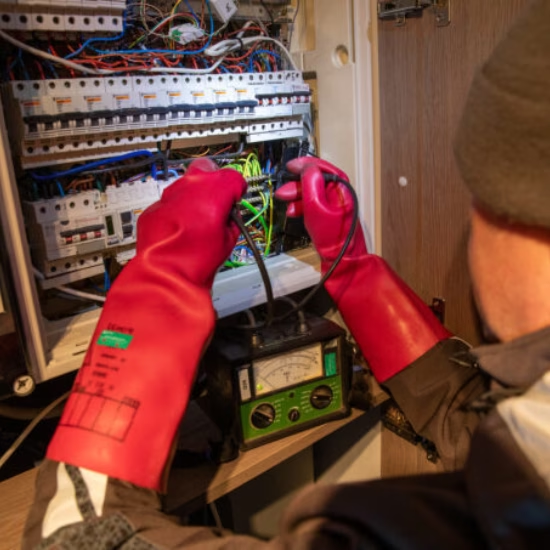
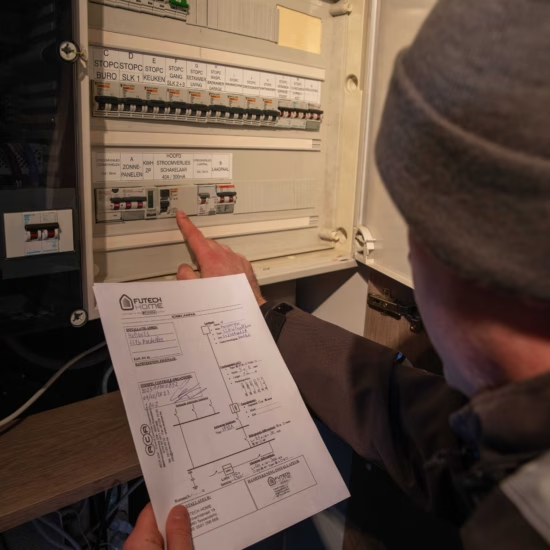
An electrical inspection includes checking, among other things:
- whether the circuit breakers are functioning correctly;
- whether the grounding system is working properly;
- whether disconnection from the grid is performed safely;
- whether the installation complies with AREI regulations;
- whether an additional inspection is required.
Furthermore, when a home battery is added to an existing installation or when the installation is modified, it is important to determine which inspection requirements apply.
An AREI inspection helps detect potential risks in a timely manner and provides assurance regarding the safety of the installation.
Are you sure your installation remains safe even in backup mode?
A home battery with a backup function offers greater autonomy and convenience, but also raises additional considerations regarding electrical safety.
That’s why it’s important to assess the installation not only for its performance but also for its safety and compliance.
Normec BTV conducts inspections of electrical installations with a focus on safety, compliance, and proper operation under all operating conditions.
Would you like to have your electrical installation inspected or checked after installing a home battery? Contact Normec BTV for a professional electrical inspection.
Frequently Asked Questions About Home Batteries with Backup Functionality
-
That depends on the changes made. If the installation of the home battery affects the electrical system, the safety devices, the wiring, or the way the system is powered, a new or additional inspection may be required. A certified inspection agency can assess which inspection is necessary in your situation.
-
That depends on how the home battery is connected and on the modifications made to the electrical installation. If the installation is modified or expanded, an inspection in accordance with the AREI may be required. It is therefore advisable to check which inspection requirements apply after installation.
-
An inspection is required when a new installation is put into service, when significant modifications or expansions are made, and in certain other situations determined by the AREI. It is also important to verify that the installation continues to function safely when installing a home battery with a backup function, both during normal grid power supply and in backup mode.