Obstructions Reduce Fire Safety
Normec FSS conducts inspections of new sprinkler systems (initial inspection), which are primarily installed in new buildings, as well as existing sprinkler systems (follow-up inspection).
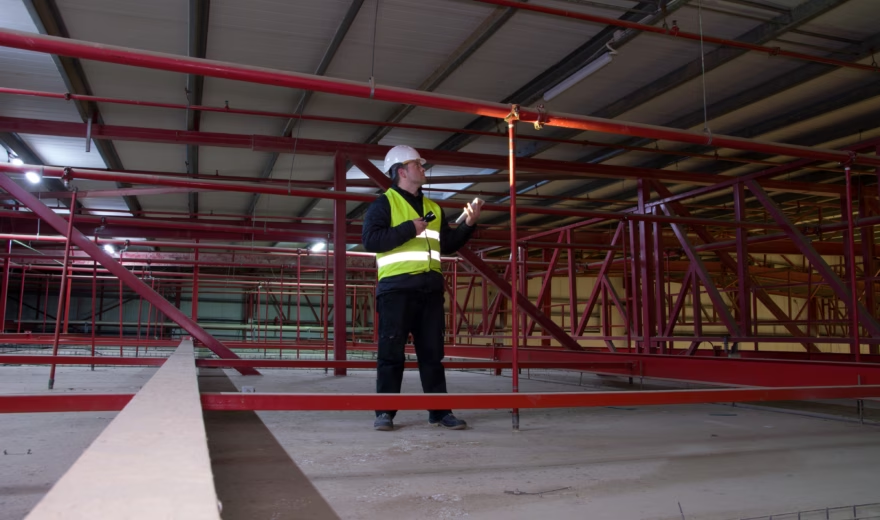
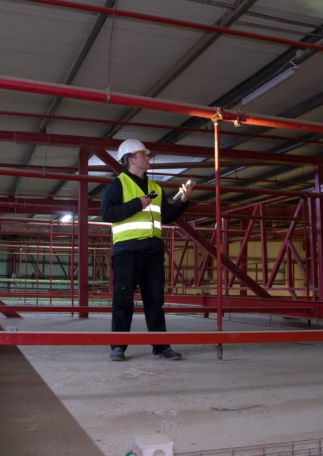
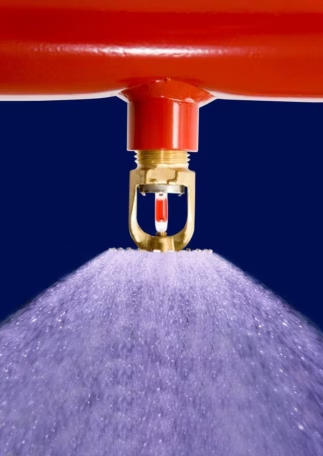
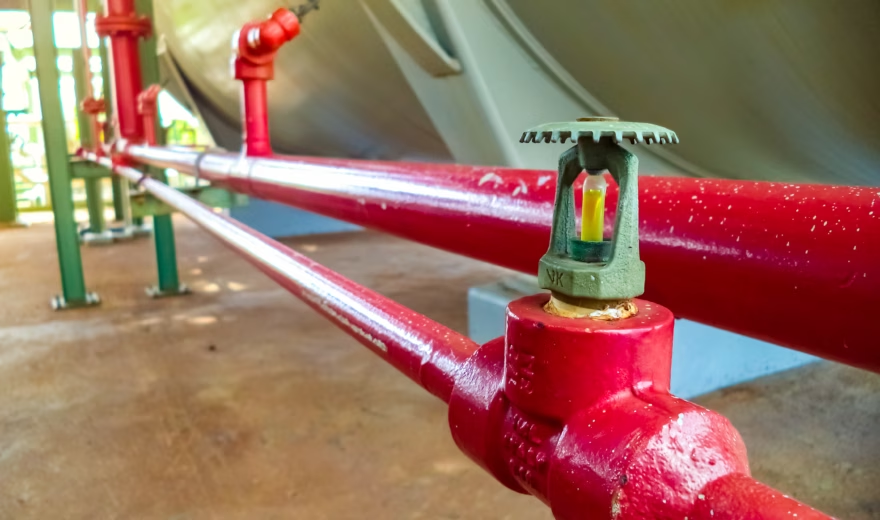
René explains: “We conduct the inspections based on the CCV inspection schedule and assess whether the regulations are being met. One of the many issues we assess during inspections is potential obstructions to sprinklers. In addition to the sprinkler system, the ceiling also contains cable trays, lighting fixtures, ducts, drain pipes, and much more. Often, these are clustered together. If these are too large or installed too close to the sprinklers, they can create an obstruction. In such cases, the sprinkler water may no longer be able to cover the entire area. This, in turn, increases the risk that a fire cannot be contained and will spread further—with all the consequences that entails. We’ve noticed that organizations often don’t give this much thought, but such obstructions actually reduce fire safety without anyone realizing it.”
Communication Can Save a Lot of Money
Even if the sprinkler installer has installed everything perfectly, it’s still possible for an electrician to subsequently, and unknowingly, create obstructions. The electrician might see a good spot for a cable tray but doesn’t consider the implications for fire safety. Especially if this hasn’t been communicated, these kinds of obstructions can arise.
For that reason, René always emphasizes coordination: “Of course, it’s unacceptable for installed systems to be adversely affected by other people’s installations. Good coordination prevents problems. The FM Global data sheets provide very clear instructions on this. By applying the regulations wisely, significant savings can be achieved. And that can sometimes amount to as much as €100,000 in costs that wouldn’t have been necessary with proper communication.”
Examples of Mistakes in Practice
In practice, for example, René regularly encounters sprinklers that are mounted too high on the ceiling and therefore spray water directly onto the steel structure. Or ducts/drain pipes that get in the way of the sprinklers. He also sees cable trays, cable ducts, or conduits that are installed too wide and thus create an obstruction. Sometimes, an entire suspended ceiling is even installed beneath the existing sprinkler system, which completely negates its effectiveness.
Uneven ceiling surfaces are also common, according to René: “Ideally, we’d like a nice, flat ceiling. But of course, it happens that an organization has uneven ceilings. In that case, the sprinkler system must be installed properly.” Even in such a situation, it’s important to prevent obstructions.
Examples of Mistakes in Practice
In practice, for example, René regularly encounters sprinklers that are mounted too high on the roof and consequently spray water onto the steel structure. Or ducts/drain pipes that get in the way of the sprinklers. Cable trays, cable ducts, or conduits that are installed too wide can also create obstructions. Sometimes, a complete suspended ceiling is even installed beneath the existing sprinkler system, which completely negates its effectiveness. Uneven sections in the ceiling are also common, according to René: “Ideally, we’d like a nice, flat ceiling. But of course, it happens that an organization has uneven ceilings. In that case, the sprinkler system must be installed properly.” Even in such situations, it’s important to avoid obstructions.
Tips for organizations with sprinklers:
- If you make changes or modifications to the ceiling: contact the sprinkler installer who originally installed the system.
- If this isn’t possible, ask Normec FSS to assess whether the changes will negatively impact the operation of the sprinkler system.
- Even if a modification to a sprinkler system seems very simple, it can have major consequences for fire safety.