Sprinkler System for a Fire-Safe Building
As a building owner, you are responsible for fire safety. You want to prevent residents, users, and the surrounding area from being exposed to unnecessary risks. The Building and Living Environment Decree (Bbl) contains the national regulations for the fire-safe use of buildings. In some situations, deviations from building codes are permitted. A sprinkler system can then serve as an equivalent solution to meet the established requirements.
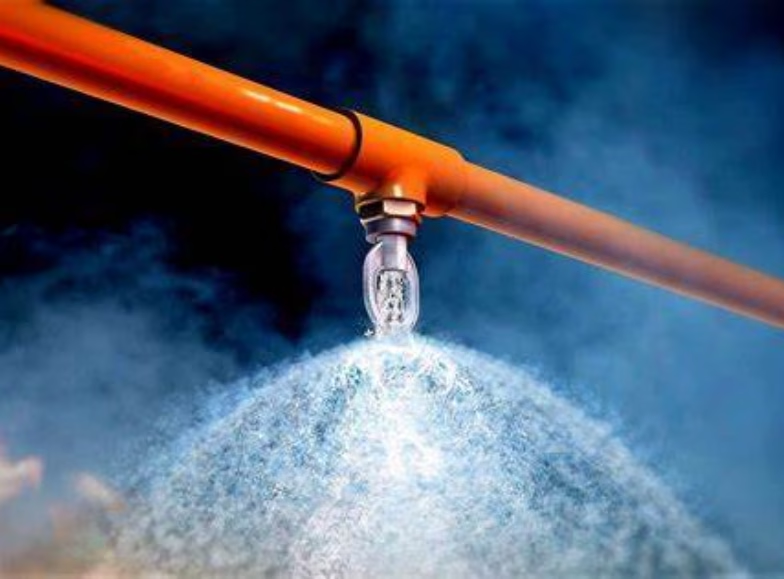
A sprinkler system automatically detects and alerts to a fire and helps keep it under control. In this way, the system limits fire damage and contributes to the safety of people and buildings. The system uses sprinkler heads that respond to the heat of a fire. As soon as a sprinkler head is activated, water is released to extinguish the fire.
What types of sprinkler systems are there?
There are various types of sprinkler systems. The appropriate type depends, among other things, on the environment and the desired level of fire protection.
- Wet system: All pipes are filled with water and are pressurized. As soon as a sprinkler head is activated by a fire, water begins to discharge. This system has a simple design and responds quickly.
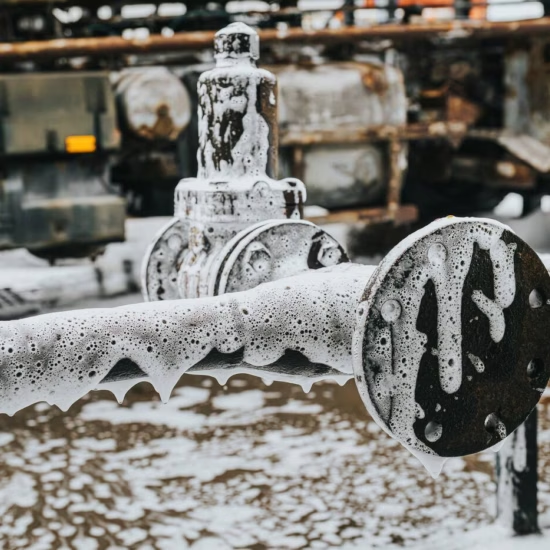
- Dry system: The pipes are filled with, for example, dry air or nitrogen. When a sprinkler head opens, the pressure drops and the main valve opens. The pipes then fill with water. This system is suitable for areas at risk of freezing or with high temperatures (above 95 °C).
- Pre-action system: part of the system remains dry. As soon as smoke detectors detect a fire, the sprinkler pipes fill with water. Extinguishing does not begin until the heat causes the glass in a sprinkler head to break. This prevents water from being released immediately if a sprinkler head is unexpectedly damaged. This type is primarily used in areas where water damage could have serious consequences.
- Deluge system: All sprinkler heads are open. Upon activation, water is released simultaneously from all sprinkler heads. This is typically triggered by smoke or flame detection or by detection sprinklers. The system is suitable, among other things, for environments containing explosive or flammable materials.
When is an inspection required?
Are you using a sprinkler system as an equivalent solution to a requirement in building codes? If so, the system must have an inspection certificate in accordance with the CCV inspection schedule. Even when an inspection is not mandatory, you can have one performed voluntarily. For example, to ensure the proper functioning or condition of your sprinkler system. Or if you need an independent second opinion.
During the inspection, we assess the system, structural provisions, and organizational measures. This allows us to verify whether your fire protection meets the applicable requirements.
What are the benefits of a sprinkler inspection?
- You’ll know whether your sprinkler system meets the required standards
- You’ll gain clarity on the technical, structural, and organizational provisions
- You’ll have your system inspected by expert inspectors
- You can demonstrate that your fire safety system meets the requirements
- With periodic inspections, you can monitor the operation of your system
Sprinkler System Inspection Certificate
An inspection certificate demonstrates that your sprinkler system and the associated fire safety measures meet the required standards. During the inspection, we assess the system, structural features, and organizational measures. Are all components in order? If so, you’ll receive an inspection certificate from Normec. Among other things, this certificate allows you to demonstrate to your insurer that your fire safety system meets the relevant requirements.
Why choose Normec?
Our inspectors combine experience with specialized knowledge. Each has their own area of expertise and possesses broad professional knowledge. This ensures an expert and thorough assessment of your sprinkler system. Normec is also ISO 17020-accredited, which guarantees the quality and independence of our inspections.
Periodic inspection of your sprinkler system
The initial inspection is followed by a periodic re-inspection. This allows us to verify that the system is being properly maintained and that your sprinkler system still meets its original design objectives.
The inspection takes place annually, unless different requirements apply to the building or property in question. This keeps you informed about the condition of your system and allows you to demonstrate that your fire protection continues to meet the required standards.
Do you want assurance regarding the safety of your sprinkler system?
Related services
Frequently Asked Questions About Sprinkler Inspections
-
Wanneer je een sprinklerinstallatie gebruikt als gelijkwaardige oplossing voor een eis uit de bouwregelgeving, moet deze beschikken over een inspectiecertificaat volgens het CCV-inspectieschema.
-
Na de eerste inspectie volgt een periodieke inspectie. Deze vindt doorgaans jaarlijks plaats. Afhankelijk van de eisen voor het betreffende gebouw of object kan een andere inspectiefrequentie gelden.
-
Er zijn vier veelgebruikte systemen: natte systemen, droge systemen, pre-actionsystemen en delugesystemen. Ze verschillen in werking en toepassing. Welke uitvoering geschikt is, hangt af van de omgeving en de gewenste brandbeveiliging.
-
We beoordelen de sprinklerinstallatie, bouwkundige voorzieningen en organisatorische maatregelen. Hiermee controleren we of de brandbeveiliging aan de gestelde eisen voldoet.
-
Een inspectiecertificaat toont aan dat de beoordeelde brandbeveiliging voldoet aan de relevante eisen. Je kunt dit certificaat onder andere gebruiken om aan je verzekeraar aan te tonen dat je brandbeveiliging op orde is.
-
Ja. Ook als een inspectie niet verplicht is, kun je deze laten uitvoeren. Bijvoorbeeld om zekerheid te krijgen over de werking en staat van je installatie of voor een onafhankelijke second opinion.
-
Bij een nat systeem staan de leidingen voortdurend gevuld met water. Bij een droog systeem bevatten de leidingen lucht of stikstof en stromen ze pas vol wanneer een sprinklerkop wordt geactiveerd. Droge systemen zijn daardoor geschikt voor ruimtes waar bijvoorbeeld bevriezingsgevaar bestaat.