Keep dust and smoke inside the system
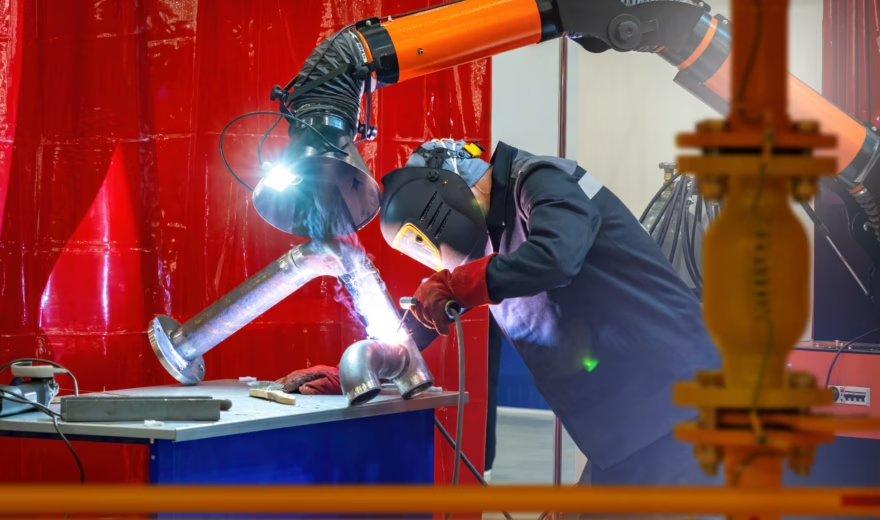
The less space dust and fumes have to spread, the better. An enclosed system utilizes this principle. With this type of Local Exhaust Ventilation (LEV), the process that generates contaminants takes place entirely or partially within an enclosed environment. The exhaust system creates negative pressure inside the enclosure and removes the contaminated air.
This reduces the likelihood of dust or fumes entering the work environment through openings. The degree of enclosure therefore plays a key role in the system’s effectiveness.
Text about your enclosed system
At first glance, a closed system may appear to function properly. But what happens to the airflows inside the enclosure? And does contaminated air escape through openings? A Thorough Examination and Test (TExT) provides answers to such questions. Normec examines and tests the LEV system and assesses its technical condition and relevant performance.
This involves examining the operation of the system as a whole. This reveals deviations that could affect the control of dust and smoke.

Periodic inspections provide clarity
For most LEV systems, regulations require that a Thorough Examination and Test be performed at least every 14 months. Shorter intervals apply for certain applications.
A periodic TExT helps you:
- Have the condition of the enclosed system assessed
- Detect operational deviations in a timely manner
- Gain insight into the performance of the extraction system
- Plan maintenance and improvements effectively
- Demonstrate that the required periodic TExT has been performed
The findings are documented in a report. This provides you with clear information for management and any follow-up actions.
Enclosure and extraction must work together
An enclosed system does not rely solely on exhaust capacity. The design of the enclosure and any openings in it also affect how well contaminants are controlled. Is the production process changing? Is an opening being added, or is a door left open more often? If so, this can affect airflow and, consequently, the system’s performance.
Normec therefore evaluates the LEV system within the context in which it is used. This provides you with an independent assessment of the installation and lets you know if any attention is needed.
Want to have your enclosed system inspected?
You might also be interested in these services
Frequently asked questions about closed systems for dust and fumes
-
An enclosed system is a type of local exhaust ventilation in which the process that generates dust, fumes, or other contaminants is fully or partially enclosed. Contaminated air is extracted from this enclosure.
-
In an enclosed system, the source is located entirely or partially within an enclosure. In a capturing system, the source is located outside the range hood, and the contaminated air is drawn toward the exhaust system.
-
TExT stands for Thorough Examination and Test. It refers to the periodic thorough inspection and testing of a LEV system.
-
For most LEV systems, regulations stipulate a maximum period of 14 months between inspections. Shorter intervals apply to some applications.
-
Enclosure helps prevent contaminants from spreading freely into the work environment. Openings and modifications can affect airflow and performance.
-
You will receive a report containing the results and findings of the research and tests conducted.