Accessibility links Skip to main content

Changes to AREI 2026

At first glance, the AREI changes taking effect on April 1, 2026, may seem technical. But for you as a prevention consultant, they are primarily strategic. Because in the event of an incident, people don’t just look at the installation. They look at your follow-up procedures and demonstrable compliance. The changes primarily fall into three areas. The question is: Have you already assessed them against your current installation?

Continue reading
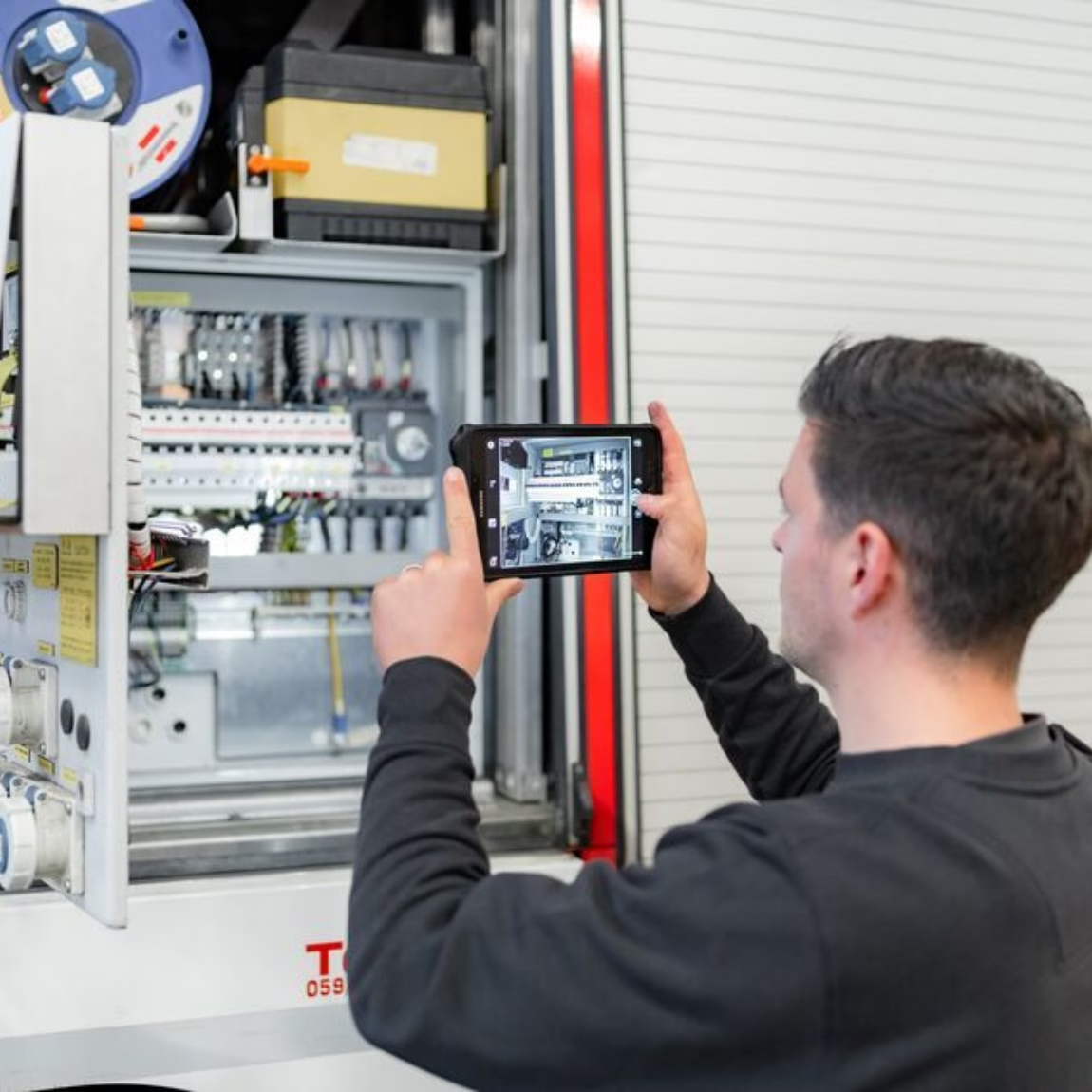
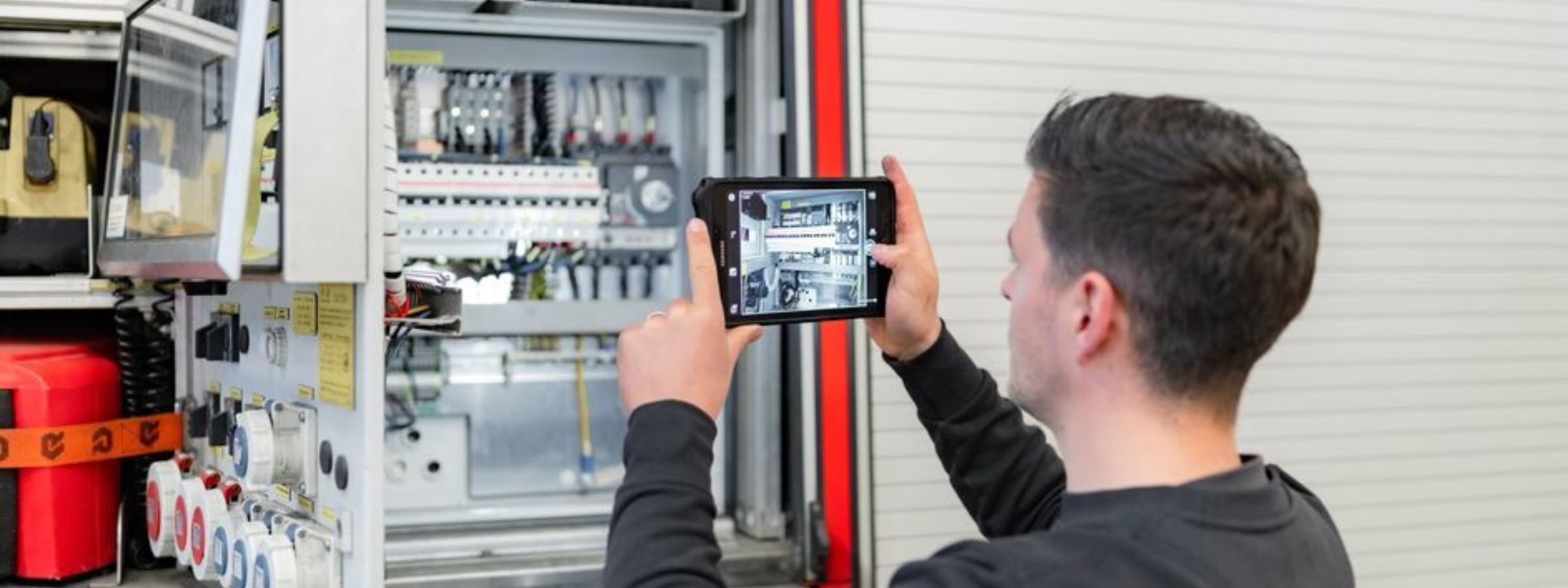
A technician inspects an electrical switchgear cabinet with a tablet during a technical installation inspection.

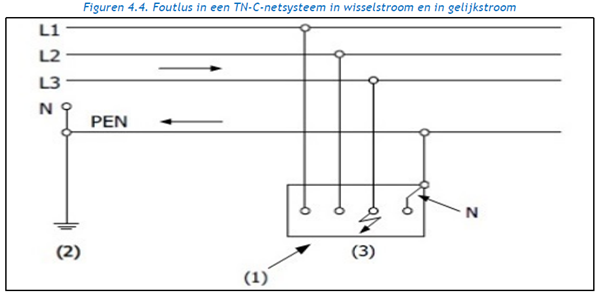
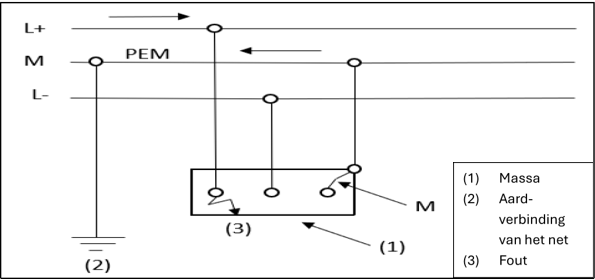
Changes to AREI TN-C Power Systems: Where Does the Risk Lie?

There have been changes to the regulations governing the installation of TN-C power systems.

The TN-C power system is prohibited:

  • When the grounded active conductor (PEN, PEM, and PEL) is used in a final circuit;
  • In residential installations, common areas of a residential complex, and electrical installations without BA4/BA5-certified personnel;
  • In areas characterized by external influences BE2 and/or BE3 and/or CA2;
  • For the designated current path of an electric vehicle charging station;
  • In temporary, mobile, or relocatable electrical installations.

In addition, the grounded active conductor (PEN, PEM, and PEL) must have a cross-sectional area of at least 10 mm² for copper or 16 mm² for aluminum, unless the nominal voltage of the current path is limited to the conventional absolute voltage limit UL

No exception is made for 2-phase circuits. A transitional provision applies to this last requirement for projects or work whose on-site execution began before April 1, 2026.

Schematic representation of a fault current within a TN-C power system in an electrical installation.
Schematic representation of an earth connection and fault current within an electrical grid.

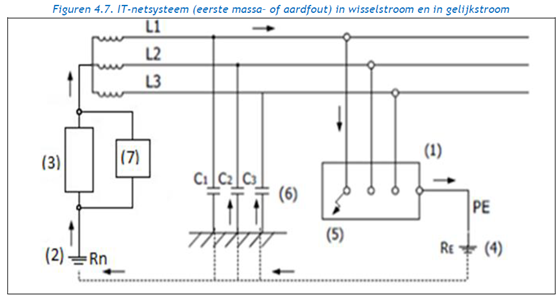
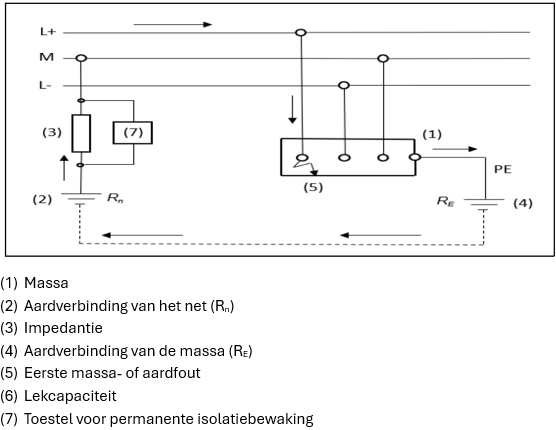
Changes to AREI IT Network Systems: Monitoring Becomes a Responsibility

In addition to the existing options for active protection against electric shock in the event of indirect contact, two new options are being added. This brings the total to six possible devices or equipment that may be used, namely:

  • Overcurrent protection devices
  • Residual current protective devices
  • Overvoltage protection devices
  • Devices for continuous insulation monitoring that can be combined with an insulation fault detection system
  • Residual current insulation monitoring devices (*) (new)
  • Monitoring devices using technology that ensures at least an equivalent level of protection as one of the two preceding devices (**) (new)

(*) Residual current insulation monitoring devices are devices that either trip the circuit or sound an alarm when a leakage current is detected. Residual current protection devices, on the other hand, will always trip when a residual current is detected.

(**) This option was added to allow for future flexibility in case other types of isolation monitoring devices become available on the market.

When an IT power system does not automatically interrupt the power supply upon the first fault, a new regulation now applies. Continuous monitoring is required to detect the occurrence of an initial ground fault, and one of the last three devices listed above must be used for this purpose.

A transitional provision applies to this last regulation for projects or work whose on-site execution began before April 1, 2026.

Schematic representation of an IT power system with fault current and ground connection in an electrical installation.
Schematic representation of an IT system with isolation monitoring for electrical installations.

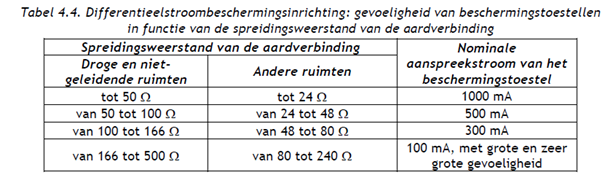
Residual Current Protection in Non-Residential Installations: No Longer a Standard Table

Table 4.4 is being removed from Book 1. The maximum permissible sensitivity of the residual-current device must now always be calculated using the formula:

IΔn × RE ≤ UL

where:

  • IΔn in A: sensitivity of the residual current device;
  • RE in Ω: earth resistance of the ground connection between the masses
  • UL in V: conventional absolute voltage limit

The earth connection resistance must never exceed 500 Ω for dry and non-conductive spaces (AD1, BB1, and BC1) and 250 Ω for other spaces (AD2 through AD5, BC2, and BB2).

A table of technical values for trip currents and resistive components in protection systems.

What happens if this is not evaluated?

During a subsequent inspection, this could lead to:

✔ Observations or violations

✔ Mandatory corrections

✔ Internal discussion regarding responsibility

✔ And in the event of an incident? Then it will be determined whether you could reasonably have known that the regulations had changed.

Do you want to ensure your installation remains compliant with the changes in 2026?

Normec BTV helps you:

✔ Technically assess your current situation
✔ Clearly identify risks
✔ Demonstrate compliance

No unnecessary interventions. Just clarity.

Contact our experts at com-btv@normecgroup.com.

Request a quote

Fill out the form and we will contact you shortly.

Naam
Privacy Policy 

Looking for an independent inspection partner?

Normec offers expert and independent inspections to ensure the safety of buildings, installations, and facilities.

Contact us

Complete the form and we will contact you as soon as possible.
Naam
Privacy Policy 
Customer Portal

Related Articles

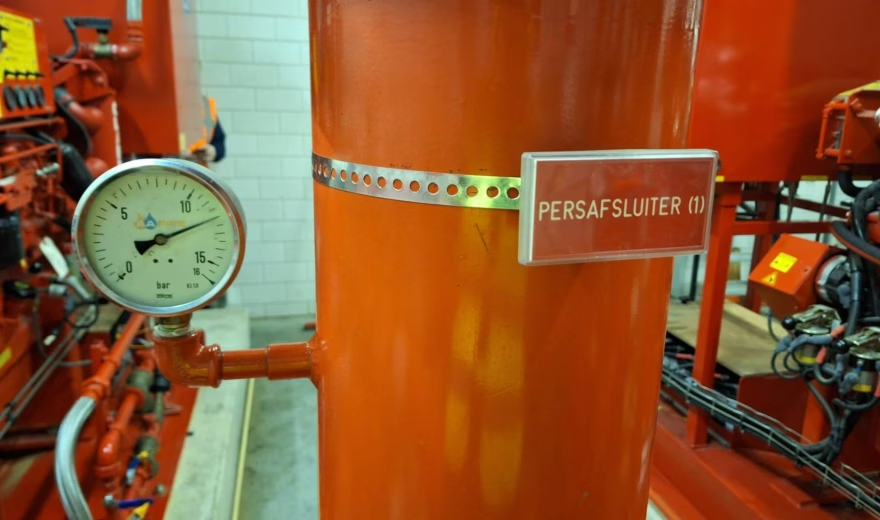
Pressure relief valve on an orange piping system with a pressure gauge in a utility room.
03 Jun 2026

Inspection of compressed air systems in Belgium: compressed air tanks and requirements by region

Many companies use compressed air tanks to store compressed air. Because these compressed air systems are under pressure, they pose certain risks. Corrosion or a defective safety valve can have serious consequences for people, the environment, and business continuity. To ensure safety and comply with environmental regulations, companies in Belgium must have their compressed air tanks inspected. However, the specific requirements vary by region: Flanders, Brussels, and Wallonia each have their own regulations. This article provides a clear overview of the most important requirements and key considerations in the three regions.
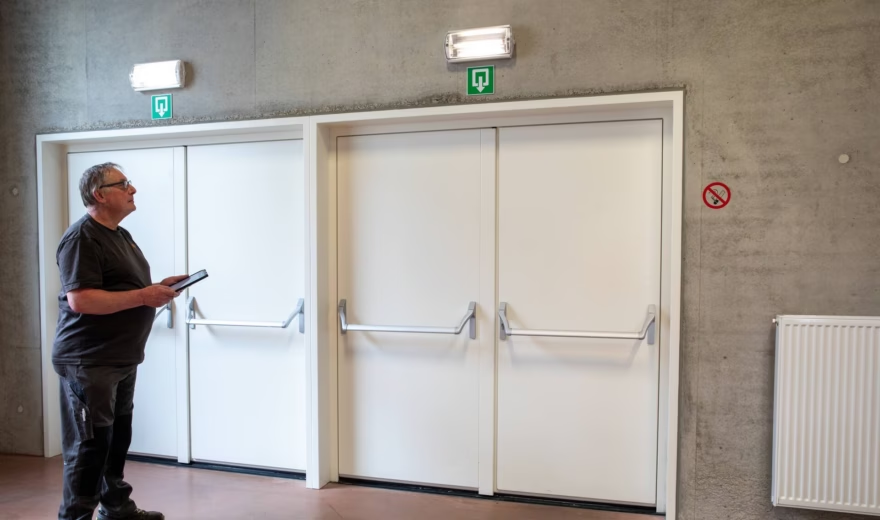
An inspector checks emergency doors and escape routes in a building using a tablet.
12 Mar 2026

Emergency Lighting Inspection: When Is It Required in Belgium?

When a building is suddenly plunged into darkness—due to a fire, power outage, or other malfunction—emergency lighting is often the only system left to provide guidance. Yet in practice, we find that organizations in Belgium often overlook the inspection of emergency lighting. Implementation is particularly behind schedule in Wallonia. Yet various regulations explicitly require this inspection, such as the Walloon Tourism Handbook. This creates a risk for many organizations. This is not because organizations ignore safety, but because fire safety requirements are fragmented and difficult to keep track of.

A professional video camera is filming a scene during a low-light shoot.
07 Jul 2026

A Safe Event with Normec BTV

Whether it’s a lively festival, an impressive corporate event, or a local fair: safety always comes first. At Normec BTV, we understand this better than anyone. That’s why we offer specialized inspections for the critical components of every event. This way, you can welcome your audience with confidence and guarantee a safe event with Normec BTV!

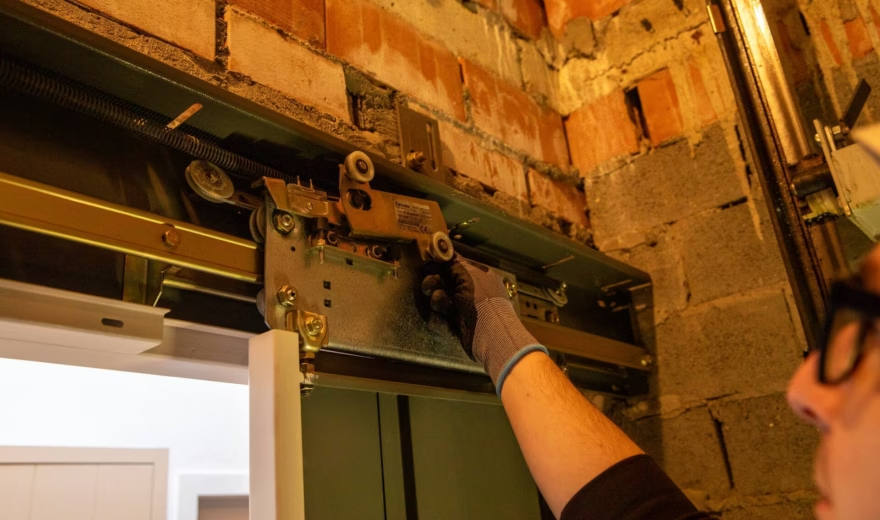
A technician is inspecting or adjusting a door mechanism in an existing masonry structure.
07 Jul 2026

Want to ride the elevator with peace of mind? Normec BTV takes care of the inspection for you!

Passenger elevator inspections: preventive inspections, risk assessments, post-modernization inspections, or final inspections—Normec BTV can handle it all!

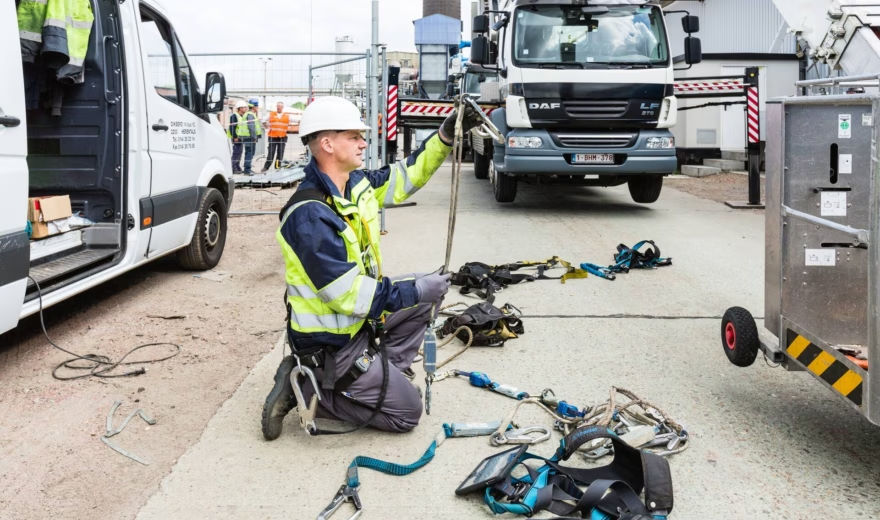
A technician kneels at a construction site and inspects lifting and fall protection equipment next to company vehicles and a truck.
29 Jun 2026

Inspecting Personal Protective Equipment: Why PPE for Fall Protection Is Often Overlooked

Inspecting personal protective equipment (PPE) is an essential part of working safely at heights. Yet in many organizations, safety harnesses, lanyards, and other fall protection PPE tend to fall by the wayside more quickly than larger pieces of equipment. This creates the risk that inspections won’t be performed on time or that an overview of the equipment will be lost.

A technician performs maintenance on an industrial door or elevator system in a mechanical room.
28 May 2024

Main Causes of “C” Findings in an Elevator Inspection

The five main causes of a “C” rating during the 3- or 6-monthly preventive inspections of elevators are as follows:

A person is conducting an elevator inspection and operating the control panel while holding a measuring device.
21 May 2024

A Week Following in the Footsteps of Our Inspector: Hitchhiking

A Week in the Footsteps of Youssef Meet Youssef Chennoufi, one of the key members of our Brussels elevator team. Together with his colleagues, he braves the daily hustle and bustle of the Brussels-Halle-Vilvoorde region to ensure you can step into an elevator with complete peace of mind. How does he do it? You’ll find out in this article about his workweek.

Related Services

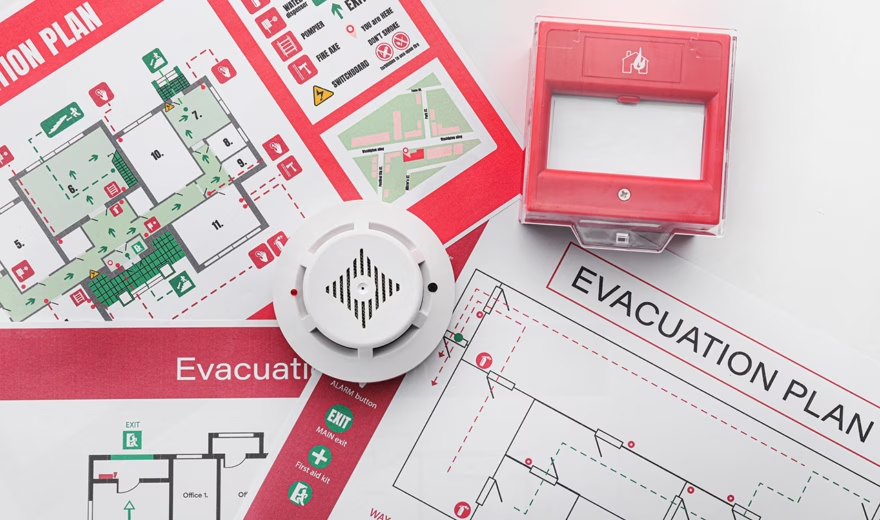
Smoke detectors, manual fire alarms, and evacuation floor plans for fire safety and emergency procedures in buildings.

Fire risk assessments

An individual operates a touchscreen on laboratory equipment to set up or monitor an analysis process.

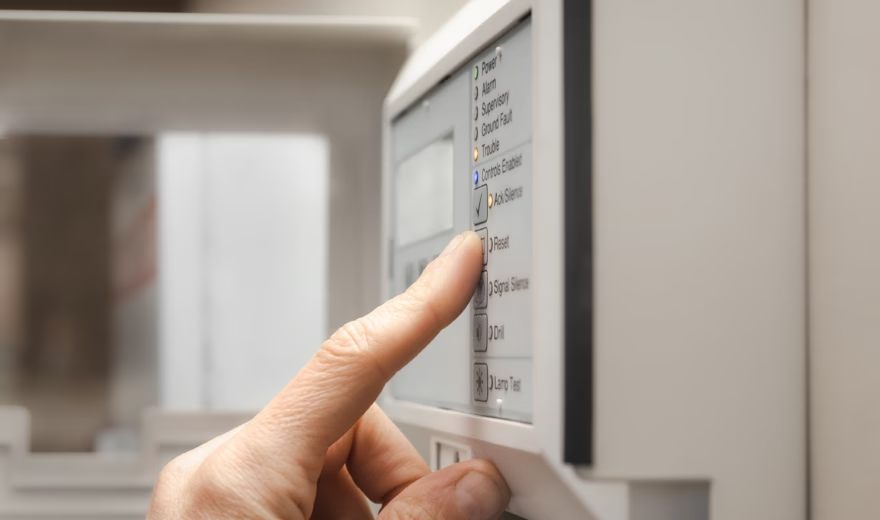
Fire Alarm Testing and Inspections

Red industrial pipes with sprinkler heads in a fire protection system

Fire suppression inspections

A technical employee performs inspection or maintenance work on an industrial installation at height.

Hoisting and Lifting Equipment

A technical employee performs maintenance or inspection work on an industrial structure containing cables and technical components.

Lifting Accessories and Safety

A truck with a crane is moving construction materials at a construction site.

Work equipment and treatment devices

A technical employee performs inspection or maintenance work at heights using an aerial work platform.

Storage and access systems