Accessibility links Skip to main content

Inspecting Personal Protective Equipment: Why PPE for Fall Protection Is Often Overlooked

Inspecting personal protective equipment (PPE) is an essential part of working safely at heights. Yet in many organizations, safety harnesses, lanyards, and other fall protection PPE tend to fall by the wayside more quickly than larger pieces of equipment. This creates the risk that inspections won’t be performed on time or that an overview of the equipment will be lost.

Continue reading
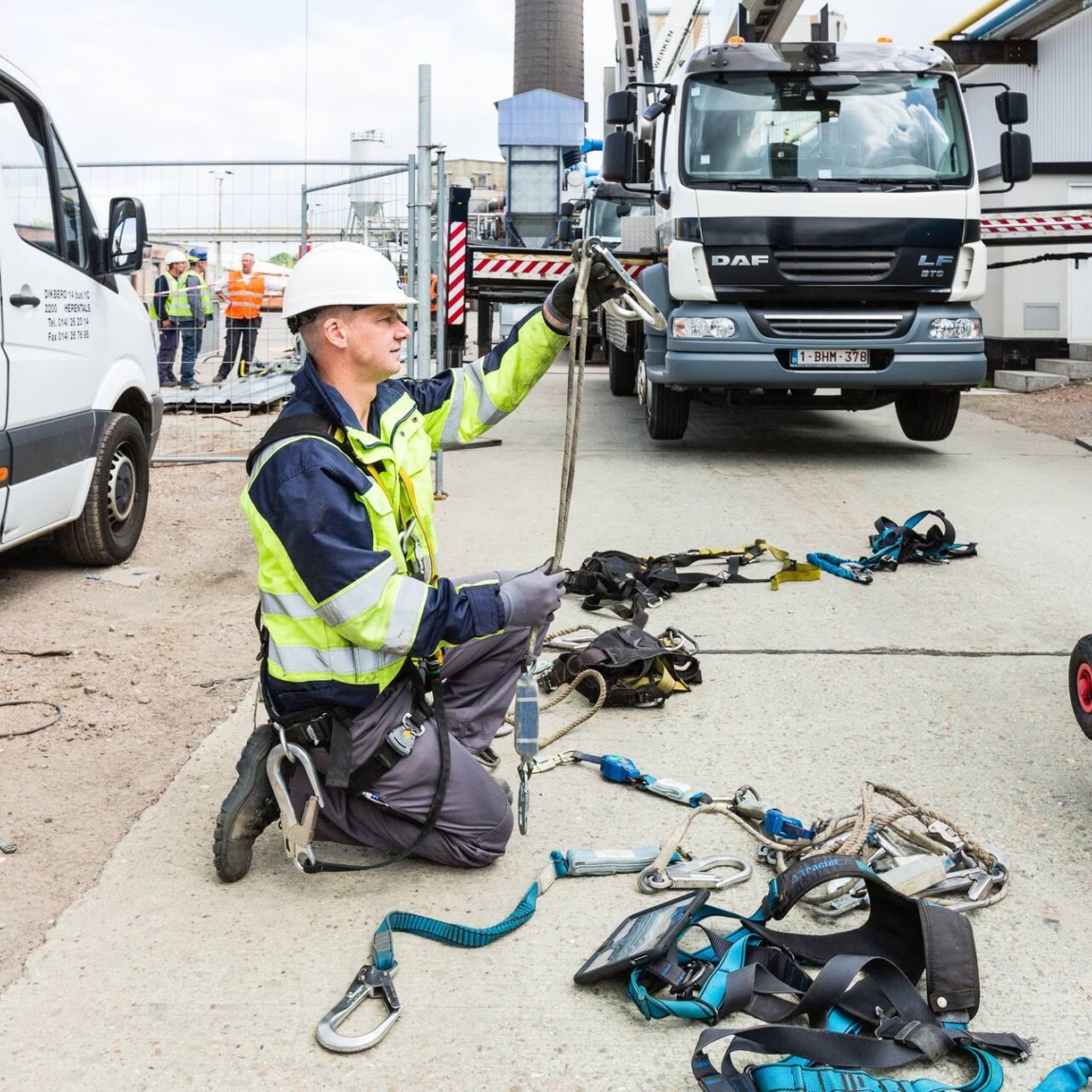
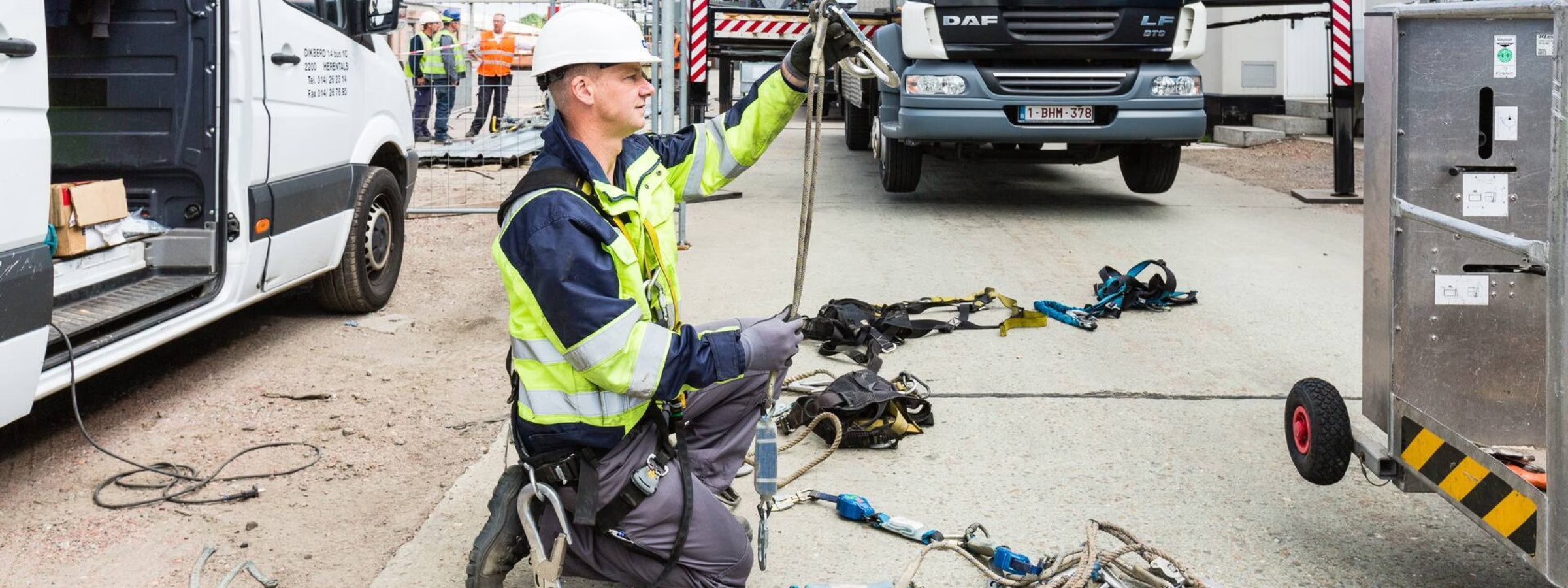
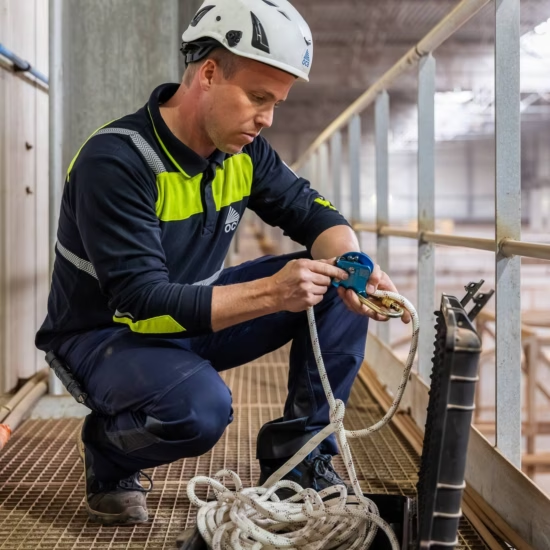
A technician kneels at a construction site and inspects lifting and fall protection equipment next to company vehicles and a truck.
An employee inspects and organizes a fall protection system and safety equipment on an elevated work platform.

What is personal protective equipment?

Personal protective equipment (PPE) is gear worn by an employee to reduce safety risks. Examples include helmets, safety shoes, safety harnesses, …

In this article, we focus specifically on PPE designed to prevent falls (fall protection).

Such PPE typically consists of:

  • the fall arrest harness;
  • lifelines, fall arresters, carabiners, and fall arrest devices.

If even a single component fails, safety is no longer guaranteed.

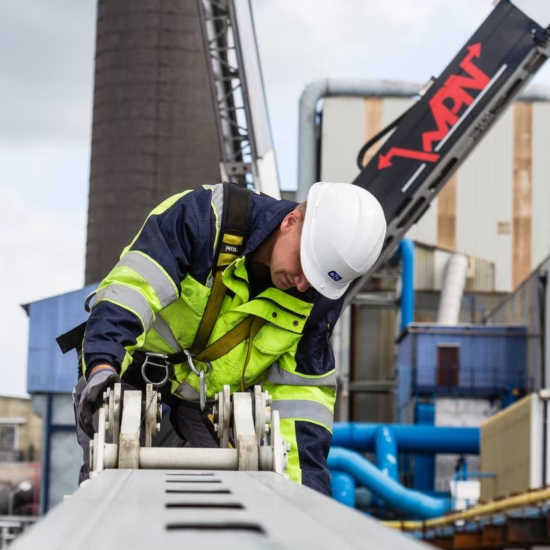
An inspector is inspecting a steel structure at height to assess its technical condition and safety.

Why is fall protection PPE so often overlooked?

Personal protective equipment differs fundamentally from many other types of work equipment.

A crane or aerial work platform is usually registered at a fixed location. A fall arrest harness, on the other hand, travels with the user. This often results in a fragmented situation where no one has a complete overview.

Prevention advisors, facility managers, and technical supervisors often encounter questions such as:

  • Which fall arrest harnesses are still in active use?
  • Which lanyard belongs to which crew?
  • Is this piece of equipment still safe after a fall?
  • Where is the inspection report located?
  • Who is responsible for the next inspection date?
  • Which fall arrest harnesses may have exceeded their expiration date?

These questions may seem administrative, but they directly affect safety. When there is doubt about the status of a piece of protective equipment, uncertainty also arises regarding its usability.

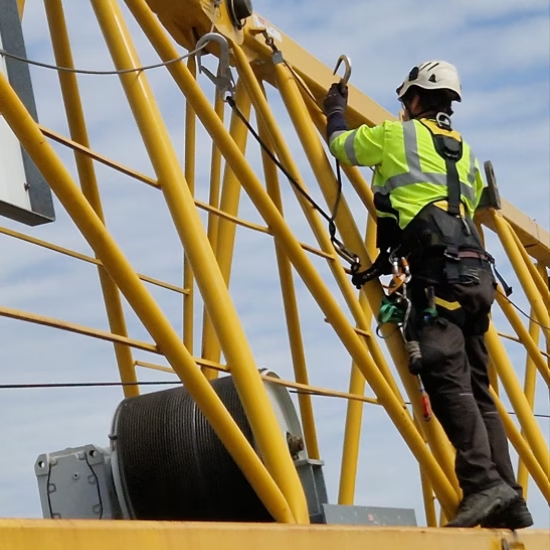
An employee wearing safety gear inspects an anchor point and a fall protection system at height at an industrial facility.

When can personal protective equipment be used?

According to the hierarchy of prevention, personal protective equipment is never the first line of defense.

Employers must first determine whether risks can be eliminated or reduced through:

  • organizational measures;
  • technical measures;
  • collective protective equipment.

Only when these solutions do not provide sufficient protection may personal protective equipment be used.

When working at heights (2 meters or higher), personal protective equipment is mandatory if collective protective measures are not available.

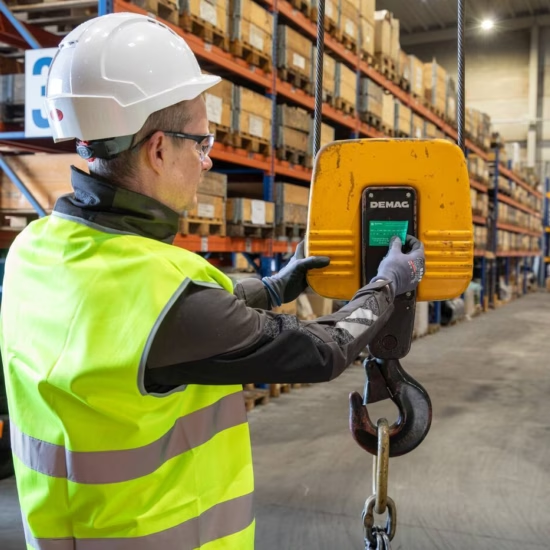
An employee is inspecting an electric hoist in a warehouse with pallet racks.

How do you keep track of personal protective equipment?

Effective tracking doesn’t have to be complicated. Often, a few basic principles are all it takes.

  • Take inventory of all PPE

Create a complete inventory of all fall arrest harnesses, lanyards, fall arrest blocks, and other equipment available within the organization.

  • Use unique identifiers

Use serial numbers or internal codes so that each item can be tracked individually.

  • Store documents centrally

Inspection reports, inspection data, and any comments are best kept in one central location.

Inspection of lifting straps and fall protection equipment for wear and damage within a test setup.

When should fall protection PPE be inspected?

Fall protection PPE must be inspected at least once a year by a certified EDTC. During this inspection, we check for:

  • cracks;
  • wear and tear;
  • deformations;
  • missing parts;
  • damaged fasteners.
  • Any expiration date specified by the manufacturer
  • CE conformity

In addition, there is an additional requirement if the PPE has been involved in a fall incident. In that case, it must be taken out of service immediately until an inspection has been conducted.

Even if there is any doubt regarding damage, wear, or overloading, it is advisable to immediately take the equipment out of service.

Don’t let fall protection PPE slip through the cracks

Fall arrest harnesses, safety lanyards, etc., are often less visible than other work equipment. Precisely because of this, they tend to slip under the radar.

Yet this personal protective equipment is crucial for employees working at heights. By systematically inventorying it, having it inspected on time, and maintaining accurate documentation, you create greater safety for both employees and the organization.

A clear overview of your fall protection PPE isn’t just useful for audits or inspections; above all, it forms an important foundation for safe working practices.

Request a quote

Fill out the form and we will contact you shortly.

Naam
Privacy Policy 

FAQ on PPE Inspections

Ja. Minstens om de 12 maanden en telkens nadat zij een val hebben gestut.

De controle gebeurt door een erkende Externe Dienst voor Technische Controle (EDTC) die bevoegd is voor keuringen van hijs- en hefwerktuigen.

Ja. Een valharnas moet na een val onmiddellijk uit gebruik worden genomen en worden gecontroleerd door een EDTC. In veel gevallen schrijft de fabrikant zelfs voor dat het harnas na het opvangen van een val buiten gebruik wordt gesteld en vervangen.

Belangrijke aandachtspunten:

Direct uit gebruik nemen: Gebruik het harnas niet opnieuw totdat het is gekeurd.

Inspectie door een EDTC: Controleer op beschadigingen zoals gescheurde banden, beschadigde stiksels, vervormde of gescheurde metalen onderdelen en slijtage.

Volg de instructies van de fabrikant: Sommige fabrikanten eisen vervanging na elke opgevangen val, ook als er geen zichtbare schade is.

Documenteer de gebeurtenis: Leg de val en de inspectie vast in het inspectieregister van de PBM.

Onder meer valharnassen, vanglijnen, schokdempers, valblokken, verbindingsmiddelen en bepaalde mobiele verankeringspunten maken deel uit van persoonlijke valbeveiliging.

Een keuringsverslag van een PBM is één jaar geldig. Nadien dient een nieuwe keuring ingepland worden.

Looking for an independent inspection partner?

Normec offers expert and independent inspections to ensure the safety of buildings, installations, and facilities.

Contact us

Complete the form and we will contact you as soon as possible.
Naam
Privacy Policy 
Customer Portal

Related Articles

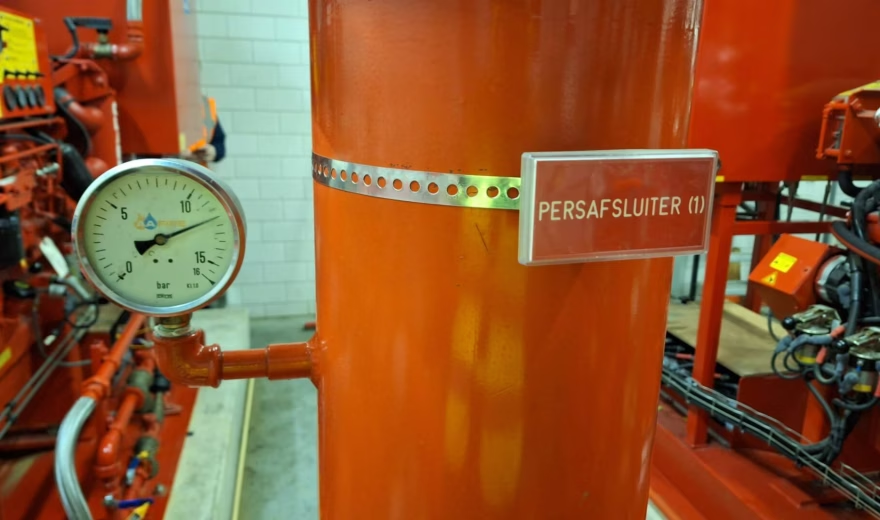
Pressure relief valve on an orange piping system with a pressure gauge in a utility room.
03 Jun 2026

Inspection of compressed air systems in Belgium: compressed air tanks and requirements by region

Many companies use compressed air tanks to store compressed air. Because these compressed air systems are under pressure, they pose certain risks. Corrosion or a defective safety valve can have serious consequences for people, the environment, and business continuity. To ensure safety and comply with environmental regulations, companies in Belgium must have their compressed air tanks inspected. However, the specific requirements vary by region: Flanders, Brussels, and Wallonia each have their own regulations. This article provides a clear overview of the most important requirements and key considerations in the three regions.
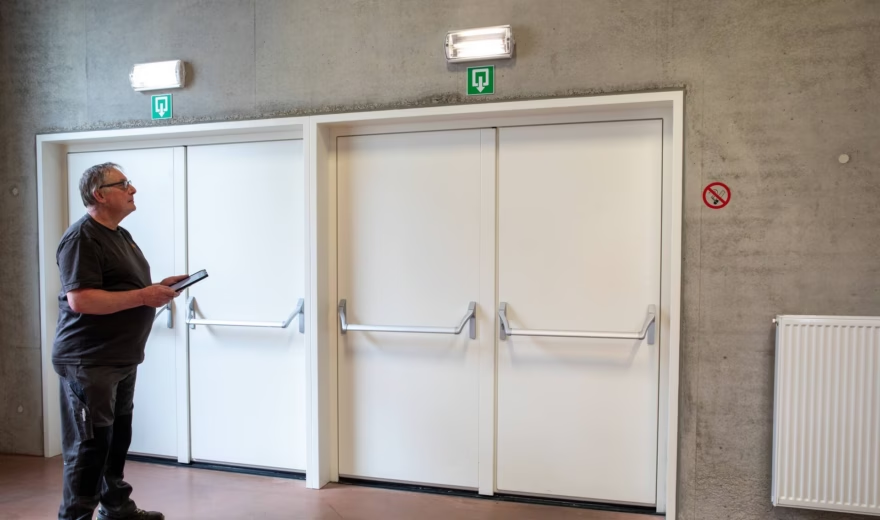
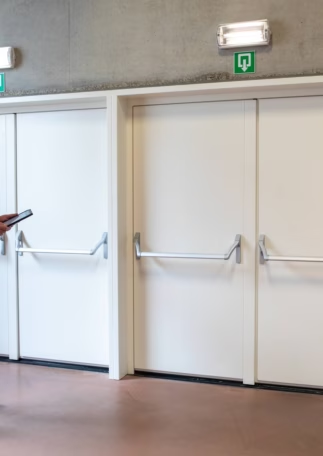
An inspector checks emergency doors and escape routes in a building using a tablet.
12 Mar 2026

Emergency Lighting Inspection: When Is It Required in Belgium?

When a building is suddenly plunged into darkness—due to a fire, power outage, or other malfunction—emergency lighting is often the only system left to provide guidance. Yet in practice, we find that organizations in Belgium often overlook the inspection of emergency lighting. Implementation is particularly behind schedule in Wallonia. Yet various regulations explicitly require this inspection, such as the Walloon Tourism Handbook. This creates a risk for many organizations. This is not because organizations ignore safety, but because fire safety requirements are fragmented and difficult to keep track of.

A professional video camera is filming a scene during a low-light shoot.
07 Jul 2026

A Safe Event with Normec BTV

Whether it’s a lively festival, an impressive corporate event, or a local fair: safety always comes first. At Normec BTV, we understand this better than anyone. That’s why we offer specialized inspections for the critical components of every event. This way, you can welcome your audience with confidence and guarantee a safe event with Normec BTV!

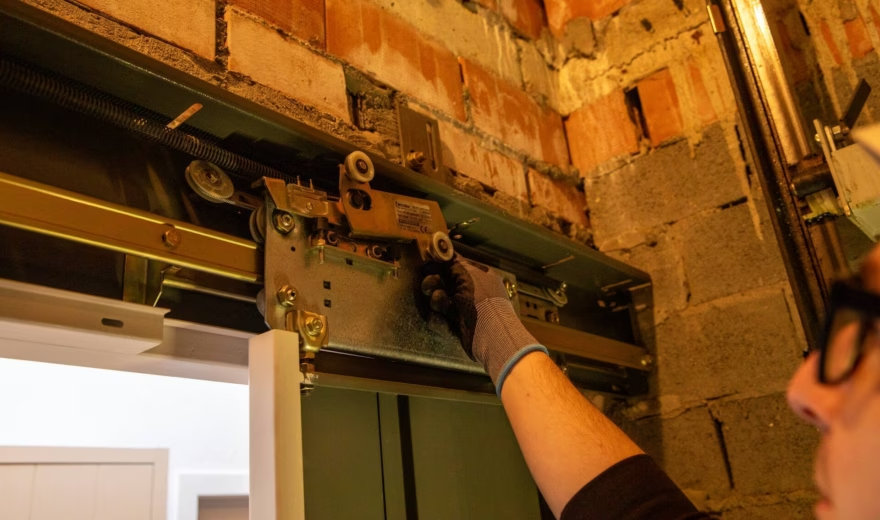
A technician is inspecting or adjusting a door mechanism in an existing masonry structure.
07 Jul 2026

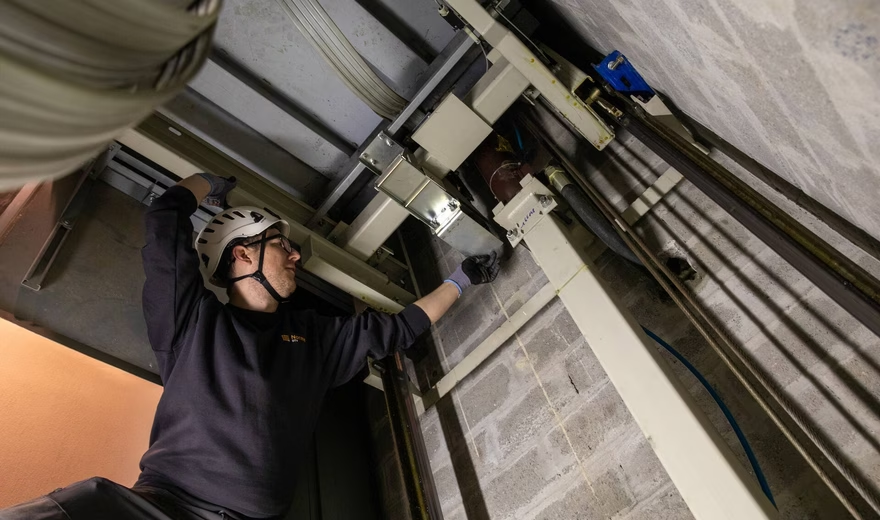
Want to ride the elevator with peace of mind? Normec BTV takes care of the inspection for you!

Passenger elevator inspections: preventive inspections, risk assessments, post-modernization inspections, or final inspections—Normec BTV can handle it all!

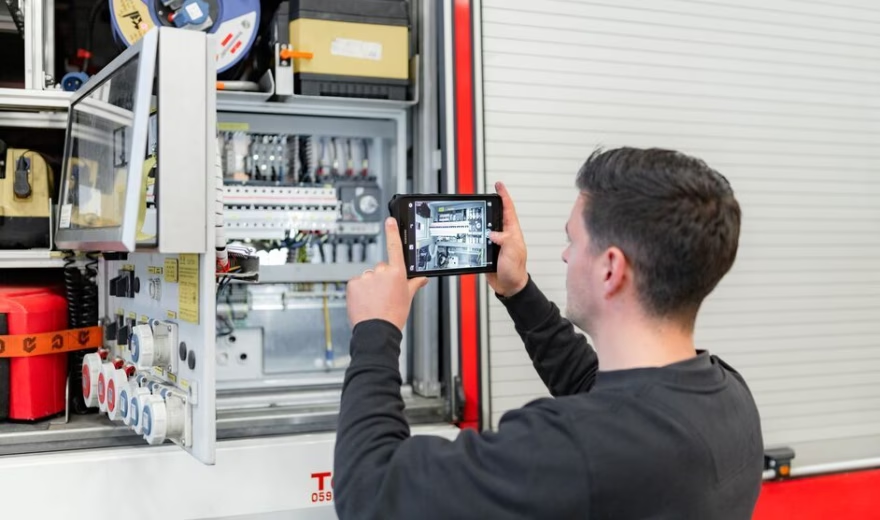
A technician inspects an electrical switchgear cabinet with a tablet during a technical installation inspection.
03 Mar 2026

Changes to AREI 2026

At first glance, the AREI changes taking effect on April 1, 2026, may seem technical. But for you as a prevention consultant, they are primarily strategic. Because in the event of an incident, people don’t just look at the installation. They look at your follow-up procedures and demonstrable compliance. The changes primarily fall into three areas. The question is: Have you already assessed them against your current installation?

A technician performs maintenance on an industrial door or elevator system in a mechanical room.
28 May 2024

Main Causes of “C” Findings in an Elevator Inspection

The five main causes of a “C” rating during the 3- or 6-monthly preventive inspections of elevators are as follows:

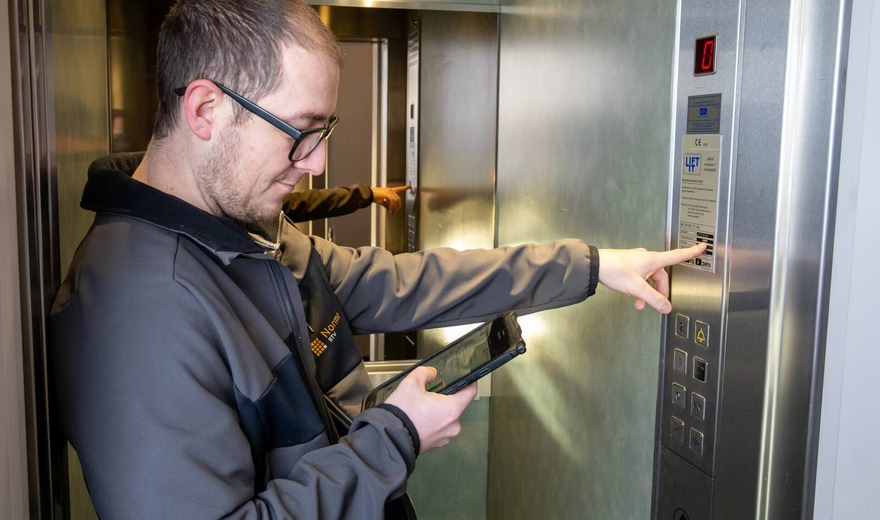
A person is conducting an elevator inspection and operating the control panel while holding a measuring device.
21 May 2024

A Week Following in the Footsteps of Our Inspector: Hitchhiking

A Week in the Footsteps of Youssef Meet Youssef Chennoufi, one of the key members of our Brussels elevator team. Together with his colleagues, he braves the daily hustle and bustle of the Brussels-Halle-Vilvoorde region to ensure you can step into an elevator with complete peace of mind. How does he do it? You’ll find out in this article about his workweek.

Related Services

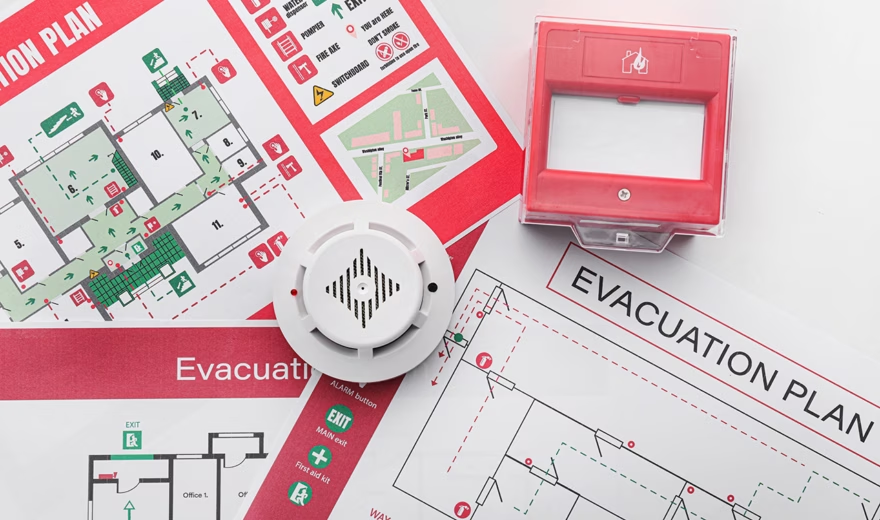
Smoke detectors, manual fire alarms, and evacuation floor plans for fire safety and emergency procedures in buildings.

Fire risk assessments

An individual operates a touchscreen on laboratory equipment to set up or monitor an analysis process.

Fire Alarm Testing and Inspections

Red industrial pipes with sprinkler heads in a fire protection system

Fire suppression inspections

A technical employee performs inspection or maintenance work on an industrial installation at height.

Hoisting and Lifting Equipment

A technical employee performs maintenance or inspection work on an industrial structure containing cables and technical components.

Lifting Accessories and Safety

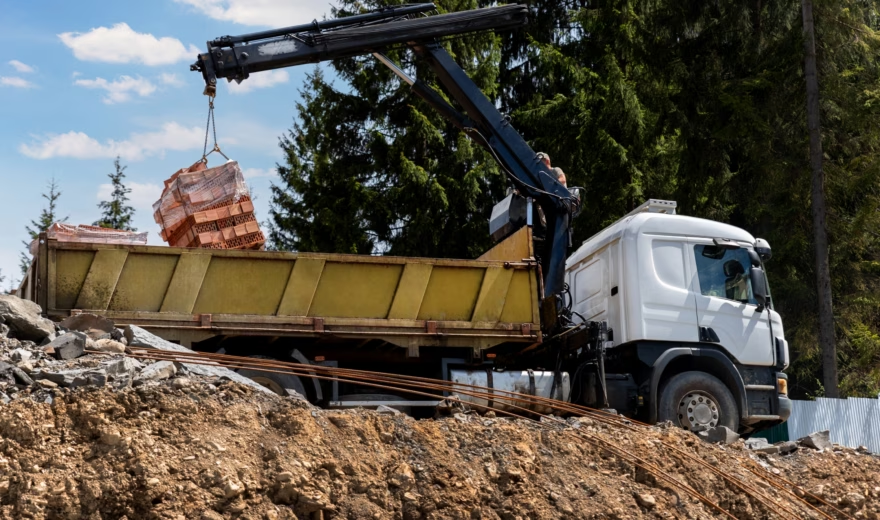
A truck with a crane is moving construction materials at a construction site.

Work equipment and treatment devices

A technical employee performs inspection or maintenance work at heights using an aerial work platform.

Storage and access systems