Health Risks of Lead in Water
Late last year, the Health Council of the Netherlands published a new report on the health risks of lead in drinking water. This brought significant attention to the problem of lead water pipes in homes built before 1960. In the Netherlands, this affects approximately 100,000 to 200,000 homes. Lead in drinking water is particularly dangerous for vulnerable groups such as children, pregnant women, and the elderly. Ingesting too much lead can have negative effects on the development of the brain and the nervous system.
How can you identify lead pipes?
As noted, lead pipes may be present in homes built before 1960. Homes built later use different materials. You can recognize lead water pipes by their gray color and somewhat irregular shape. The connections are not made with couplings but consist of a thickened section of the pipe itself. Sometimes water pipes are concealed, for example, under a floor. To be sure whether lead pipes are present, we can perform a test.
Do you have lead water pipes in your portfolio?
As a municipality or housing authority, you may also have to deal with the presence of lead water pipes in your own real estate portfolio. It’s important to locate and replace these pipes as soon as possible. After all, tenants, users, and residents rely on clean and safe water coming from the tap—whether it’s drinking water in a busy daycare center, a large school, a care facility for vulnerable residents, a housing complex, a city hall, or an office.
Due to the lockdown, many projects addressing lead in water have been temporarily put on hold. Now that many buildings and organizations are reopening and resuming operations, many municipalities and housing authorities are eager to get back to work on this issue.
What should municipalities or housing authorities do?
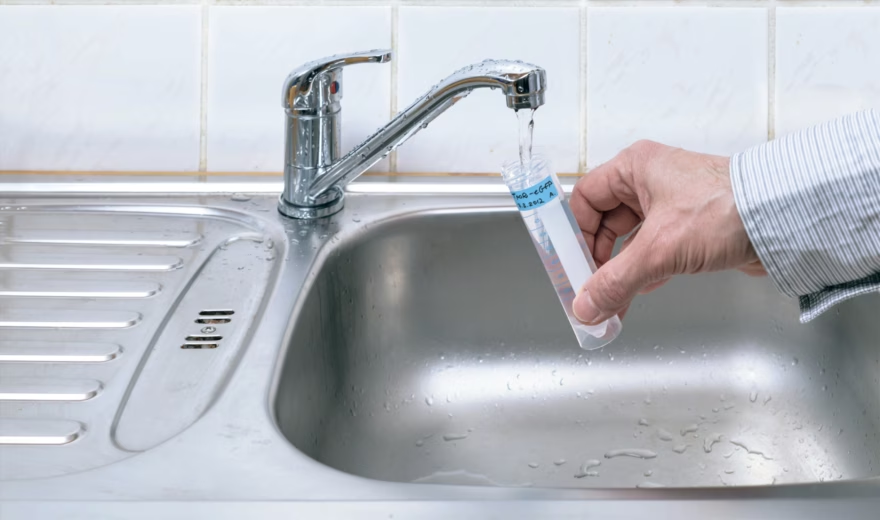
If you, as a municipality or housing authority, suspect the presence of lead pipes in your building or complex, we can test this for you immediately. After all, safe and healthy drinking water is of vital importance! As drinking water experts, we do everything we can to ensure that everyone can continue to safely use faucets and water pipes in your buildings—especially now.
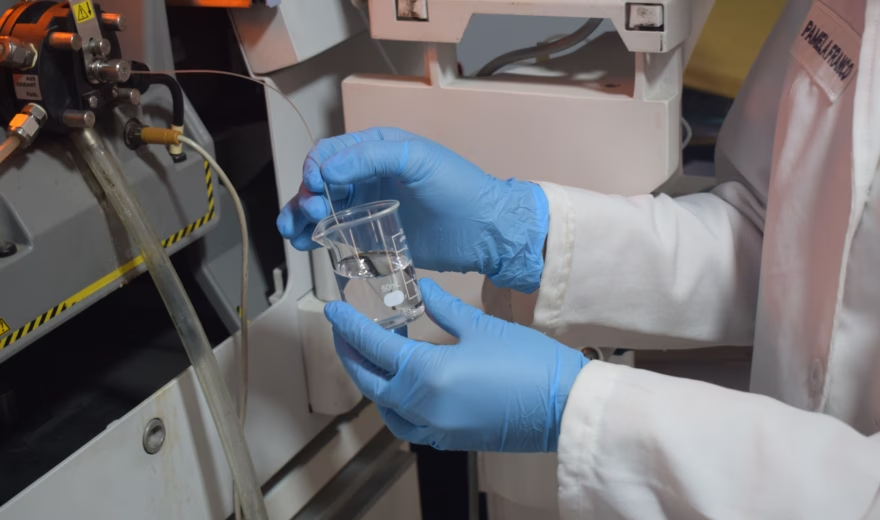
We are fully certified and analyze water samples directly in our accredited laboratory. This gives you immediate clarity on the possible presence of excessive lead particles in your drinking water. So you know if and where you need to replace lead pipes quickly. In addition, we’re happy to help by carefully and thoroughly answering residents’ questions and addressing their concerns. After all, it’s important to maintain a good relationship with your tenants and residents.