Accessibility links Skip to main content

Legionella Outbreak in Belgium: 16 Patients So Far, One Death

A Legionella outbreak near Ghent, Belgium, has already claimed one life. Fifteen other patients are in the hospital. One is in critical condition. The source of the infection is not yet known, according to Het Laatste Nieuws.

Continue reading
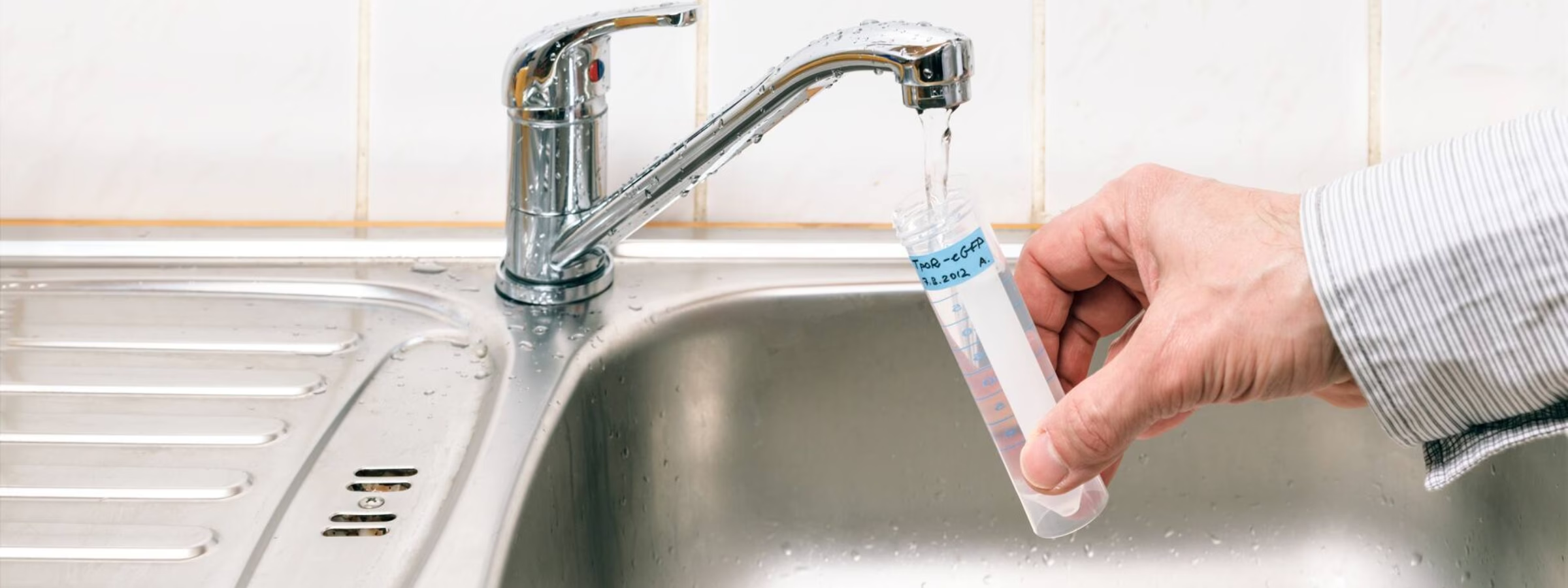
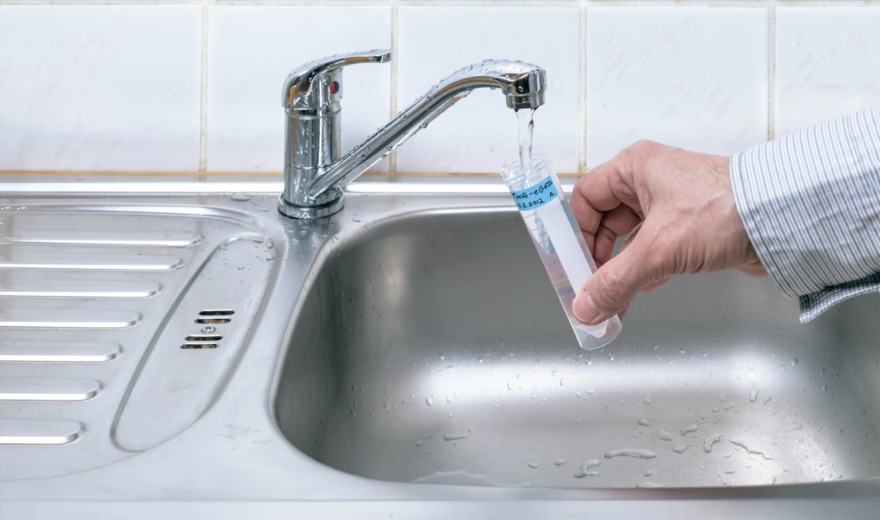
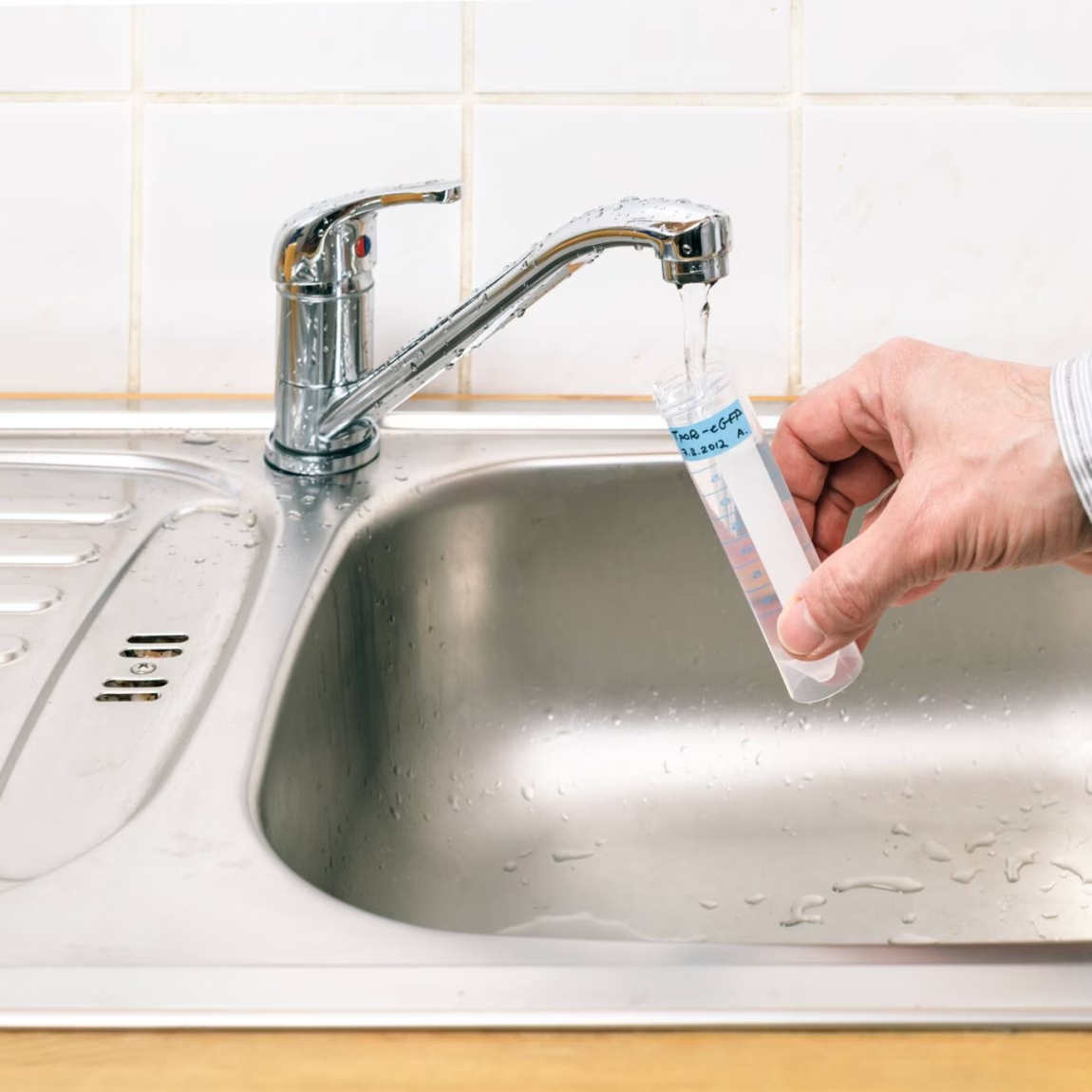
A water sample is collected from a kitchen faucet above a stainless steel sink.

The fatality is a 50-year-old man from Ghent. He was admitted to the hospital in critical condition last Monday. His skin was gray, he had a high fever, was coughing violently, and was very short of breath. A Legionella infection was not immediately suspected, a nurse told the Flemish news channel VTM last night.

By the next day, Hervé Férodet’s condition had deteriorated so severely that he had to be placed on a ventilator. The man in his 50s died last weekend. He lived alone in Ghent’s Kanaalzone and had diabetes.

Ghent Port
Férodet was the first of sixteen people hospitalized with a Legionella infection. The latest patient, for now, was admitted on Sunday. Six of the victims are over 65 and have a chronic illness or a weakened immune system. The youngest patient is 25, and the oldest is 90.

Most patients are from Evergem, and a few are from nearby Ghent. An investigation is underway to determine whether they visited the same location, but initial findings suggest this is not the case. However, they all come from the area surrounding the Port of Ghent.

Drinking Water
The Flemish Agency for Care and Health therefore believes that the source of the infection may well be a cooling tower for drinking water. “It’s possible that contaminated water mist spread into the open air and then settled somewhere,” a spokesperson told *Het Laatste Nieuws*.

The Agency has taken samples from the cooling towers of 17 companies in the Port of Ghent. The samples are currently being cultured. Because the bacteria must first be able to grow in such a water sample, the results are not expected until Monday. A Legionella outbreak has previously claimed lives in Belgium. In November 1999, five people died after contracting the infection from hot tubs at a trade show in Kapellen near Antwerp.

It is possible that contaminated water mist spread into the open air and then settled somewhere.

Nine months earlier, the Netherlands had been hit by a major Legionella outbreak. More than 200 visitors to the Westfriese Flora in Bovenkarspel were infected by water mist from two filthy hot tubs. Of the patients, 32 died from the effects of the infection.

In October 2014, a 69-year-old man from Enkhuizen died after becoming infected in a sauna in Avenhorn, North Holland. Legionella is a bacterium found in water. Infection occurs through inhalation of contaminated water droplets. Push-button showers in swimming pools and hot tubs are particularly likely to spread the bacteria. The bacterium lives in groundwater, surface water, and drinking water and thrives in stagnant water at temperatures between 25 and 45 degrees.

Not everyone gets sick
The bacterium can cause Legionnaires’ disease, a severe—and sometimes fatal—form of pneumonia. Not everyone gets sick. In the Netherlands, approximately 300 people contract this form of pneumonia each year. Risk factors include being over forty years of age, smoking, excessive alcohol consumption, and a weakened immune system.

Source: AD
Looking for an independent inspection partner?

Normec offers expert and independent inspections to ensure the safety of buildings, systems, and facilities.

Contact us

Complete the form and we will contact you as soon as possible.
Naam
Privacy Policy 

Request a quote

Fill out the form and we will contact you shortly.

Naam
Privacy Policy 

Related Articles

20 Jul 2026

Why Water Quality Is Crucial for Your Central Heating System

In building management, water quality plays a crucial role in the proper functioning of systems. Water is the foundation of every central heating system and directly affects comfort, performance, and operational continuity. If the water composition is not optimal, scale, corrosion, and contamination can occur. This leads to higher costs and increased maintenance.

Laboratory glassware, including measuring cups, pipettes, and test tubes, submerged in water and visible in a testing or analytical setting.
29 Apr 2026

Proposed Legislative Amendment on Legionella: What’s Happening and What Can You Expect?

The rules for Legionella prevention may change. Here’s what we know so far. A development is underway in Legionella prevention that may lead to changes in legislation. This process has been ongoing for about five years and is based on evolving scientific insights. One of the potential major changes is a shift in focus from broad-based Legionella sampling to a more targeted approach focused on Legionella pneumophila. Understandably, this raises questions. What direction is this heading in, and what might this mean for organizations working to ensure safe water? At Normec Aquaserva & Kalsbeek, we are closely monitoring these developments. In this article, we share the most important insights currently available.

A faucet with running water above a sink in a bathroom.
22 Jun 2021

Detecting lead water pipes

Due to the COVID-19 crisis, public health is currently the single most important issue facing the world. Various organizations are focusing on the importance of health both during and after the further easing of the lockdown. We, as a consulting firm, are also actively engaged in this effort—particularly in ensuring the safe use of buildings and water systems. After all, safe and healthy drinking water is also essential for good health.

A person in a lab coat is recording measurement data on a form next to laboratory equipment.
21 Jun 2021

Focus of the SZW Inspection 2021: Healthy and Safe Working Conditions

In 2021, working safely and healthily is more important than ever. The COVID-19 crisis has made this abundantly clear. To reinforce this, the SZW Inspectorate will once again focus on compliance with core occupational health and safety obligations in 2021. Through active inspections, the Inspectorate will remind employers of the importance of properly implementing the Risk Inventory and Evaluation (RI&E), the action plan, and the basic contract as the foundation for a safe and healthy work environment.

A person drinks a glass of water in a well-lit indoor setting.
03 May 2021

How harmful is lead in drinking water, and what can you do about it?

Homes built before 1960 may still have lead pipes. In the Netherlands, there are still between 100,000 and 200,000 homes with lead pipes (Health Council Report, Nov. 2019). This can cause lead to enter your drinking water. Even with new pipes in newly built homes, lead can temporarily end up in the drinking water. These lead particles are harmful to health, especially for pregnant women and young children. Just how harmful is lead, and what can you do about it?

An empty swimming pool in which the lane lines on the bottom are clearly visible.
26 Apr 2021

Safe Swimming Waters and the New Environment Act

With the implementation of the new Environment Act, pool owners will face changes and new rules in swimming water regulations. Many detailed regulations are being phased out. As a result, you, as a pool owner, will have more room for ideas and innovations, as well as greater freedom of choice in your approach.

Related services

Two employees are inspecting an industrial facility and recording inspection data using a tablet.

Water Safety and Compliance

A water sample is collected from a faucet for water quality analysis.

Water Quality & Testing

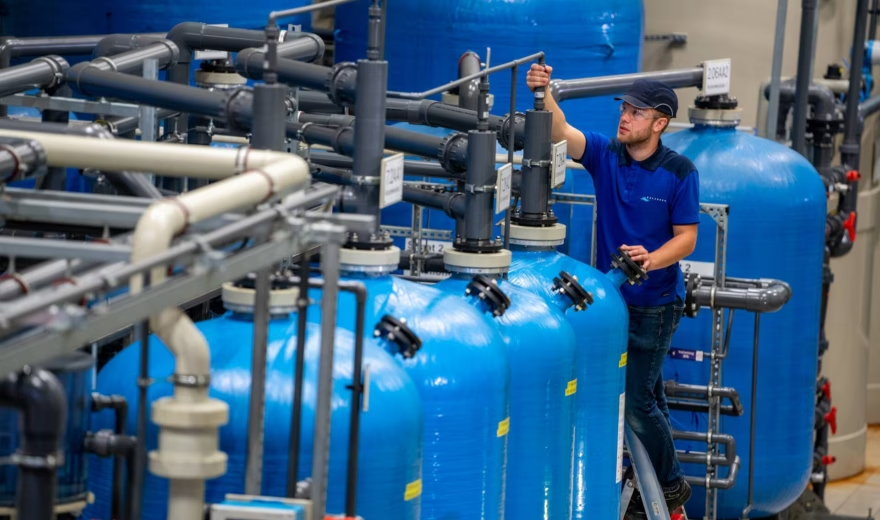
A technician is performing inspection and maintenance work on a water treatment plant equipped with piping and filter tanks.

Water Treatment and Systems

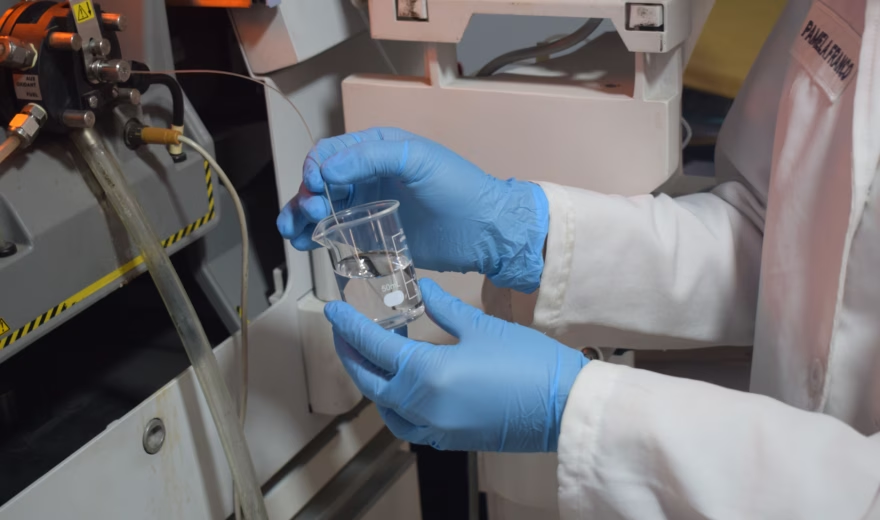
A water sample is examined in the laboratory to analyze water quality and microbiological parameters.

Monitoring and Management