How Does a Water Mist System Work?
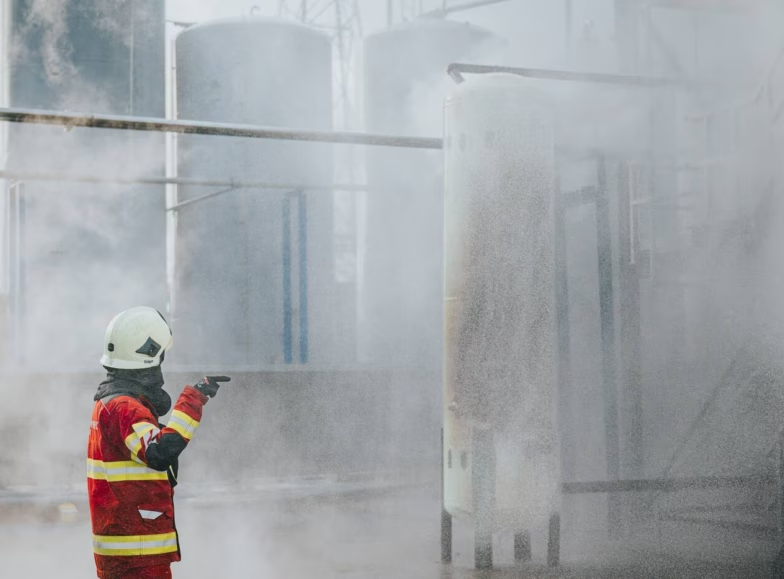
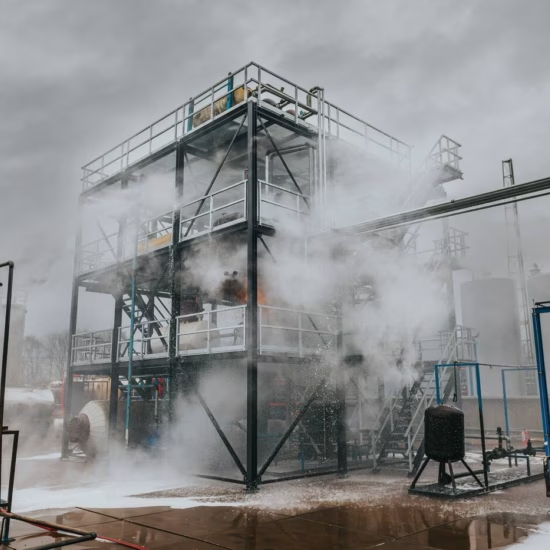
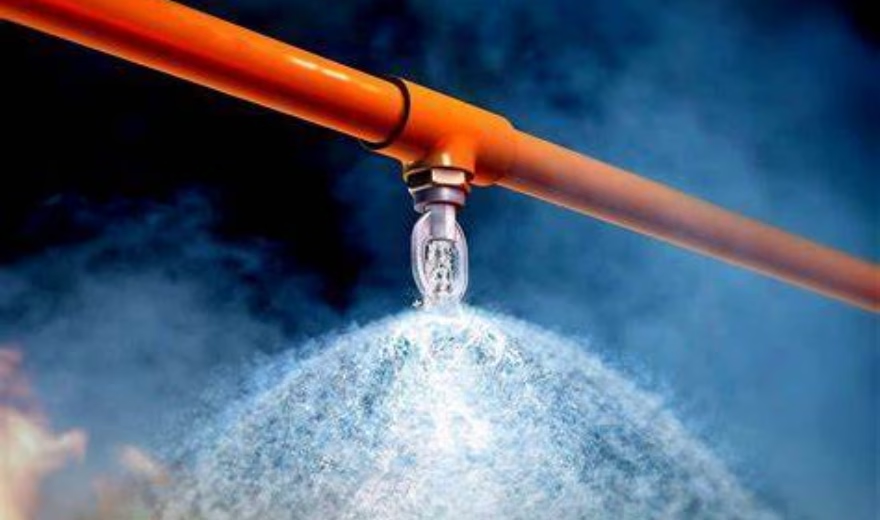
Buildings must be protected against fire and its consequences. A water mist system is one way to achieve this. The system atomizes water into very small droplets. This creates a strong cooling effect, causing the temperature to drop. In addition, water mist displaces oxygen.
There are two types of water mist systems:
- Low-pressure systems: operate at pressures up to 16 bar in the piping network and can be combined with traditional sprinkler systems.
- High-pressure systems: operate at pressures between 40 and 200 bar. Due to the higher pressure, they use less water than traditional sprinkler systems. The system also requires less maintenance.
When is an inspection required?
Are you using a water mist system as an equivalent solution to a requirement in building codes? If so, the system must always have an inspection certificate in accordance with the CCV inspection schedule. You can also have an inspection performed voluntarily. For example, if you want assurance regarding the operation or condition of your system. Or if you need an independent second opinion.
What do we check during a water mist inspection?
During the inspection, we assess whether your water mist system meets the established objective. This objective must be traceable to the basic design, such as the DIOM.
We inspect the system, test the associated control systems, and also assess the structural and organizational provisions. This includes the management of the system and the storage of materials. The exact inspection points are specified in the CCV inspection schedule.
What are the benefits of having your water mist system inspected?
- You’ll know whether your system meets the established objectives
- You’ll gain clarity on the technical, structural, and organizational provisions
- You have your system inspected by expert inspectors
- You can demonstrate that your fire protection system meets the required standards
- With periodic inspections, you can monitor the operation of your system
Inspection Certificate for Your Water Mist System
During the inspection, we assess the system, structural provisions, and organizational measures. Are all components in order? If so, you’ll receive an inspection certificate from us. Among other things, this allows you to demonstrate to your insurer that your fire protection system meets the relevant requirements.
Why choose Normec?
At Normec, we combine expertise with practical experience. Each of our inspectors has their own area of specialization and broad professional knowledge. This ensures a thorough assessment of your water mist system. In addition, we are ISO 17020-accredited, which guarantees the quality and independence of our inspections.
Periodic inspection of your water mist system
The initial inspection is followed by a periodic re-inspection. This allows us to verify that the system is being properly maintained and that your system still meets its original design specifications. The inspection takes place annually, unless different requirements apply to the specific building or facility.
This allows you to monitor the performance of your water mist system and continue to demonstrate that your fire protection meets the required standards.
Have your water mist system inspected
Related services
Frequently Asked Questions About Water Mist Inspections
-
Een watermistinstallatie is een brandbeveiligingssysteem dat water vernevelt tot zeer kleine druppels. Hierdoor ontstaat een sterk koelend effect en wordt zuurstof verdrongen. Dit helpt om een brand te beheersen.
-
Wanneer je een watermistinstallatie gebruikt als gelijkwaardige oplossing voor een eis uit de bouwregelgeving, moet deze beschikken over een inspectiecertificaat volgens het CCV-inspectieschema.
-
Na de eerste inspectie volgt een periodieke inspectie. Deze vindt doorgaans jaarlijks plaats. Afhankelijk van de eisen voor het betreffende gebouw of object kan een andere inspectiefrequentie gelden.
-
We beoordelen of de installatie voldoet aan de vastgestelde doelstelling. Daarbij controleren we de technische installatie, testen we de aansturingen en beoordelen we de bouwkundige en organisatorische voorzieningen.
-
Een lagedrukinstallatie werkt met een druk tot 16 bar. Een hogedrukinstallatie werkt met een druk tussen 40 en 200 bar. Door de hogere druk is minder water nodig dan bij traditionele sprinklerinstallaties.
-
Als alle beoordeelde onderdelen in orde zijn, ontvang je van Normec een inspectiecertificaat. Hiermee toon je onder andere aan je verzekeraar aan dat je brandbeveiliging aan de gestelde eisen voldoet.
-
Ja. Ook wanneer een inspectie niet verplicht is, kun je deze laten uitvoeren. Bijvoorbeeld om zekerheid te krijgen over de werking en staat van je installatie of voor een onafhankelijke second opinion.