It’s hard to imagine any work environment today without electrical appliances and electronic systems. But wherever electricity flows, there is also a potential hidden hazard. Those who have the condition of their electrical equipment inspected regularly and professionally are on the safe side. We’ll show you what matters most.
First, the good news: The number of fatalities from electrical accidents—which is regularly tracked by the Energy, Textiles, Electrical, and Media Products Workers’ Compensation Association (BG ETEM)—has decreased dramatically over the past few decades, despite a steady increase in the use of electric devices. This is almost certainly due to the increasingly sophisticated safety regulations for electrical devices. However, accidents—some of them fatal—caused by electricity still occur. These accidents can not only have tragic consequences—leading to serious injuries or even loss of life—but they can also result in significant financial burdens if insurance coverage does not apply. This can be the case, for example, if employers cannot provide proof of a current “E-Check.”
However, such nightmare scenarios can be avoided by having your electrical equipment and systems inspected regularly and professionally—a process also known as an “E-Check.” “Professionally” means that the inspection is conducted in accordance with DGUV regulations. The experts at GP-Prüfservice have summarized how this works and what you need to keep in mind in this blog post.
Contents of this article
- Stay on the Safe Side with the E-Check
- Experienced professionals pave the way for safe electrical systems
- Regulations for Ensuring Safety
- E-Check or DGUV V3 Inspection—What’s the Difference?
- E-Check: A Four-Step Inspection
- Which devices should be inspected, when, and how often?
- Summary: Safety Through Professional Inspections
- Frequently Asked Questions
Stay on the Safe Side with the E-Check
If you run a business, people are likely coming and going from your facilities every day—not just employees, but also guests, service providers, or customers who may be visiting you. In theory, all of these people are exposed to a certain degree of risk if there are electrical devices on your premises—and that’s the case even if you simply have a coffee maker in the kitchen or use computers and printers. The experts at GP-Prüfservice repeatedly find that many business owners don’t even know which devices need to undergo a regular electrical inspection. And they’re also unaware of the potential danger posed by electrical devices: a damaged cable, an overheated battery, a faulty switch—what might seem like minor issues can cause major damage. The same applies to production facilities that house large electrical systems, which are frequently in operation and therefore subject to heavy wear and tear. And, unlike private individuals, as a business owner, you are actually required to have these electrical inspections performed regularly to ensure workplace safety.
With an E-Check, you’re on the safe side, because a qualified technician will thoroughly inspect your electrical equipment and systems, document the results, and point out any potential defects. If your electrical installations pass the E-Check, you’ll receive a sticker and the test results will be documented. This provides you with proof in the event of damage, allowing you to deal with your insurance company with peace of mind.
Experienced professionals pave the way for safe electrical systems
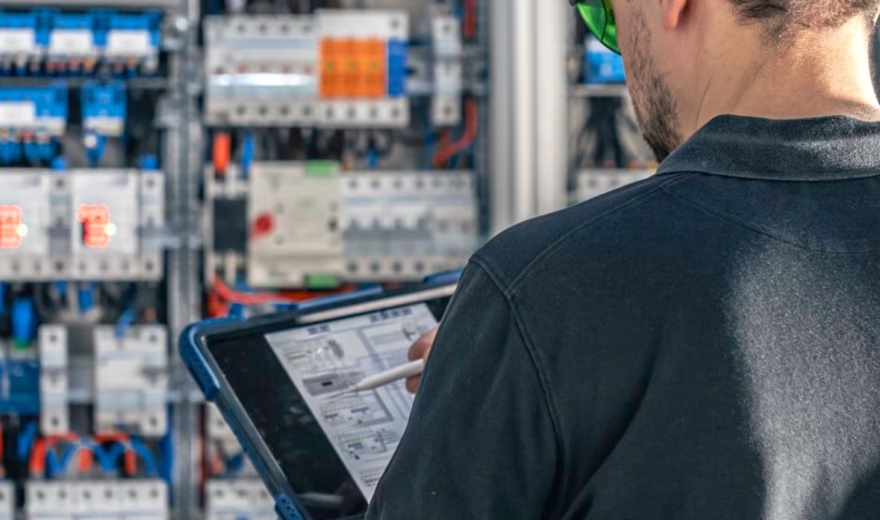
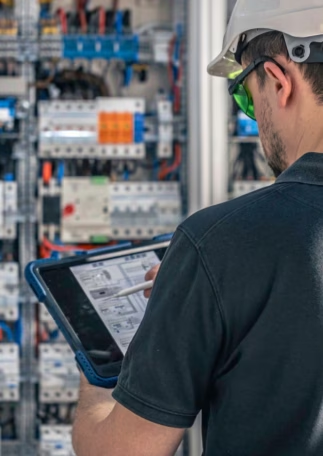
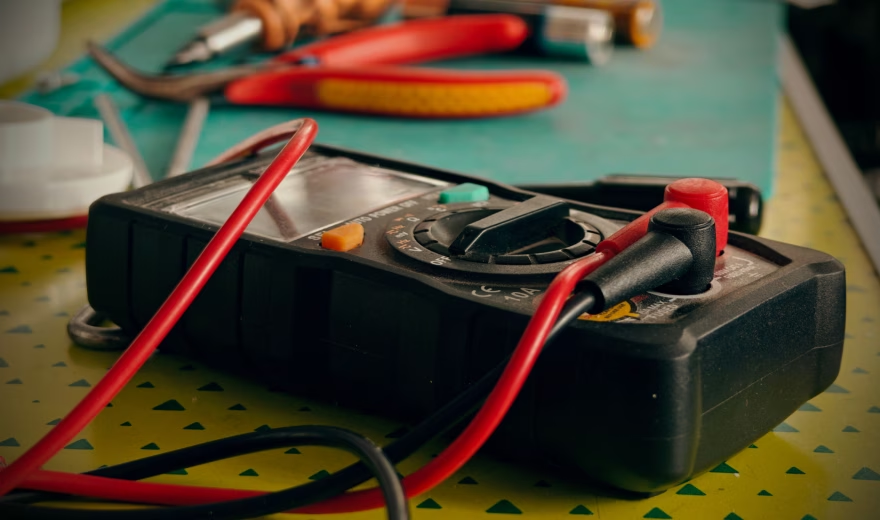
Of course, you can always handle your electrical devices and systems with care and keep an eye out for visible defects. However, it is essential and required by law that an E-Check—which must be conducted in accordance with specific regulations—be performed by an experienced licensed electrician. Even if you are thoroughly familiar with the standards DIN VDE 0701-0702, DIN VDE 0105-100, or DIN VDE 0113-1, the inspection (in the case of portable devices) must always take place at least under the direction and supervision of a licensed electrician. For permanently installed equipment, even that is not sufficient: In this case, the electrical inspection must be performed by a qualified electrician. In addition to experience and expertise, the right equipment—in the form of suitable measuring and testing instruments—also plays an important role.
Therefore, be sure to choose a qualified professional with the necessary experience to perform your electrical inspections in accordance with DGUV V3. GP Prüfservice uses only trained electricians and state-of-the-art testing equipment for all its electrical inspections.
Regulations for Safety Protection
But what does “DGUV V3” actually mean? The German Social Accident Insurance (DGUV) has issued binding legal standards designed to protect safety and health in the workplace. This, therefore, pertains to occupational safety. One of these regulations, DGUV Regulation 3, specifically addresses electrical systems and equipment. It also specifies the inspection procedures and inspection intervals required to ensure the safety of these systems.
E-Check or DGUV V3 Inspection—What’s the Difference?
This explanation also clears up another frequently asked question: What is the difference between an E-Check and an inspection in accordance with DGUV V3? The answer: There is no difference, since the two are directly related! An E-Check is simply another term for an electrical inspection. The accident prevention regulation sets the framework; the “E-Check” is the actual inspection. Think of the “E-Check” rather as an umbrella term for all inspection procedures involving electrical equipment.
No matter which term you use for the inspection—GP Prüfservice is the right place to go if you want to have your electrical installations inspected.
E-Check: A Four-Step Inspection
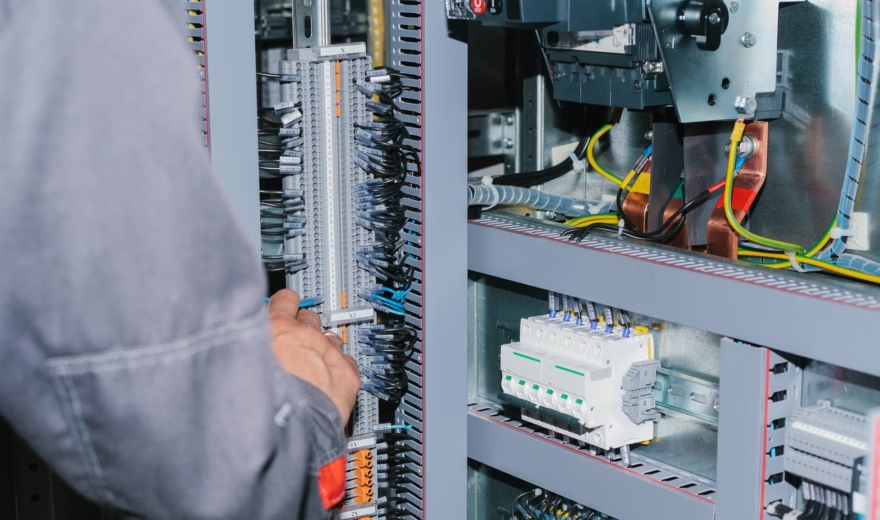
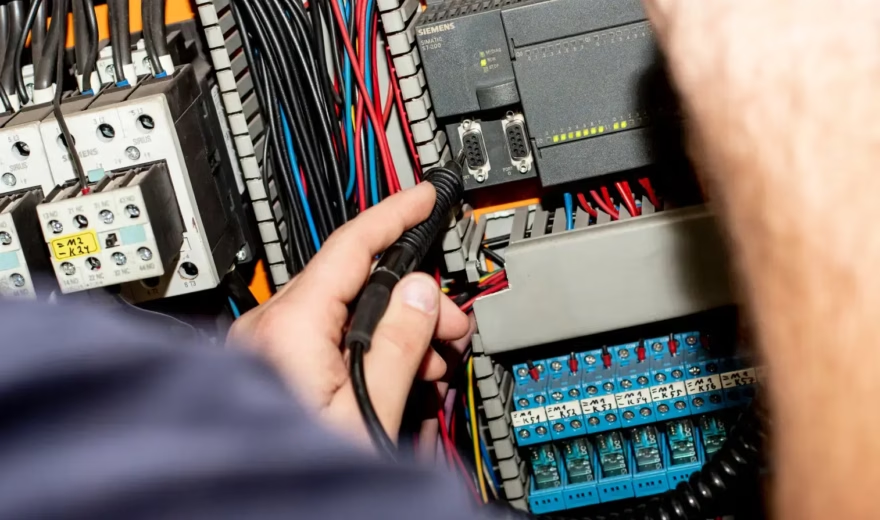
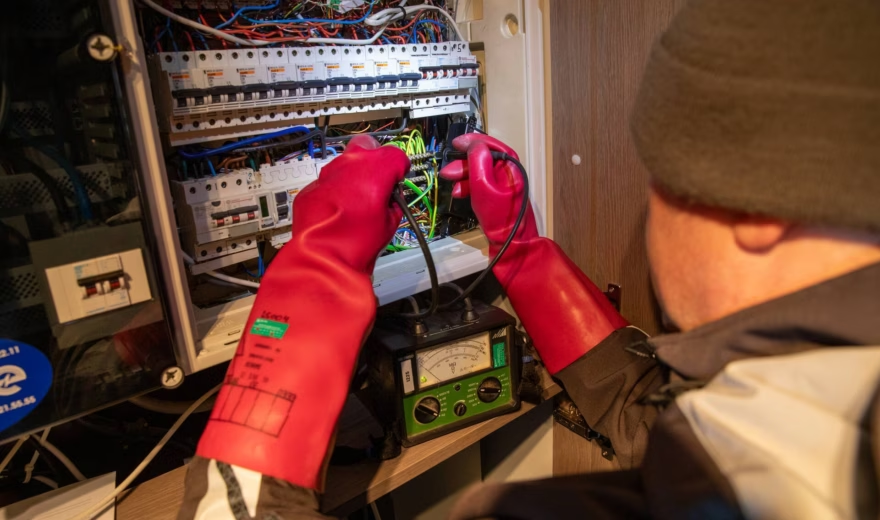
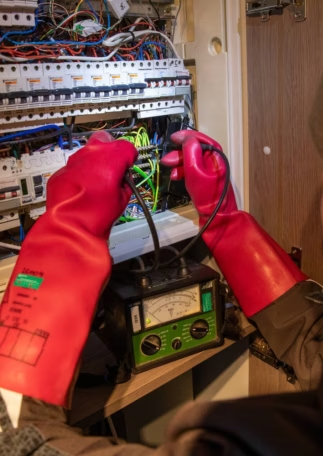
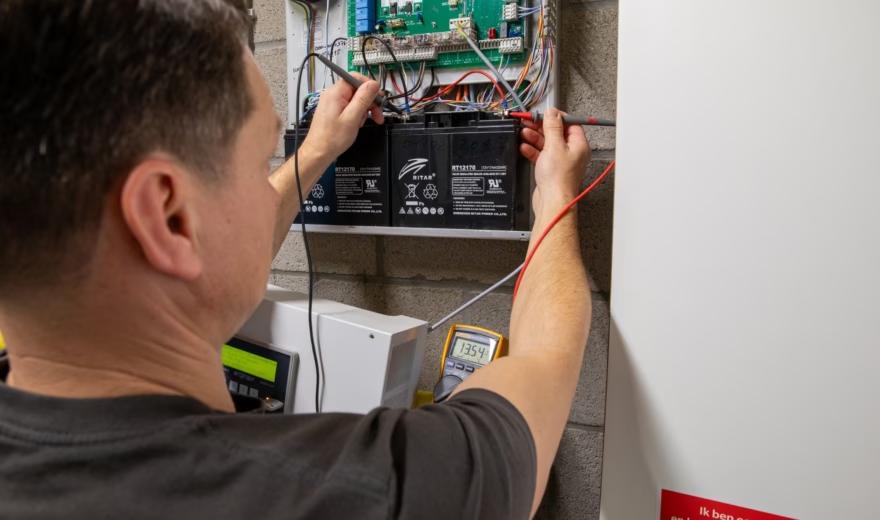
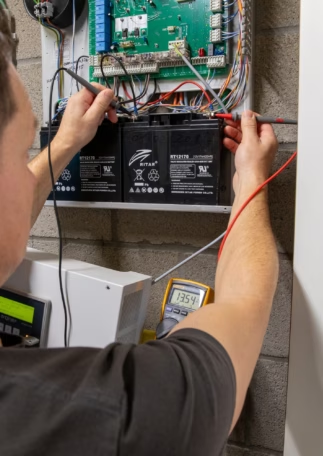
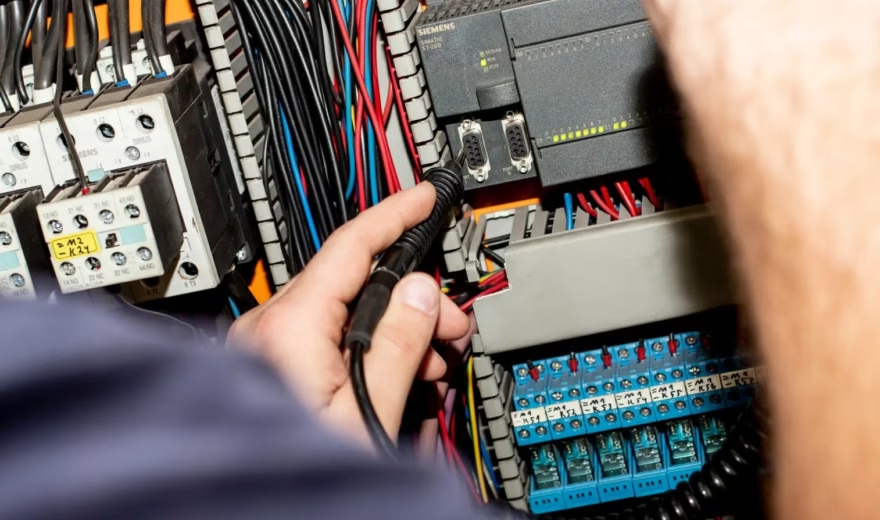
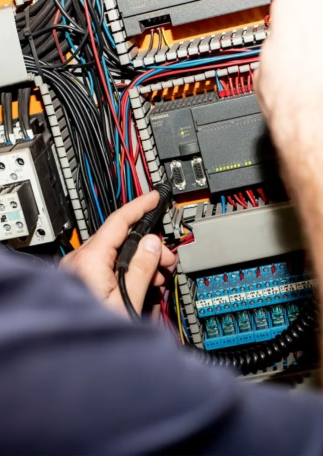
So how does the E-Check work? The licensed electrician who performs the inspection at your location will first conduct a visual inspection. This means they’ll check for any visible damage, defects, or other abnormalities that require further investigation. Such visible defects could include, for example, damaged cables or fuses. Improper use of electrical appliances can also be identified during this inspection. Measurements provide information on whether all electrical circuits are properly wired and functioning. For example, the insulation resistance or equivalent leakage current is measured. As part of the functional test, the qualified electrician ensures that all electrical components are functioning properly and meet all current technical requirements. Upon completion of the inspection, you will receive not only an inspection sticker but also an inspection report documenting all results. You should keep this document in a safe place, as it may become very important to you in the event of liability issues. If any devices fail the inspection, you must not continue to use them. It’s best to discuss directly with the qualified electrician whether a repair is worthwhile or if a new purchase is necessary.
Which devices should be inspected, when, and how often?
Don’t view an E-Check as a necessary evil, but rather as an important measure to protect yourself. After all, no one wants to be held responsible for potential damage. Therefore, be sure to adhere to the specified inspection intervals. As a business, you are responsible for determining these intervals as part of your risk assessment. The experts at GP-Prüfservice will be happy to conduct this risk assessment for you.
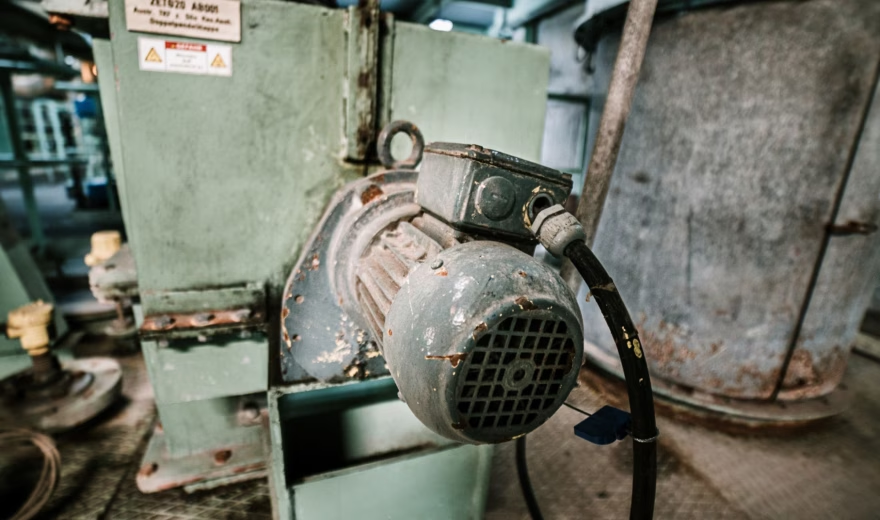
The specific intervals applicable to your situation will be determined by the qualified electrician on a case-by-case basis, as inspection intervals are not specifically defined for every piece of equipment. Several factors play a role here: Is the equipment “fixed” or “portable”? In what environment (office, construction site, production facility, public space…) is the electrical device located? Is the device in continuous operation, or is it used only rarely? The regulation provides guidelines and inspection intervals as a reference, such as the requirement that stationary electrical systems must be inspected at least every four years, while a guideline of 6 months applies to portable electrical equipment. However, completely different inspection intervals may apply to individual components of a system. Therefore, we recommend that you work with your certified specialist to determine the inspection intervals as part of a hazard assessment—both for your own protection and to comply with accident prevention regulations.
Summary: Safety Through Professional Inspections
So let’s recap: An E-Check assesses the condition of your electrical installations and offers you various benefits: protection in liability matters and with your insurance provider, safety for life and limb, and an extended service life for your equipment. A regular inspection—possibly combined with maintenance or repairs—can also have a positive impact on your energy costs.
The qualified specialists at GP Prüfservice are thoroughly familiar with the requirements of the DGUV V3 inspection and would be happy to perform a professional E-Check at your company, including a visual inspection, measurements, and functional testing. Contact us now and take advantage of our free initial consultation and free test inspections.