Accessibility links Skip to main content

Inspection of Stationary Electrical Systems

Fixed electrical installations must be inspected by a qualified electrician after commissioning, after modifications, and at regular intervals. With more than 50 years of experience in industrial services, GP Prüfservice knows exactly what matters.

Continue reading
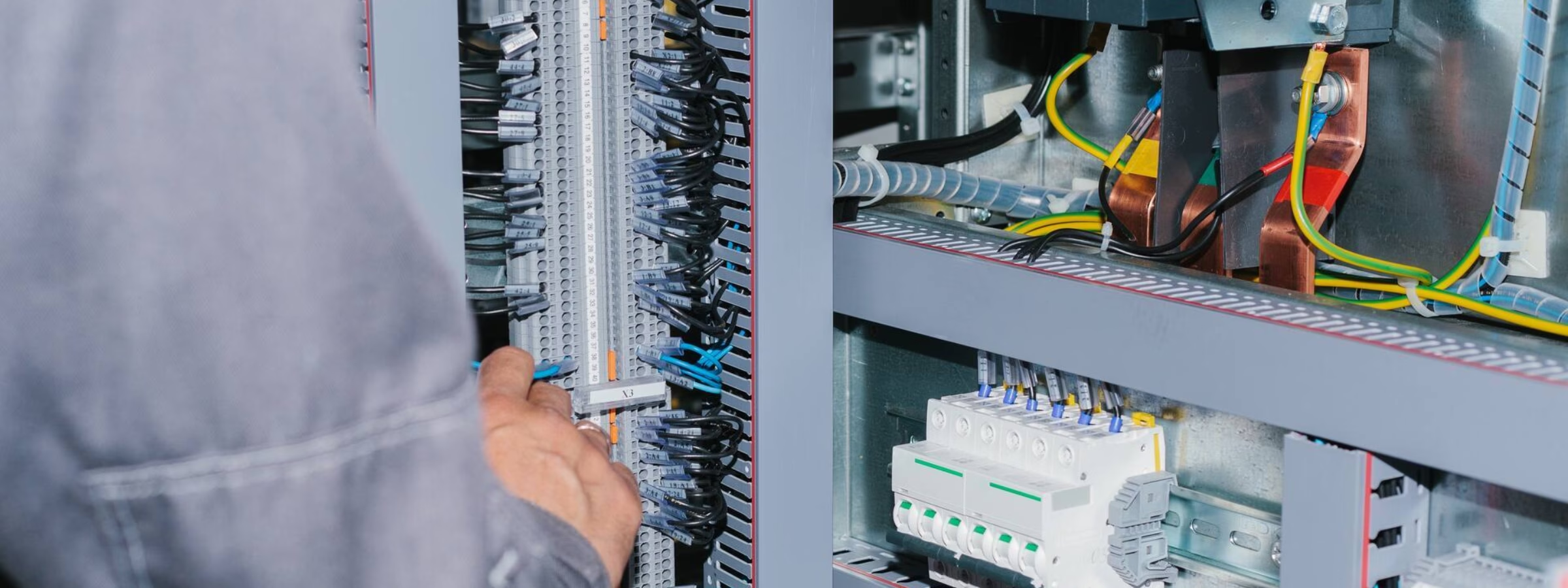
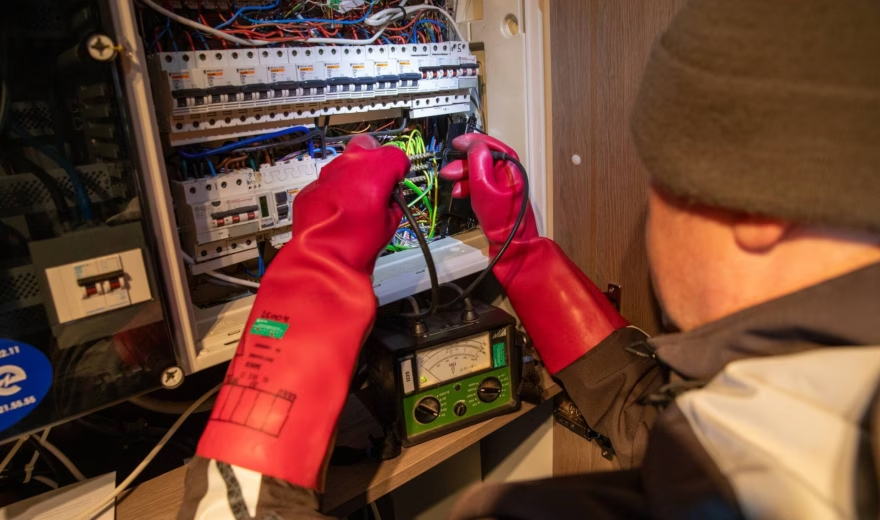
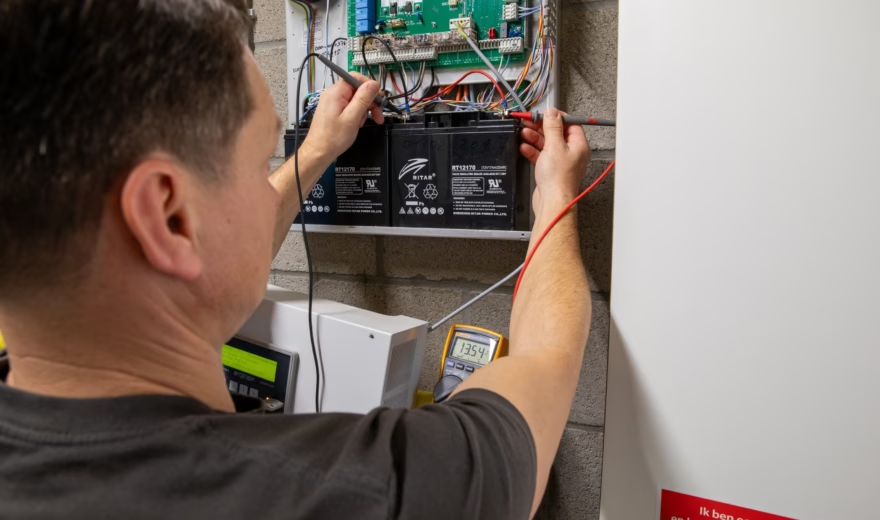
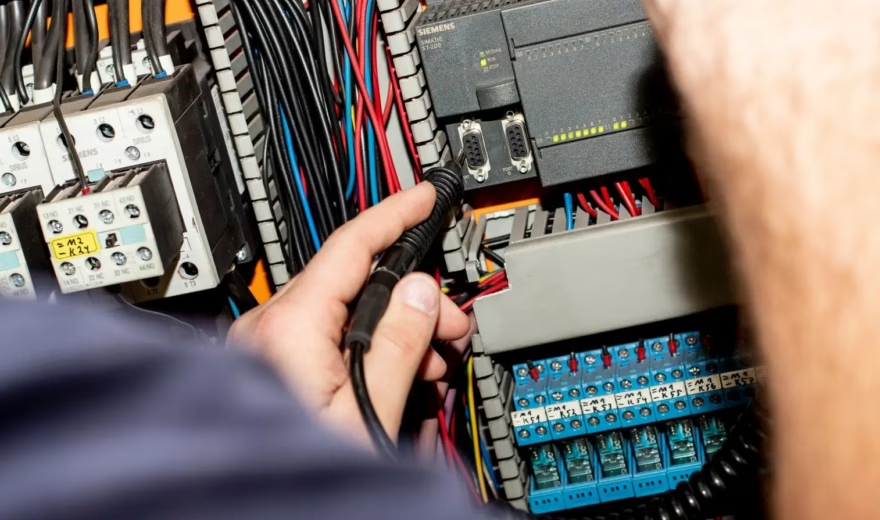
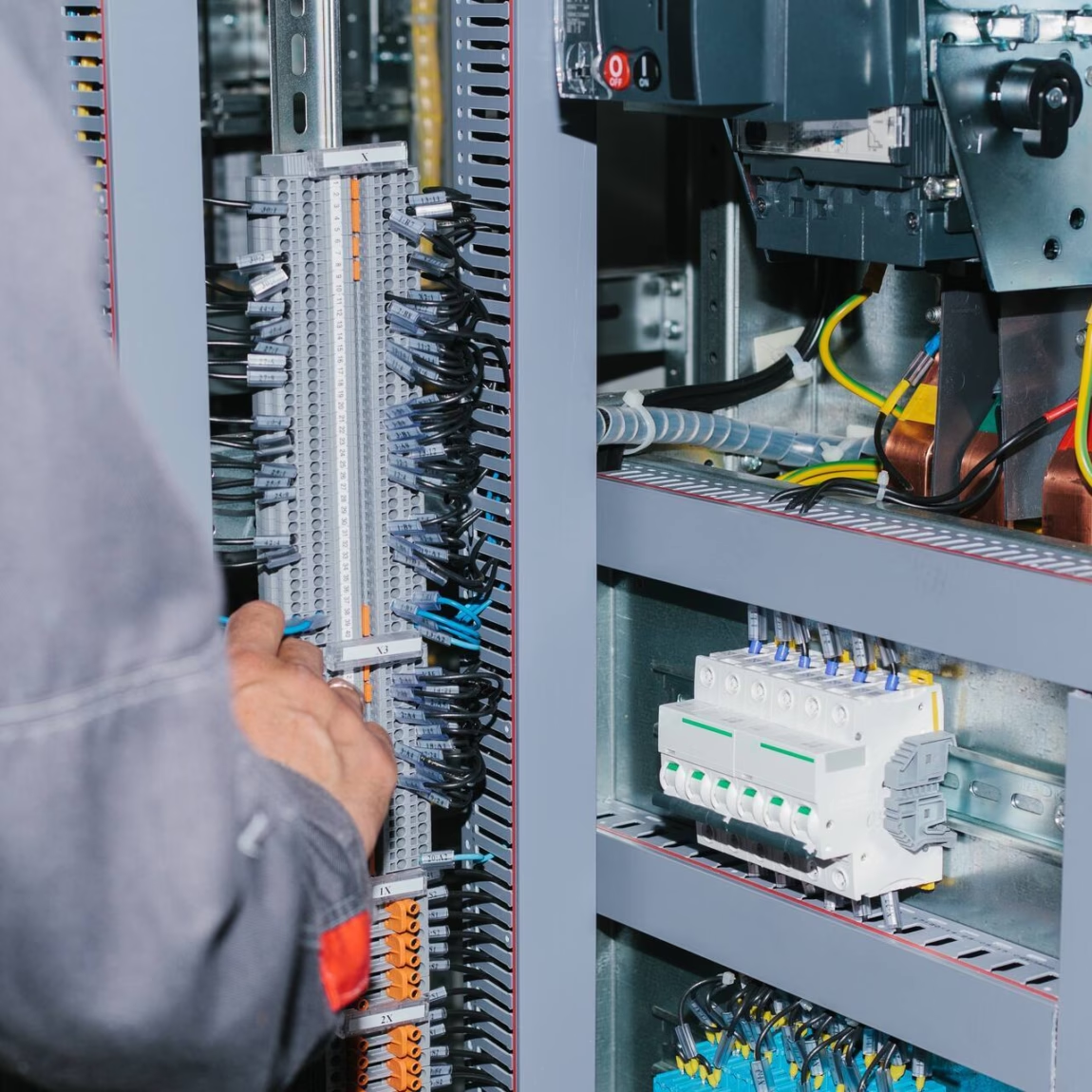
A technician performs inspection or maintenance work on an open electrical control panel.

GP Prüfservice GmbH is your expert service provider for the inspection of stationary electrical systems. With more than 50 years of experience in industrial services and a team of qualified professionals, we ensure that your machines and equipment are safe.

Key Points at a Glance

The inspection of stationary electrical systems is regulated by law in Germany and applies to all companies that employ at least one employee. Stationary electrical systems must be inspected by a licensed electrician after commissioning, after modifications, and at regular intervals; the results must be documented.

  • The inspection of fixed electrical installations is regulated by law in Germany and applies to all companies that employ at least one employee.
  • Fixed electrical installations must be inspected by a qualified electrician after commissioning, after modifications, and at regular intervals; the results must be documented.
  • For most fixed installations, the inspection interval is 4 years, though there are exceptions.
  • Regularly inspecting and maintaining your systems saves costs in the long run.
  • Failure to comply with inspection intervals may result in penalties. Additionally, insurance coverage may be at risk.

Contents of this article

Free Initial Consultation


Your Benefits with GP Prüfservice

50 years of experience in industrial services, a qualified team, transparent pricing, and state-of-the-art equipment—we leave nothing to chance. Get to know us so that your inspection of stationary electrical systems is a success.

  • Test reports immediately: We guarantee that you’ll receive all test reports in a legally compliant format no later than 2 days after your job is completed.
  • No untrained staff: We rely exclusively on trained electrical professionals
  • 50 Years of Experience: Our roots lie in industrial maintenance. Our focus on industrial companies pays off—for you!
  • More than 1 million inspections: We’ve already conducted more than 1 million inspections of electrical equipment, systems, and devices for our satisfied customers.
  • Transparent costs: Travel, labor, inspection stickers, inventory lists, and reports—everything is included in our inspection price. There are no hidden costs. Guaranteed.
  • Free trial inspections: Would you like to see the quality of our inspections for yourself beforehand? We’d be happy to conduct free trial inspections during a visit to your company.

‍

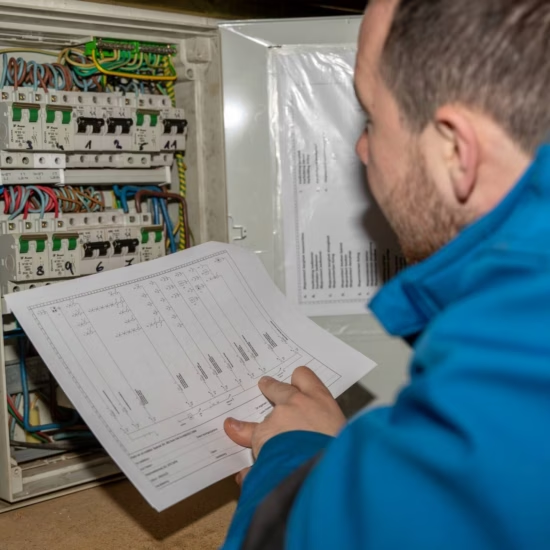
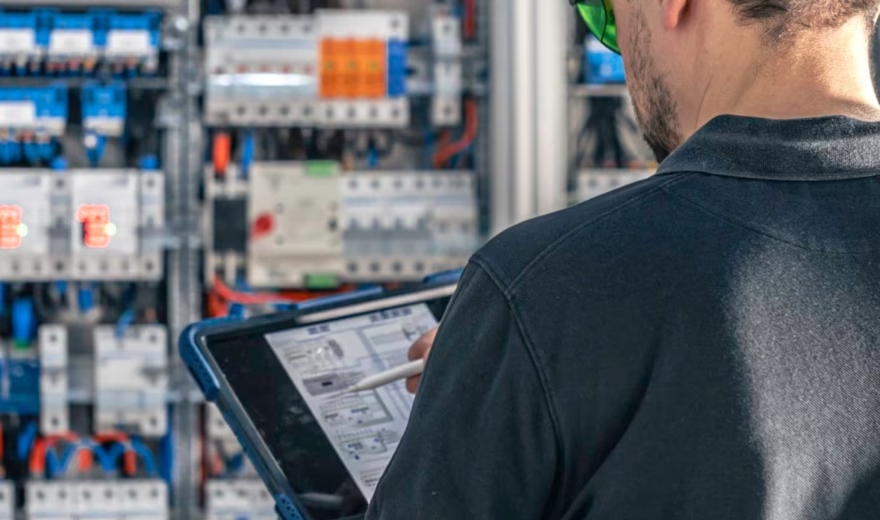
An inspector is inspecting an electrical distribution panel based on an inspection report.

How does an inspection take place?

The inspection of electrical systems can vary depending on the type of system. However, DIN VDE 0105, which governs the operation of electrical systems, generally stipulates that the following steps must be performed during every inspection:

  • Visual inspection
  • Measurement of protective conductor resistance
  • Measurement of insulation resistance
  • Functional test
  • Evaluation and documentation of the inspection

Learn more about the most important regulations and deadlines for testing stationary electrical installations

In our guide, the industrial service experts at GP Prüfservice GmbH in Dortmund explain what you need to keep in mind when inspecting fixed electrical installations. What deadlines must you meet? Who is authorized to perform inspections of fixed installations? What are the benefits of preventive maintenance for electrical systems? And what exactly is the difference between “fixed” and “movable,” “stationary” and “non-stationary,” and “system” and “equipment”?

Definition: What Is a Fixed Electrical System?

For those who aren’t deeply involved with electrical systems themselves, it’s often difficult to distinguish between fixed, stationary, or non-stationary systems. The question of what constitutes electrical equipment versus an electrical system also quickly causes confusion among laypeople. Let’s therefore begin with the definition of a fixed electrical system and how it differs from similar terms.

System or Equipment?

Accident prevention regulations generally refer to fixed or portable equipment—depending on whether a piece of equipment is permanently installed or movable. When it comes to electrical systems, the DGUV distinguishes between stationary and non-stationary systems. In common usage, however, the term “fixed installation” has become widely accepted—which is not really a problem, since “ortsfest” is simply the German translation of the Latin loanword “stationary.”

We can therefore continue to refer to the inspection of “ortsfest” electrical systems without concern. The difference between a portable and a fixed installation is that the fixed installation is permanently connected to its surroundings. This is already the case, for example, when a power outlet is permanently installed in a construction site trailer. The trailer itself is certainly mobile, but the power outlet is still considered stationary. It therefore depends less on whether the fixed installation always operates in the same location, and more on whether it is permanently mounted. It is irrelevant whether the installation site is a building, a container, a vehicle, or a construction trailer.

The accident prevention regulation cites installations at construction sites or assembly sites as examples of non-stationary installations. Temporary structures (such as a carousel or a tent hall) also fall under the category of non-stationary installations. Therefore, stricter inspection intervals apply to them.

Fixed or portable, stationary or non-stationary—what’s the difference?

The Accident Prevention Regulation generally refers to fixed or movable equipment—depending on whether a piece of equipment is permanently installed or portable. For electrical systems, the DGUV distinguishes between stationary and non-stationary systems. In common parlance, however, the term “fixed installation” has become widely accepted—which is not really a problem, since “ortsfest” is simply the German translation of the Latin loanword “stationary.” We can therefore continue to refer to the inspection of fixed electrical installations with confidence.

The difference between a portable and a fixed installation lies in the fact that the fixed installation is permanently connected to its surroundings. This is already the case, for example, when an outlet is permanently installed in a construction site trailer. While the trailer itself is certainly mobile, the outlet is nevertheless considered stationary. It therefore depends less on whether the fixed installation is always in service at the same location, and much more on whether it is permanently mounted. In this context, it is irrelevant whether the installation site is a building, a container, a vehicle, or a construction site trailer. The accident prevention regulation cites installations on construction sites or at assembly sites as examples of non-stationary installations. Temporary structures (such as a carousel or a tent hall) also count as non-stationary installations. Therefore, stricter inspection intervals apply to them. We will discuss the inspection intervals for stationary installations further below. You can find a comparison of the intervals for stationary and non-stationary installations in our guide on the topic page for the inspection of electrical installations.

Why is regular inspection of fixed electrical installations important?

Let’s now turn to the question of why stationary electrical systems need to be inspected at all. The most important reason is undoubtedly safety. Wherever large amounts of electrical energy are involved, there is always a risk of a dangerous or even fatal electric shock. To ensure that companies do not put their employees’ health at risk, regular inspections of all electrical systems are mandatory.

What regulations govern the inspection of fixed electrical systems?

Several laws and regulations govern the inspection of stationary electrical systems, including the Energy Industry Act (EnWG), the aforementioned DGUV Regulation 3 (formerly BGV A3), and the Industrial Safety Regulation (BetrSichV). In addition to legal requirements, many fire insurance companies also require that electrical systems be inspected regularly and that the results be documented. We have already discussed the details in depth elsewhere. You can read our comments on the individual laws and ordinances on the page (“Inspection of Electrical Systems”—LINK to the subsection “Where is the inspection of electrical systems regulated?”).

‍
Predictable costs and a low risk of failure are arguments in favor of preventive maintenance

Those who invest in the regular maintenance of their industrial systems in addition to the required inspections can actually save costs in the long run. Preventive maintenance ensures that your electrical system is in top condition and consistently delivers peak performance. The risk of malfunctions—and even costly production downtime—is minimized.

‍
With GP Prüfservice, you’ll never miss a deadline

Of course, in addition to the actual inspections, GP Prüfservice GmbH also ensures that our customers meet all deadlines for the periodic inspection of portable and stationary equipment. Instead of spending a lot of time on the bidding process and awarding contracts for inspections, business owners and plant managers can focus on their core business.

‍

Request your no-obligation quote today!

What are the general rules for inspecting electrical systems?

As we explained at the beginning, the law distinguishes between fixed and portable electrical systems. Most of the regulations apply equally to both fixed and portable systems. For example, all electrical systems may, in principle, only be inspected by a qualified electrician. We’ve already discussed these general rules in detail on the overview page for electrical system inspections. There you’ll find general answers to the following questions:

  • Who is authorized to perform inspections?
  • What are the deadlines?
  • What are the potential consequences?
     
  • How are inspections conducted?

Visit our guide on the topic of electrical system inspections to find answers to these questions.
‍

In the following chapter, we’ll take a detailed look at the specific requirements that apply to the inspection of stationary electrical systems.

What specific requirements apply to stationary systems?

The biggest difference between the inspection of stationary and non-stationary systems is the different inspection intervals. The law assumes that permanently installed systems are generally subjected to less stress than mobile systems and is therefore initially more lenient regarding inspection intervals. According to the DGUV, a four-year inspection interval applies to stationary systems—but only if the system does not fall under Group 700 (see next section) and if it is subject to normal wear and tear. If the system is installed in a location that is particularly hot, cold, humid, or dusty, the inspection intervals must be shortened. A qualified electrician must assess what is appropriate in each individual case. For residual-current, differential-current, and residual-voltage circuit breakers in stationary systems, an inspection interval of six months applies.


Special-Purpose Facilities, Rooms, and Systems

DIN VDE 0100 Group 700 lists so-called “systems of a special nature” for which a shortened inspection interval applies. All systems listed below must be inspected once a year (selection).
 

  • Rooms with a bathtub or shower
  • Rooms with swimming pools or other pools
  • Rooms with sauna heaters
  • Construction sites
  • Electrical systems in agriculture or horticulture
  • Conductive areas with restricted movement
  • Campgrounds and similar areas
  • Areas used for medical purposes
  • Photovoltaic systems
  • Outdoor lighting systems
  • Low-voltage lighting systems
  • Structures for large gatherings of people
  • Electrical systems in caravans and motorhomes
  • Classrooms with experimental stations
  • Electrical systems in furniture and other furnishings
  • Service and maintenance corridors
  • Electrical facilities and enclosed electrical facilities
  • Service connections in public cable networks
  • Damp and wet areas and outdoor installations
  • Floor and ceiling radiant heating systems

‍
 

Continuous monitoring may eliminate the need for inspections of fixed electrical installations

A special provision that applies exclusively to fixed installations is the rule regarding continuous monitoring. If a fixed installation is continuously monitored by a qualified electrician, periodic inspections may be waived in exceptional cases. However, this is contingent upon the installation being continuously maintained by qualified electricians. In addition, metrological checks must be performed continuously during operation.

The Services Offered by GP Prüfservice GmbH

GP Prüfservice GmbH has its roots in industrial services and can draw on many years of experience in the operation, maintenance, and inspection of stationary systems and machinery. Inspecting even complex machinery and stationary equipment is part of our daily routine. With a specialized team and more than 50 years of experience, we are a reliable partner for your company. We’d be happy to advise you individually over the phone. Contact us today!

Free Initial Consultation
Are you looking for an independent inspection partner?

Normec offers expert and independent inspections to ensure the safety of buildings, systems, and facilities.

Contact us

Complete the form and we will contact you as soon as possible.
Naam
Privacy Policy 

Request a quote

Fill out the form and we will contact you shortly.

Naam
Privacy Policy 

Related Articles

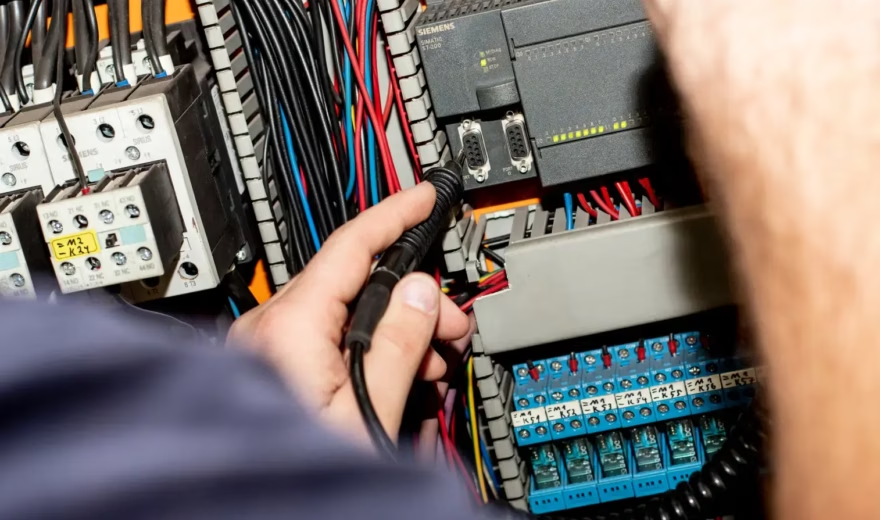
A technician is taking measurements inside an open electrical control panel containing wiring and components.
19 Aug 2026

DGUV V3 Inspection Costs: How Much Does an E-Check Cost?

The regular DGUV V3 inspection, also known as an E-Check, is required by law. In this blog post, learn how the costs for a DGUV V3 inspection are broken down—and how you can get a specific quote by scheduling a free trial inspection with the experts at GP Prüfservice.

A person records inspection data on a clipboard during an inspection in an industrial setting.
19 Aug 2026

E-Check: Why Inspecting Equipment Is So Important

The E-Check—the professional inspection of electrical equipment and systems—is mandatory for companies in Germany. We explain why this is the case and when you’re on the safe side.

Stainless steel process piping with flanged connections in an industrial facility
19 Aug 2026

How to Find the Right Maintenance Strategy for Your Industrial Company

Industry 4.0—as the use of intelligent and digitally networked systems in industrial facilities is often succinctly described—has also ushered in a transformation in industrial services. More and more companies are reorienting their approach: They are adopting new maintenance strategies. We present the most important maintenance strategies.

19 Aug 2026

How to Test a Three-Phase Motor Using Simple Methods

Three-phase motors are the workhorses of the electric motor world and can start even when faced with high countertorques. In this article, we’ll explore how to test a three-phase motor using simple methods.

An electrical technician performs an insulation resistance test in a meter box while wearing protective insulation gloves.
19 Aug 2026

Electric Motor Troubleshooting: Check the Motor Capacitor

Most electric motors that run on standard 230-volt AC power from a wall outlet are so-called capacitor motors. When such a capacitor motor fails, the component that gives it its name is often to blame.

Fixed industrial ladder and platform structure on a factory premises providing access to elevated facilities.
19 Aug 2026

DC Motor Maintenance—Explained Step by Step

Regular maintenance and servicing of electric motors can minimize downtime, reduce the failure rate during electrical testing, and thus make a significant contribution to the success of an industrial operation. In this article, we explain how regular maintenance of DC motors is carried out.

19 Aug 2026

The Electric Motor Won’t Start – Diagnostic Tips from an Expert

From commercial kitchen range hoods to high-pressure washers, from circular saws to forklifts—in many areas, we depend on electric motors to function. The experts at GP Prüfservice offer tips for when an electric motor stops working.

Related Services

Expert die een brandveiligheidsinspectie uitvoert met behulp van een VDS-inspectie voor het controleren van de brandveiligheid in een gebouw.

VdS expert examination

Low-Voltage Inspection

Renewable Energy Systems

DGUV V3 Testing

Thermography

Equipment Testing

Machine Safety

Frequently asked questions about Inspections of Permanent Electrical Installations

The landscape of standards surrounding the inspection of fixed electrical installations may seem confusing at first to many operators of electrical installations. However, it is worth taking a closer look, because compliance with DIN and VDE standards forms the basis for long-term operational safety. While DIN-VDE 0100 and 0105 define specific technical requirements, TRBS 1203 and the BetrSichV refer directly to these standards. Anyone who wishes to inspect their installations in accordance with the regulations must therefore understand all cross-references and correctly incorporate them into their own inspection process.

You should conduct an internal review at least once a year to determine whether newly published sections of the DIN or VDE standards affect your inspection schedule. In many cases, it may be a good idea to outsource the entire inspection process to an external service provider. This provider is familiar with all relevant standards, is always up to date on the latest developments, and, together with management, ensures that each inspection runs smoothly. From the documentation prepared in accordance with regulations to the final inspection, all requirements are met. This ensures that no safety gaps arise and that the facility operators can fulfill all documentation requirements, even in the context of an external audit conducted in accordance with the BetrSichV and TRBS.

A rigorous inspection process always begins with a thorough visual inspection. During this process, the electrical specialist assesses the external condition of all components, documents any visible defects, and takes appropriate measures. This is followed by measurements that comply with the relevant standards. Using modern testing equipment, the earth resistance and insulation resistance, among other parameters, are measured. As part of the periodic inspection in accordance with DGUV V3, this allows for the detection of incipient damage before it poses a serious hazard to people or equipment.

The functional test concludes the inspection of a permanent electrical installation. In this step, the electrician verifies whether protective devices, such as residual current devices (RCDs), activate under realistic load conditions. The inspection report must document the entire process —from visual inspection through measurements to the functional test —and clearly list the test equipment used. This ensures complete transparency for both internal quality assurance and subsequent inspections by the authorities.

If defects are discovered during the inspection and measurements performed by the electrician, the measures taken subsequently can be critical to the safety of the installation.

Minor damage can often be repaired immediately. However, serious defects may also require an extraordinary shutdown of the installation if operational safety can no longer be guaranteed.

In the practice of installation inspections, the following measures, for example, have proven effective:

- Replacement of defective parts

-Retrofitting additional safety devices

- Adjustment of the maintenance schedule

It is important that all steps taken as part of the electrical inspection are documented in a traceable manner and rechecked during the next functional inspection. In this way, facility operators ensure that defects do not lead to consequential damage and that overall safety remains guaranteed at all times.

The BetrSichV places full responsibility for the proper condition of electrical installations on the operator.

Regular inspections may be outsourced to an inspection service, but may also be delegated to the operator’s own employees. If the inspection is conducted internally, this means that the operator of the system must ensure that every person inspecting the permanent electrical installation possesses demonstrable knowledge —the DGUV generally refers to this as an electrical technician. It is not sufficient merely to have completed a degree or training program. It is also important that this knowledge is regularly refreshed or updated to reflect the current state of the art through specialized training courses, continuing education, and seminars.

At GP Prüfservice GmbH, you can rest assured: our employees meet all DIN, VDE, and TRBS requirements. In addition to the required technical knowledge, the GP Prüfservice team also has extensive experience in planning the process of re-inspections and in selecting suitable testing equipment.

The intervals for re-inspections depend on the operational risk. Under normal use, electrical installations generally have an inspection interval of 4 years. For so-called “operational areas, rooms, and installations of a special nature” (according to DIN VDE 0100 Group 700), the interval is reduced to one year. Based on a risk assessment, the actual inspection intervals may or must be adjusted.