From commercial range hoods to high-pressure washers, from circular saws to forklifts—a wide variety of professional-grade equipment is powered by electric motors. Usually, we just flip a switch, use the equipment, and don’t give the motor a second thought. It’s only when we press the power switch one day and realize the electric motor won’t start that we realize how dependent we are on electric motors functioning properly. The experts at GP Prüfservice offer tips for when the electric motor won’t start.
What to do if the motor won’t start? Check it first!
The electric motor won’t start? Instead of immediately replacing the entire motor, it’s often worth investigating why the electric motor isn’t starting. Often, the problem isn’t with the motor itself, but with the upstream system.
All About Electric Motors: Are you interested in electric motors? Then you might also be interested in our electric motor topic page.
Let’s take a lawn mower as an example. If the lawn mower suddenly stops while in use, we first check the power cord and plugs to make sure they’re securely connected. Almost every motor has overload protection that prevents the motor from overheating in the event of an overload (for example, if the grass is too tall). Let the motor rest for 10 to 15 minutes, then check to see if it’s working again.
If this doesn’t work, the next step is to check the fuse or try a different outlet on a different circuit. Is it running? No? Then the next step is to replace the power cord. Even if the motor runs afterward, please note the following:
A thorough cleaning often works wonders
It’s only natural for power tools to get dirty during normal use. However, if particularly coarse, sticky, or oily substances get inside the machine, this can lead to serious damage. The same applies to very fine dust that can enter the electric motor through openings. If such contamination is already clearly visible from the outside—especially around the motor’s openings—the drive will likely require at least a thorough cleaning. There is also a risk that more serious damage has already occurred, such as a short circuit.
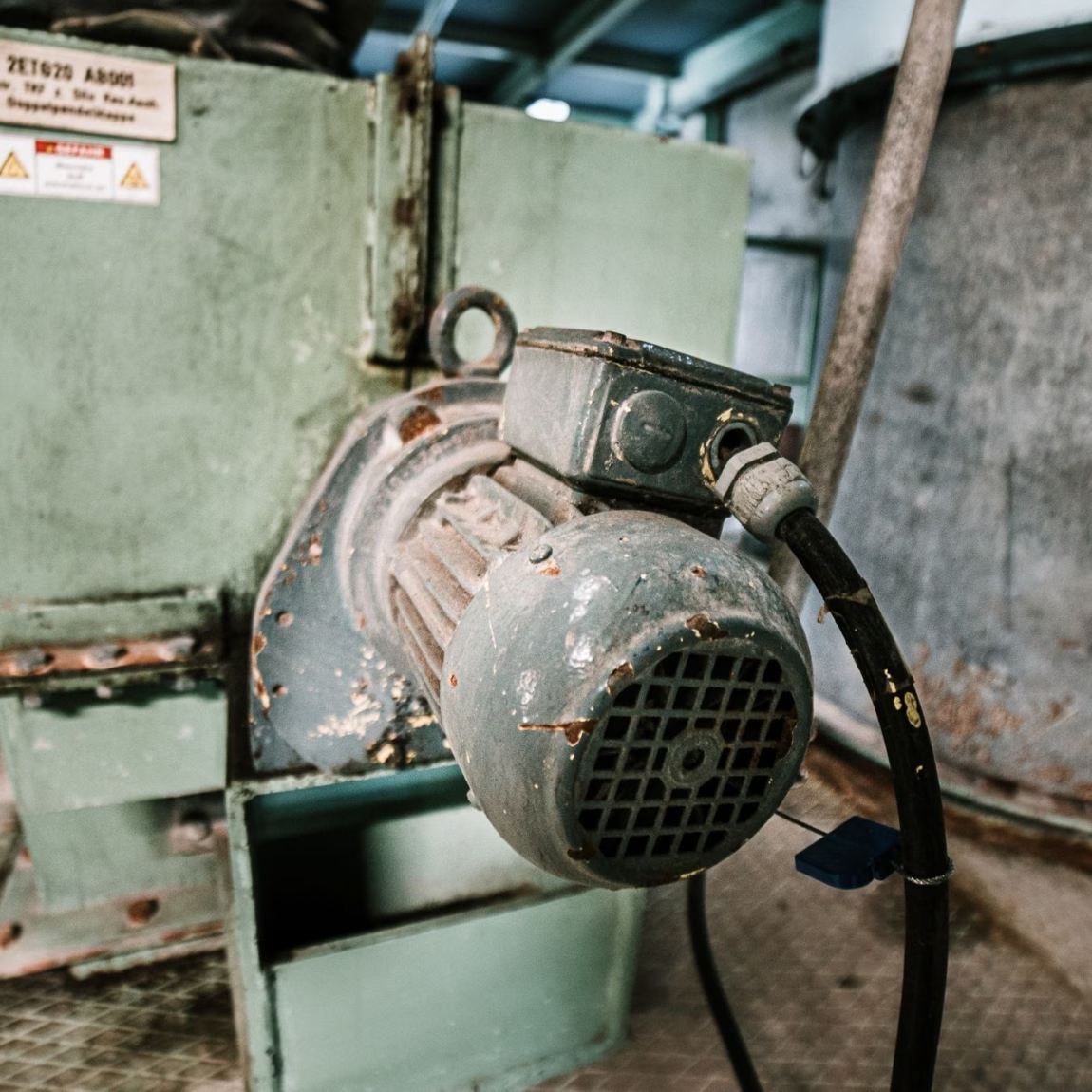
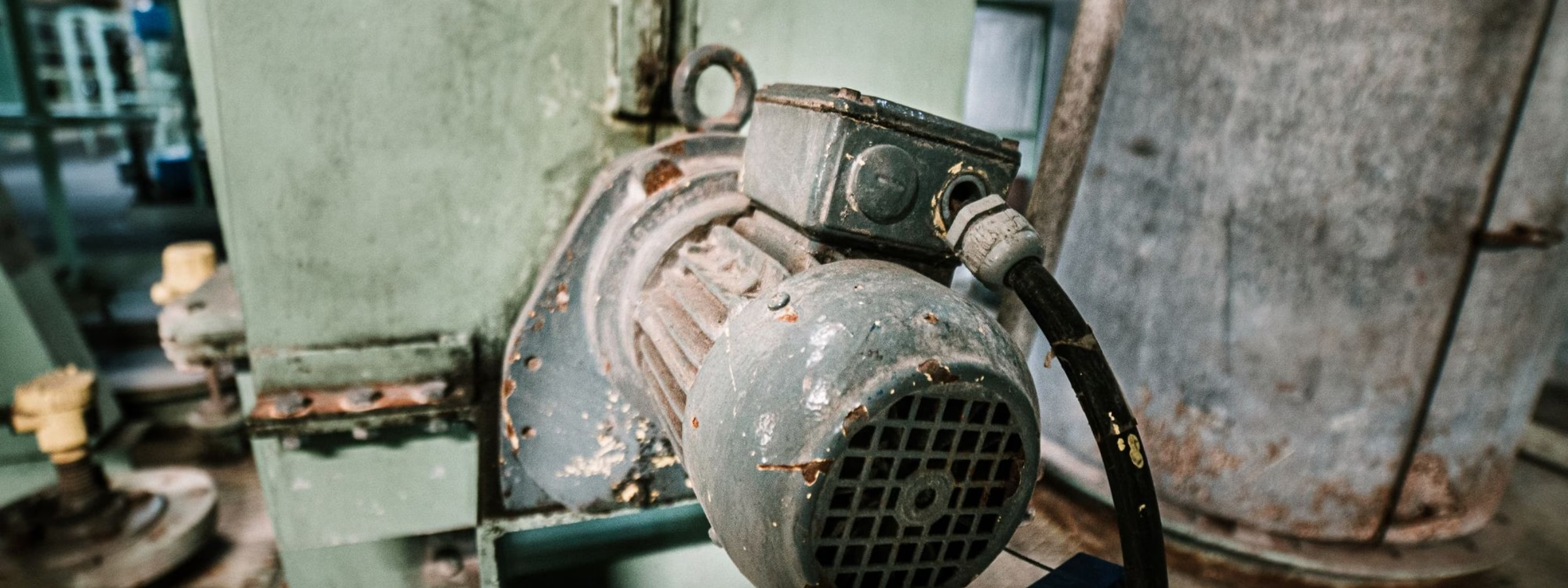
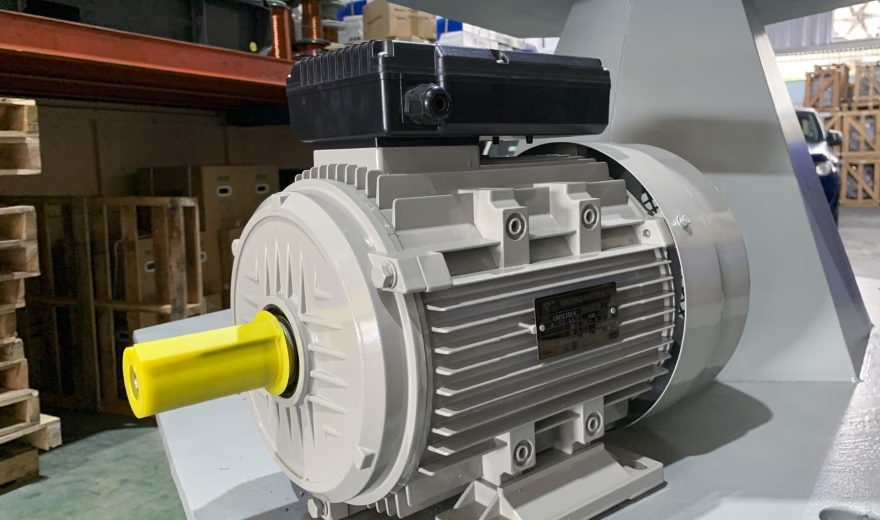
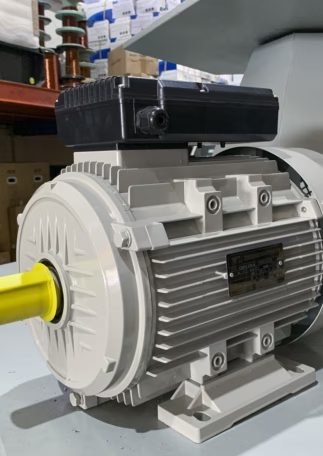
Visual inspection from the outside: Broken mounts, dark spots, heavy contamination, clogged fans
In tools and machines, electric motors are usually firmly attached to the housing and other components at specified points, for example, with screws. Mechanical stress can cause such mounts to become loose or even break. As a result, parts of the machine may jam, causing, for example, the drive shaft to seize up. The first thing to check, therefore, is the assembly.
Are there any bent or broken screws or mounts? Is the entire motor perhaps sitting crookedly in the housing? If so, simply retightening the screws or having a mount rewelded by a professional may be enough to repair the damage.
You should also check for dark discoloration on the housing in the center of the motor. This discoloration can appear on both the paint and the metal and is an indication of excessive heat buildup. This may point to a major defect in the motor.
Dirt can quickly become a problem, especially with fully enclosed and fan-cooled motors. From the outside, the fan covers—which are metal grilles—are easily recognizable. If these are clogged or caked with dirt, oil, or dust, it can cause the motor to overheat. Cleaning the fan grilles (preferably on a regular basis) can help if the electric motor is seized due to dirt on the rotating fan impeller and therefore fails to start.
All the data at a glance—the nameplate
It makes perfect sense to take a look at the motor’s nameplate. All important data can usually be found there at a glance—which is crucial if spare parts or even a replacement motor are needed. The manufacturer’s name and the model and serial numbers make it possible to search online for the motor’s documentation. Specific design or wiring diagrams from the manufacturer, which are often available for download, can be helpful.
The electric motor’s nameplate often includes instructions for proper installation—if the setup inside the device looks significantly different, you may have already identified the problem. Circuit diagrams with wiring specifications for different speeds, voltages, or applications can also be helpful. Furthermore, the nameplate usually lists the standard specifications for voltage and current, which should be noted for the corresponding test using measuring instruments.
It’s also important to check the type of housing before opening it. An open housing is more susceptible to contamination but easier to open. While drip-proof or even fully encapsulated enclosures are significantly more resistant to moisture or dirt penetration, care must be taken when opening them not to damage any existing seals. In some cases, fully encapsulated components can only be replaced entirely.
Warning! Under no circumstances should the following work be performed by non-professionals.
Defective Capacitor—When the Problem Lies Outside the Motor
In the case of a single-phase AC motor with a short-circuit rotor, simply replacing a relatively inexpensive component—such as the starting or running capacitor—may be enough to get the motor running again. However, a malfunction can have many different causes.
Capacitors can store energy and release it in a controlled manner—and they are considered wear parts in the motor. If they are broken, this may prevent the electric motor from starting. Capacitors are among the more affordable replacement parts and are a relatively common cause of problems with electric motors.
They are usually mounted on the outside of the motor, for example in a separate box with a metal cover. If there are visible dents on the casing, oil puddles or dirt inside, or if the capacitor has darkened, these are signs of possible damage in this area.
Use caution when working on the capacitor!
Extreme caution is required when handling capacitors. Since they are passive energy storage devices, they may still be charged even when the entire appliance is unplugged. An electric shock from a charged capacitor—no matter how small the component may be—can far exceed the intensity of a shock from a wall outlet and be fatal.
Operating or starting capacitor—what’s the difference?
Many electric motors are equipped with operating capacitors, which ensure that the motor starts, rotates in the correct direction, and develops its power evenly. Some particularly powerful motors that are difficult to start also have a so-called starting capacitor. This is used, for example, in compressors or heavy machinery such as floor grinders. Unlike the running capacitor, the starting capacitor is active only when the motor is starting and is then automatically disconnected from the power supply.
Signs of a Defective Operating Capacitor
There are a number of signs that an operating capacitor is defective. Indications may include, for example, the motor merely humming and jerking, or starting very sluggishly or in the wrong direction. If the electric motor does not start as usual because the capacitor is defective, the motor can often be started by hand in either direction. This means that once the shaft is set in motion, the motor runs on its own.
In general, it is best not to start machines by hand. This is especially true for sharp components such as saw blades or lawn mower blades. This is because if the motor starts after being turned by hand, there is a high probability that your fingers are still within the cutting area. It goes without saying that this can result in serious injuries.
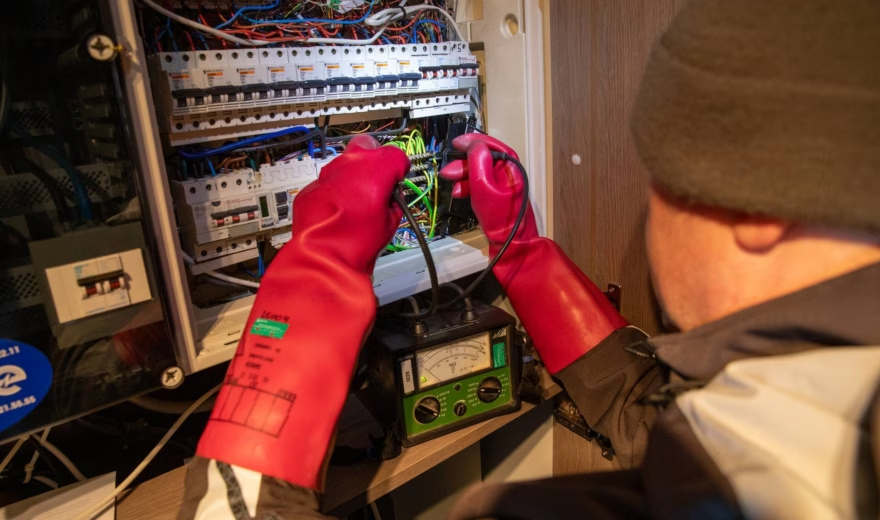
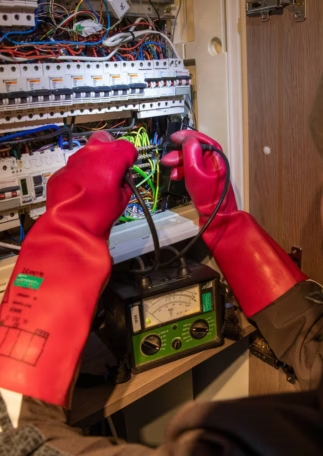
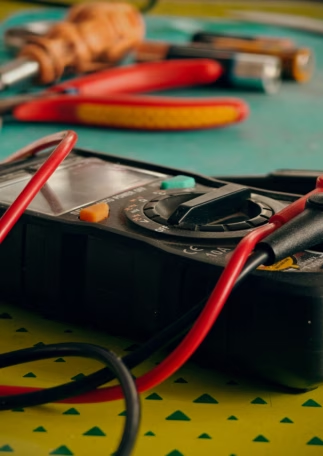
In principle, it is possible to test capacitors with the right measuring instruments. However, since a capacitor is an energy storage device that may be charged, there is a risk that the electronics of the measuring instruments could be damaged. If you want to play it safe, therefore, leave the testing to a trained professional.
Should the capacitor be replaced? If so, all the important information needed for a suitable replacement is printed on the capacitor itself. These include the capacitance, usually in µF (microfarads), the operating mode (DB for continuous operation; AB for intermittent operation in the case of starting capacitors), and the rated voltage in volts (V).
For motors with a starting capacitor, check the centrifugal switch
Larger devices such as compressors, which have a starting capacitor in addition to the operating capacitor, usually have a centrifugal switch located on the rear bearing shield. This switch disconnects the starting capacitor from the power supply as soon as the motor reaches a certain speed. Grease, dirt, or excessive heat can damage the switch or even cause it to fuse. At this point, you can check whether the switching mechanism moves freely. If it does not, this may be the reason why the electric motor is not running.
See also our blog post “Electric Motor Troubleshooting: Checking the Motor Capacitor.”
A Look Inside – The Electric Motor’s Bearings
The bearings of the central drive shaft are located at both ends of the electric motor. This is often where the problem literally gets stuck. If the shaft (rotor) cannot rotate freely within the motor housing, then nothing will run smoothly. Various types of bearings made from different materials, such as steel or brass, are used. Bearings that are not permanently lubricated may need to be manually lubricated as part of routine maintenance.
Even a layperson can check whether the bearings move freely on the motor. To do this, turn the drive shaft or rotor by hand and feel whether it’s difficult to move. You should also listen for any crunching or scraping noises coming from the bearing area. If a rotor wobbles or shows signs of imbalance, this can also indicate a problem with the bearings. Ideally, it should run quietly, smoothly, and move freely.
You can also check how much play the shaft has in the motor. In the axial direction, it can be up to 1 mm. In the vertical direction, however, it should not exceed 0.02 mm. Any deviations may indicate a broken part, defective bearings, or worn-out bearing seats.
Last but not least, you can check the rear of the motor to see if any fan is running smoothly. If it isn’t, the motor may overheat or even burn out.
At this point, please note once again that all checks must be performed only when the system is de-energized. Additionally, keep in mind that, for example, lawn mowers have a brake installed that prevents the bearings from being checked by free rotation.
A Look at the Windings
Among the most important components in an electric motor are the copper windings through which the driving current flows. A visual inspection can already reveal whether dirt might be causing contact with the motor housing. This would inevitably lead to a short circuit. The result here, too, is that the electric motor fails to start and the fuse blows. Another possible problem is that parts of the windings are burned out or, due to mechanical or thermal damage, no longer form a closed circuit. This can be determined by taking a measurement with a special testing device. However, visual signs such as noticeable blackening or mechanical damage may also indicate this issue.
Heat and a foul odor are not good signs
In some cases, however, an electric motor that no longer starts simply cannot be repaired at a reasonable cost. If the motor gets excessively hot, smokes, or smells like scorched metal and plastic, there’s probably not much that can be done. In that case, the device is almost certainly beyond repair and must be replaced entirely.
The electric motor won’t start—if in doubt, consult a professional
The electric motor won’t start, and you haven’t found the problem despite our troubleshooting tips? Then there’s only one thing left to do—consult a professional or replace the entire motor. Whether a repair is worth it often depends on the size of the electric motor. For electric motors in industrial plants, specialized industrial service providers are your first point of contact.
If a smaller electric motor has a fault that’s difficult to diagnose, replacing the motor may be the more cost-effective solution. You can also find almost any type of electric motor online at the electric motor store of your choice.
Save Costs in the Long Run with Professional Maintenance
Well-maintained motors play a crucial role in preventing malfunctions in industrial facilities. Last but not least, professional maintenance also reduces the likelihood of failures during the DGUV V3 inspection. The experts at GP Prüfservice GmbH have many years of experience not only in inspecting electrical systems and equipment but also in providing industrial services. Contact us if you’d like to entrust your electrical inspections to experts. We’d be happy to advise you!