Any business that operates electronic devices cannot avoid regular E-Checks—and that applies to nearly all businesses, since even printers and coffee machines count as electronic devices. But what are the costs associated with such an inspection? In this article, the experts at GP-Prüfservice shed some light on the matter.
First and foremost, you should know: There is no flat rate for an inspection of your electrical equipment. Just as the number and type of your electrical devices vary from business to business, so do the costs you can ultimately expect. However, by being well-informed about your equipment and the scope of the expected inspections, you can approach planning your E-Check with confidence and preparation and better estimate the costs involved. In this blog post, our experienced inspectors will bring you up to date on how a proper inspection in accordance with DGUV-V3 is conducted, why and how often you should—or are required to—perform an electrical inspection, and what factors determine the costs. Our GP-Prüfservice experts can provide you with an even more accurate picture of the expected costs during a personal consultation.
Or even better: See the quality of our inspections for yourself in advance with a free trial inspection.
Schedule an appointment now
Contents of this article
- What cost factors play a role in the inspection of electrical equipment
- Who should have an electrical inspection performed
- Why an E-Check is important
- E-Check: Meet Deadlines and Save Money
- Reasonable Price: A DGUV V3 inspection conducted in accordance with regulations follows precise guidelines
- Conclusion: The costs of a DGUV-V3 inspection of electrical equipment are well worth it
- Frequently Asked Questions
What cost factors play a role in the inspection of electrical equipment
If you’re planning an E-Check, you should first—if you haven’t already—get an overview of your electrical equipment. According to the DGUV V3 definition (PDF download of the 1997 version available here), this includes “all items that, as a whole or in individual parts, serve the application of electrical energy (e.g., items for generating, transmitting, distributing, storing, measuring, converting, and consuming) or the transmission, distribution, and processing of information (e.g., telecommunications and information technology equipment).”
A distinction is made between the following types of electrical equipment:
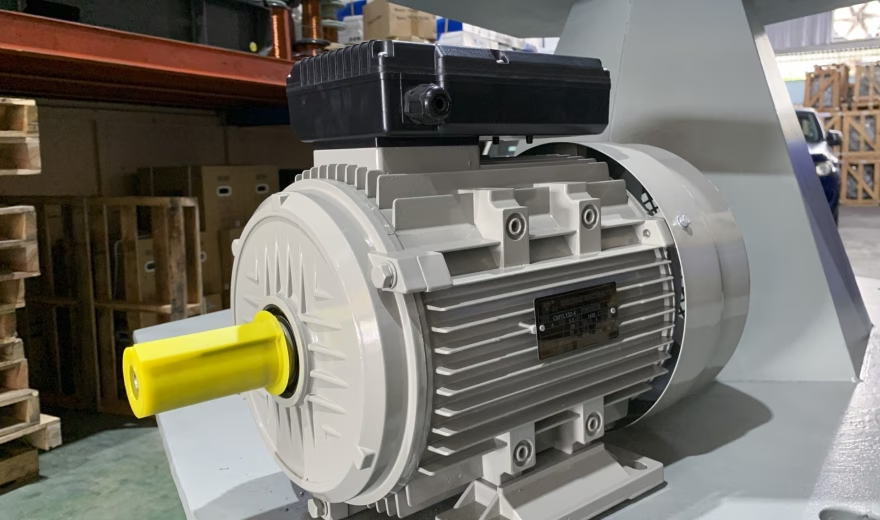
- Portable electrical equipment can be moved or relocated to another place during operation (e.g., drill, laptop, extension cord)
- Fixed electrical equipment can be moved only with great difficulty or not at all during operation (e.g., lamps, ovens, charging stations for electric cars)
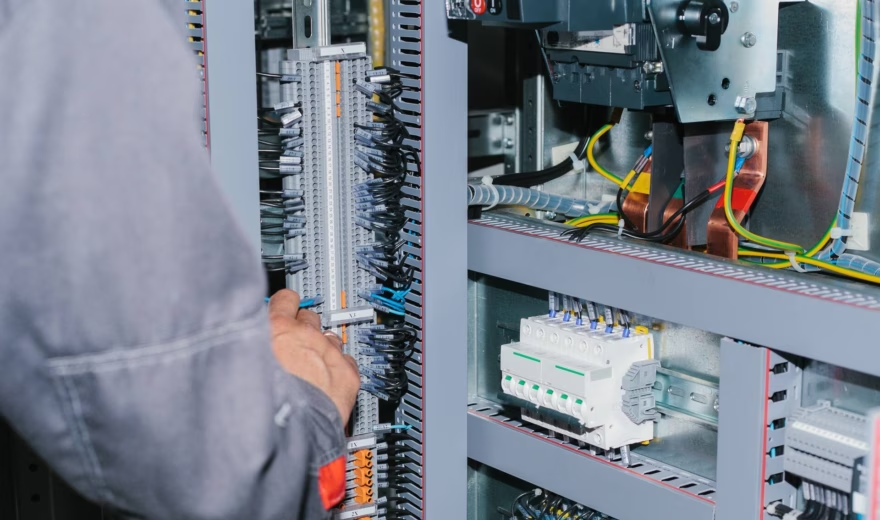
- Stationary systems are permanently connected to their surroundings (e.g., power lines, distribution boxes, electrical installations)
- Non-stationary systems are electrical installations that are set up only temporarily (e.g., on construction sites) and are dismantled after use
Once you have inventoried all your electrical equipment, you will have a good overview of the circumstances and the number of devices to be inspected. However, the size and complexity of the individual pieces of equipment also play a role. Simple electrical devices with straightforward circuits and few modules are easier to inspect than complex systems with numerous interconnections and unusual conditions. Accordingly, the size and type of your business are also decisive factors in determining the cost of the electrical inspection. A simple office likely has equipment that is relatively straightforward to inspect, though there may be a large number of such devices. A facility with ongoing production, on the other hand, has—in addition to office electronics—a certain number of electrical systems with more complex requirements, as well as a laboratory with more specialized electrical equipment.
Other factors that MAY play a role in determining costs include the distance to the inspection company’s location (travel costs), registration fees(if applicable) for an initial inspection, and flat rates for shipping or service. All of these highly individual circumstances result in varying testing scenarios and thus entail completely customized cost plans. Be sure to plan your inspection intervals carefully to avoid additional costs (e.g., due to damage incurred).
To help you plan your costs effectively, it’s advisable to seek expert advice from an inspection service provider. GP Prüfservice is here to assist you and provide a transparent overview of your individual cost factors for a DGUV V3 inspection.
Who Should Perform an Electrical Inspection
One area where you cannot—and should not—cut corners is having the electrical inspection performed by a qualified professional. According to DGUV Regulation 3, the electrical inspection must be conducted in accordance with specific regulations and standards such as DIN VDE 0701-0702, DIN VDE 0105-100, or DIN VDE 0113-1. Experienced electrical technicians are well-versed in these regulations and also carry approved testing equipment and appropriate testing software. Furthermore, having the inspection performed by qualified electricians is not only required by law but also advisable to ensure that the measurements and inspections meet all safety standards and that you do not encounter any unpleasant surprises. Therefore, be careful when choosing a testing service provider and do not accept unprofessional or dubious offers. You should avoid both exorbitant prices and bargain-basement offers.
However, there is one thing you can do yourself that could definitely save you money: Always handle your electrical equipment and systems with care and attention, train your staff accordingly, and take immediate action if you notice any visible defects.
Why an E-Check Is Important
The cost of an electrical inspection is undoubtedly justified. Not only do regulations require you to have your electrical equipment inspected for DGUV-V3 compliance, but you’re also protecting yourself in the process. After all, every person who comes and goes in your facility is theoretically exposed to a certain level of risk posed by these devices. It doesn’t matter whether it’s the coffee maker in your kitchen or a large machine in your production hall. Damaged cables, overheated batteries, and defective switches aren’t just minor issues—they can cause major damage and even pose a life-threatening risk.
In addition to the danger to people, the day-to-day operation of your business—and thus your ability to conduct business—is also a key consideration. Even if no one is injured, defective equipment can pose a significant financial risk to you.
Faults and defects are not always visible and are not caused exclusively by improper use. Age, wear and tear, or external factors can also cause your electrical devices to become inoperable or even dangerous.
In the interest of workplace safety and in accordance with DGUV V3 regulations, you should therefore invest in this important inspection. You’ll also save on costs that you might otherwise incur if you discover damage or wear and tear too late. An E-Check is therefore a worthwhile investment.
E-Check: Meet Deadlines and Save Costs
But you shouldn’t stop at just one inspection. As a rule, DGUV V3 inspections are conducted on a recurring basis. It’s essential that you meet the deadlines; otherwise, it will become costly if you overlook damage and equipment fails, for example.
The DGUV V3 mandates that you, as a business owner, must have your electrical equipment inspected. It is your responsibility to determine WHEN and HOW OFTEN you must do so. To determine the inspection deadlines, consult a qualified specialist, as there are several variables that come into play depending on the equipment. These include, for example:
- Type of electrical equipment: stationary or portable
- Environment of the electrical equipment: e.g., office, construction site, production hall, public space
- Frequency of use: Is the equipment in continuous operation, or is it used only rarely?
Although DGUV Regulation 3 provides guideline values for different conditions, ultimately a certified specialist must assess the specific circumstances, determine the appropriate inspection intervals, and document them. By adhering to these intervals, you can prevent damage and save money. As the saying goes: Prevention is better than cure.
A Justified Price: A DGUV V3 Inspection in Compliance with Regulations Follows Precise Guidelines
The inspection service provider you hire is familiar with all VDE regulations, which specify the standards that the electrical inspection must follow and the prescribed procedure. An E-Check consists of four parts:
- Visual inspection
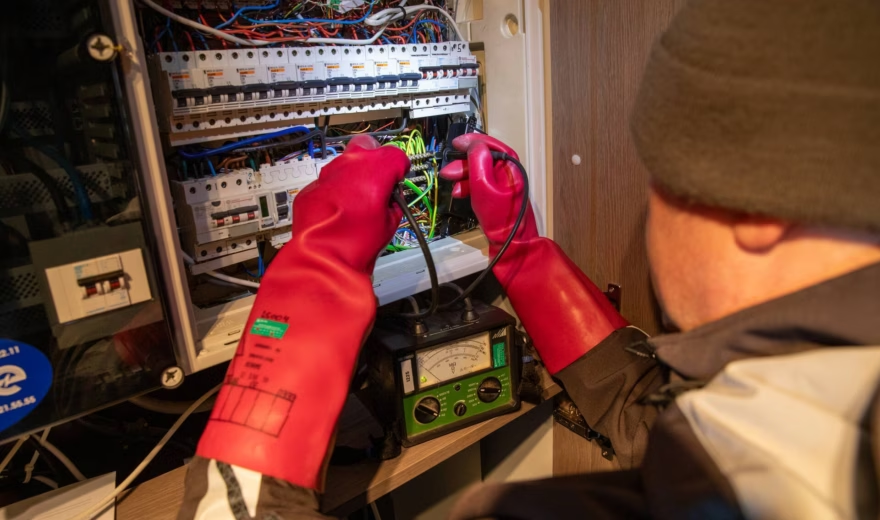
- Measurements
- Functional test
- Inspection report
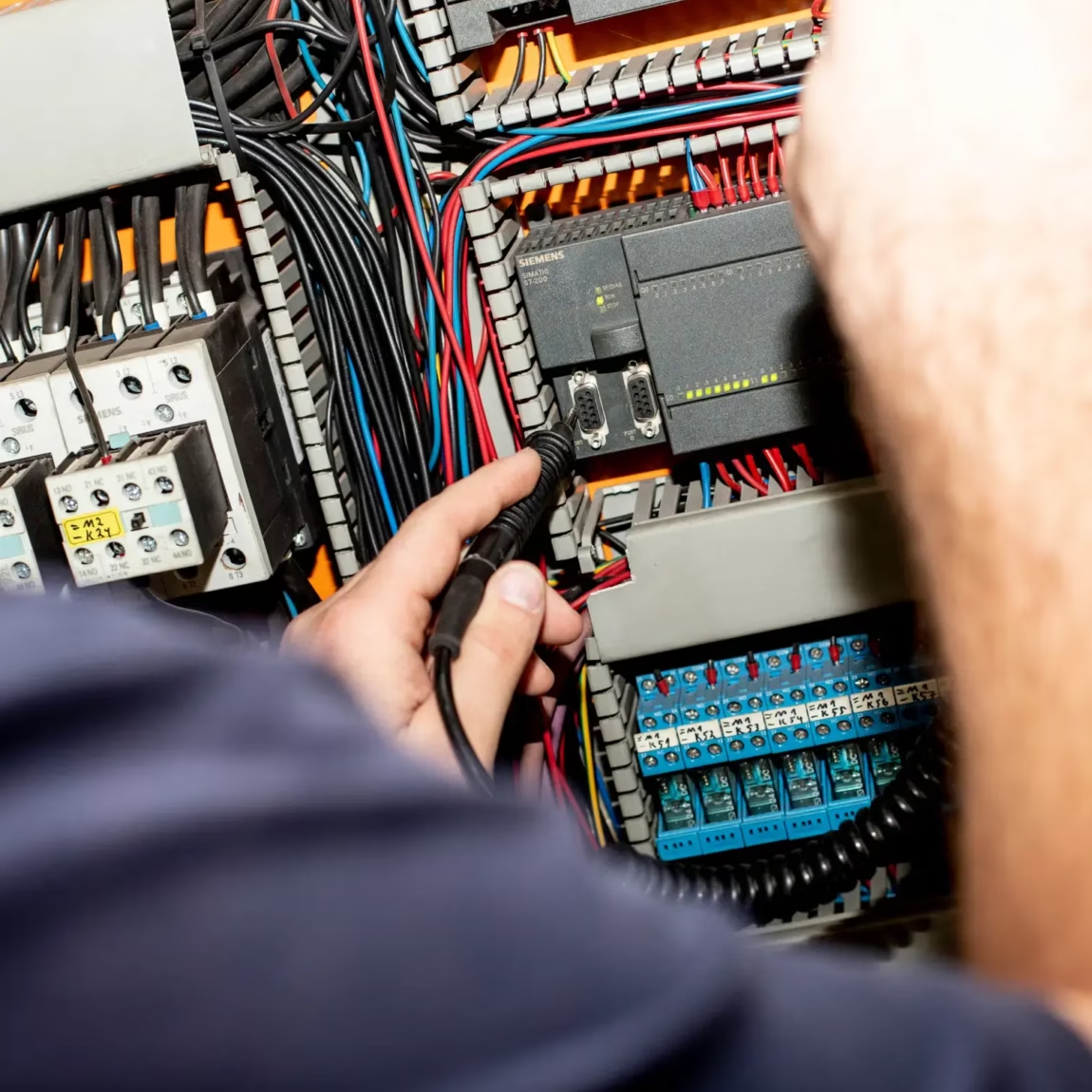
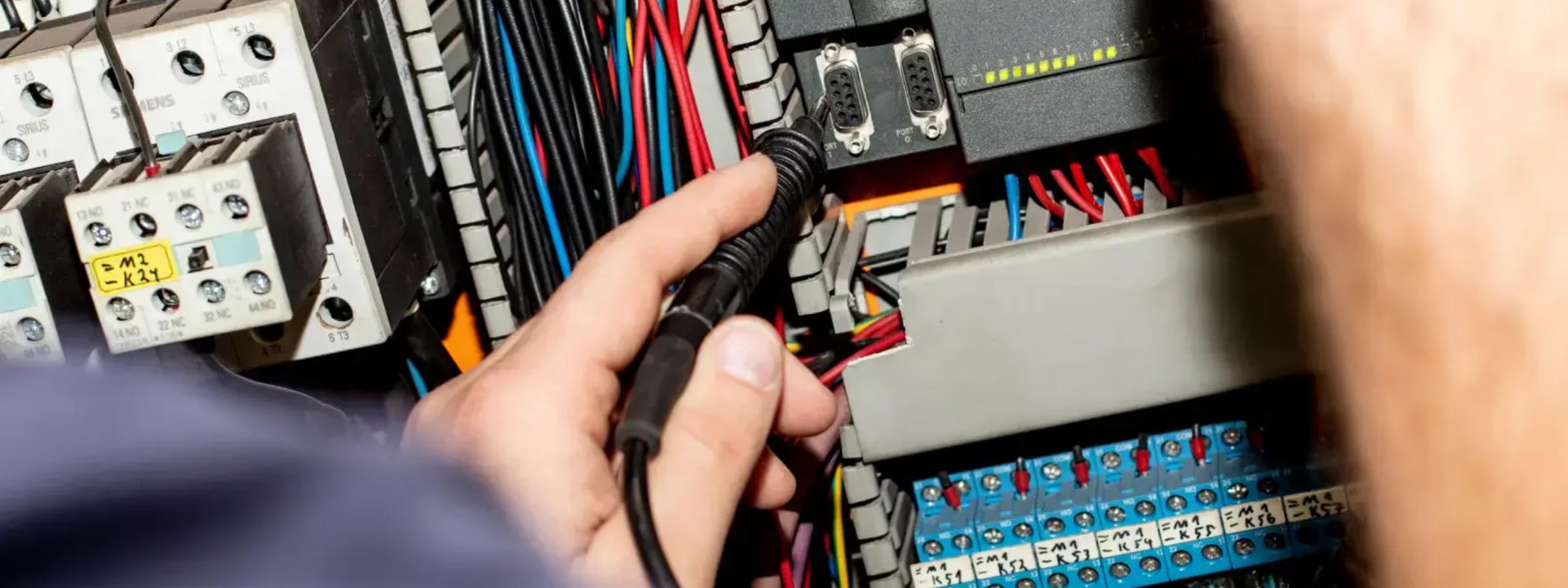
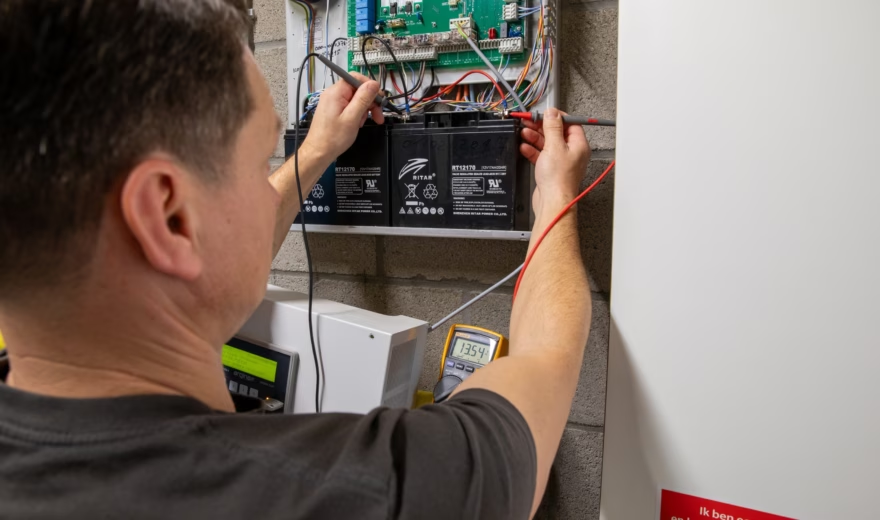
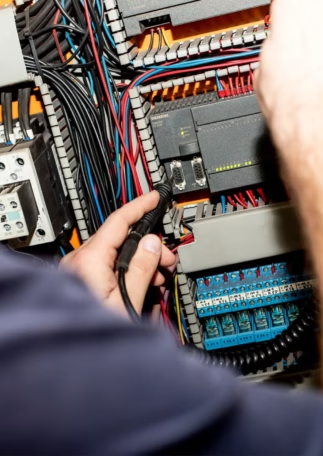
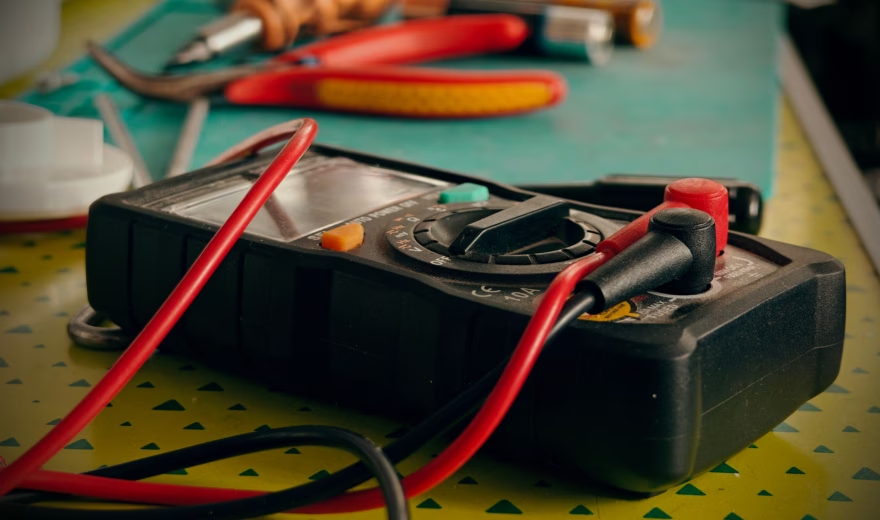
After the certified electrician has checked for visible defects (e.g., damaged cables or defective switches) as part of the visual inspection, they perform measurements to identify any damage to wiring or impaired functionality. This also includes checking insulation resistance and the equivalent leakage current. Once these two checks are complete, the inspector will test the functionality of the electrical equipment and can also determine whether the devices comply with the latest technical standards. The qualified electrician records all results in an inspection report—this documentation is important for you, as you can use it as proof that the inspection was performed in accordance with DGUV V3 in the event of damage caused by a defective electrical device. You can also track deadlines for follow-up inspections or repairs in this report.
When searching for a suitable inspection service provider, be sure to ensure that they discuss the inspection process with you transparently—including all associated costs. If the price seems too low or too high, you should obtain a second quote and compare the steps involved and the costs. Contact our experienced inspectors for advice. (Link: Contact)
Conclusion: The costs of a DGUV V3 inspection of electrical equipment are worth it
One thing is certain: When you invest in electrical equipment—regardless of its size or complexity—the costs go beyond the initial purchase price. However, the costs associated with a regular DGUV V3 inspection of your electrical equipment should not deter you. After all, these are investments in the future and longevity of the equipment. Only equipment that functions flawlessly ensures the continuous operation of your business—and the safety of your employees, customers, and other stakeholders. However, you should be well-informed so as not to fall into “cheap” traps or be taken in by overpriced offers. GP-Prüfservice offers fair prices and top-notch service—with no hidden costs. Contact our experts at GP-Prüfservice for advice. (LINK Contact)
FAQ: Frequently Asked Questions and Answers
What is a DGUV V3 inspection?
The German Social Accident Insurance (DGUV) has issued binding legal standards designed to protect occupational safety and health. This pertains to occupational safety. One of these regulations, DGUV Regulation 3, specifically addresses electrical systems and equipment. It also specifies the inspection procedures and inspection intervals required to ensure the safety of these systems.
Learn more about DGUV V3 inspections here
What is an E-Check?
During an E-Check, a certified electrician inspects your electrical systems and equipment in accordance with applicable regulations and DGUV V3 standards. This process identifies potential defects and hazards, which are then documented in an inspection report. An inspection sticker issued after the inspection serves as proof of compliance and as a reminder for the next E-Check.
What is the difference between an E-Check and a DGUV V3 inspection?
There is no difference, as the two are directly related. An E-Check is always conducted in accordance with DGUV V3 and all associated inspection measures. Instead, think of “E-Check” as an umbrella term for all inspection procedures on electrical equipment and DGUV V3 as the framework under which these inspections are conducted.
How much does a DGUV V3 inspection cost?
It’s not possible to give a flat rate. The cost depends on several factors, including:
- The specific circumstances and the number of devices to be inspected
- The size and complexity of the electrical equipment
- The size and type of the company
Certified electricians can provide you with a personalized estimate of the costs you can expect.
What additional costs might arise?
In addition to the actual inspection costs, there are often other expenses such as travel expenses, costs for data collection during the initial inspection, or service fees. If defects or damage are discovered during the inspection, additional costs will be incurred to rectify them.
At GP-Prüfservice, travel expenses, labor, inspection stickers, inventory lists, and reports are all included in the inspection price. There are no hidden costs. Guaranteed . Let our experts advise you.
Is an E-Check required by law?
Yes and no. As a private individual, you are not required to have an E-Check—however, it is advisable to have your electrical devices in your own home inspected regularly by a licensed electrician. This can benefit you in the event of damage when it comes to liability issues.
As a business owner and employer, however, you are legally required under occupational safety regulations (DGUV) to have your electrical systems and equipment inspected regularly and professionally. Failure to do so may result in criminal liability and could also negatively impact your insurance coverage.
Why is an E-Check important?
There are many good reasons for an E-Check:
- Safety: Defective electrical devices can lead to fires or electric shocks and thus pose a major hazard—or at the very least, can cause significant damage.
- Insurance coverage: Should an accident occur, the question of liability arises. An E-Check allows you to protect yourself and demonstrate that you have conducted the required inspections in accordance with DGUV V3.
- Functionality: Your electrical equipment or systems were certainly a major investment for you—which means you want to get the most out of them for as long as possible. The E-Check ensures a longer service life and trouble-free operation of your devices.
- Costs: When your electrical equipment is inspected regularly, you can be confident that it is operating at peak efficiency, thereby reducing energy consumption. This means you save on electricity costs.
- Environment: Optimized electricity consumption also benefits the environment, allowing you to contribute to climate protection.
Learn more here about why inspecting electrical equipment is important.
Who performs an E-Check?
An E-Check must be performed by a DGUV V3-certified electrician who has the necessary experience and appropriate testing equipment. In specific cases defined by the DGUV, individuals who have received electrical training may also be assigned to perform measurement and testing tasks under the direction and supervision of a qualified electrician.
How often must an E-Check be performed?
According to DGUV V3, inspection intervals for electrical equipment and systems must be adhered to. The inspection intervals depend on whether the equipment is portable or stationary. The environment in which the equipment is used and the nature of its use (e.g., continuous or occasional use) also play a role. The inspection service provider conducting the inspection at your facility will discuss the deadlines for future inspections with you.
What is checked during an E-Check?
During an inspection in accordance with DGUV V3, all components of the electrical device or system are thoroughly and professionally checked. For example, the condition of cables, plugs, insulation, and other components is assessed as part of a visual inspection. Measurements provide information on leakage currents or resistance, and a functional test verifies that all components are operating properly.
Which devices require an E-Check?
All electrically powered devices must be inspected regularly. This applies both to portable devices in offices, such as printers or coffee makers, and to stationary systems in production facilities. Every electrical device poses a potential hazard if cables are damaged, batteries overheat, or insulation is compromised.