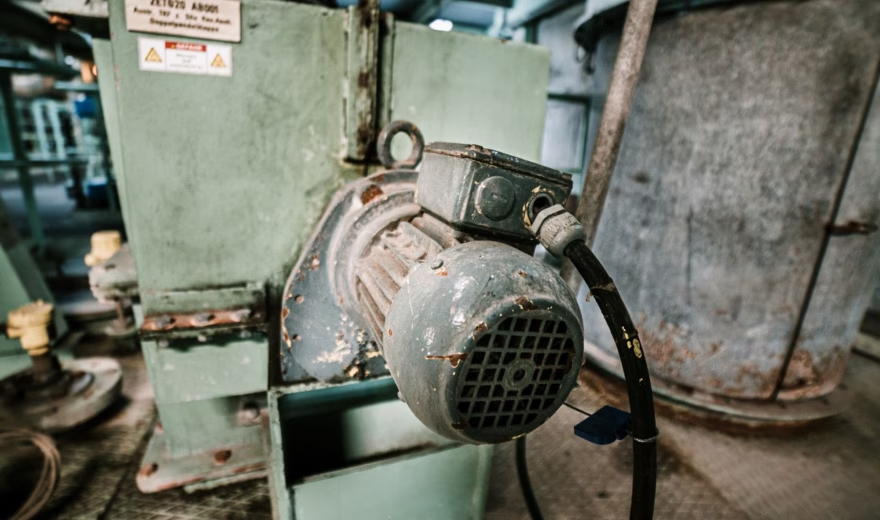
The most widely used electric motors in professional applications are three-phase motors. So-called asynchronous motors are the most common type. With a few exceptions—which also operate on alternating current—they run on three-phase current. These drives are the workhorses of the electric motor world and can start up even against high countertorques. In this article, we’ll explore how to test a three-phase motor using simple methods.
Since three-phase motors are so widespread, they are relatively inexpensive to purchase. The motors are also considered very robust. They require maintenance relatively infrequently and still achieve a long service life because there is hardly any wear and tear. But what if this workhorse suddenly stops working? Fortunately, three-phase motors have a relatively simple design, so at least major defects are easy to find when you inspect a three-phase motor.
Exercise caution when handling three-phase motors—risk of injury and fire!
The supply of “three-phase alternating current,” also known as three-phase power and often equated with high-voltage current in common parlance, has one major advantage: despite its simple design, the electric motor generates a great deal of power. However, this means that anyone working on motors powered by high-voltage current must exercise extreme caution. There is a risk of death. Three-phase current typically carries a voltage of 400 volts, which is lethal to humans. Therefore, the repair and inspection of a three-phase motor should be performed by a trained professional. Improper repairs or modifications pose the risk of an operator receiving an electric shock or a fire breaking out. In any case, the following applies: When inspecting a three-phase motor, always make sure first that the motor is disconnected from the power supply.
How is a three-phase induction motor constructed?
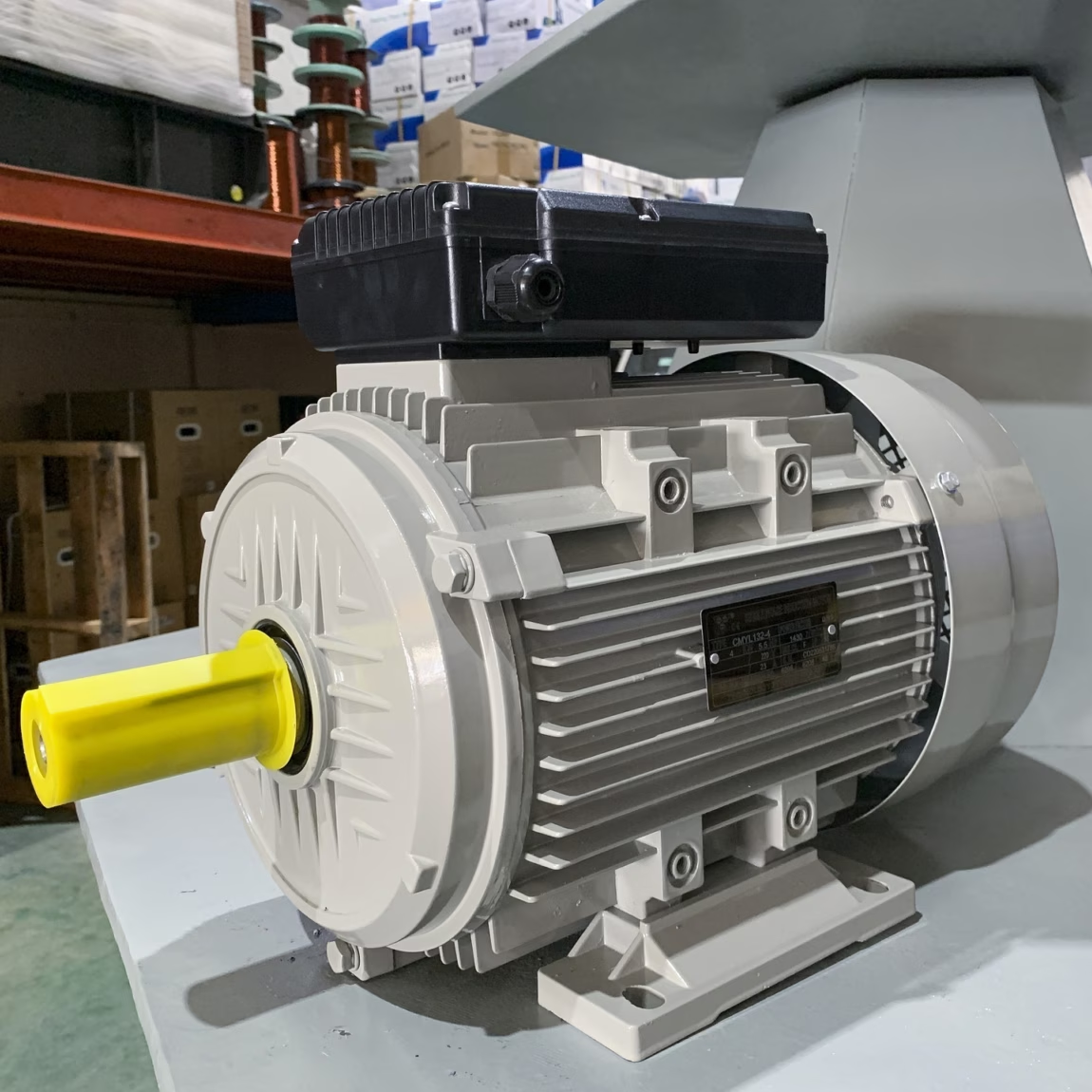
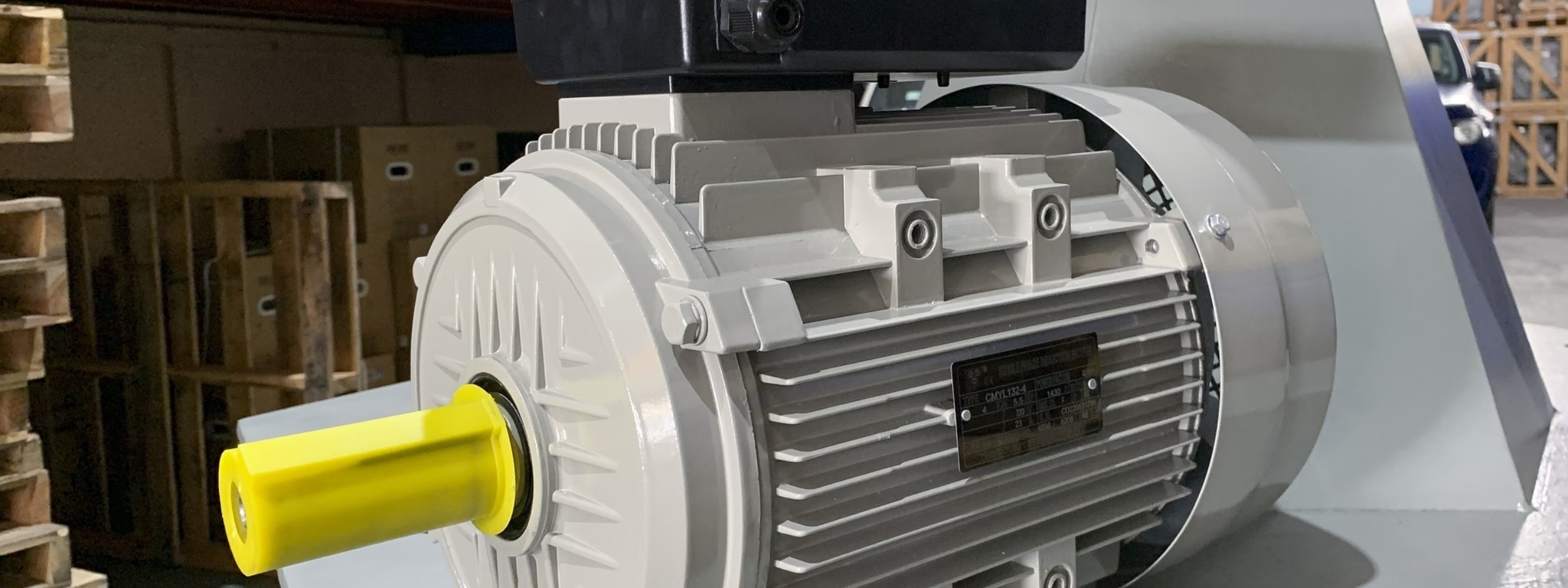
The simple and robust design of three-phase induction motors has played a key role in their widespread use. There are hardly any parts that are prone to wear. As with all electric motors, the main components are the stationary part, called the stator, and the rotating part, called the rotor or running part.
In three-phase asynchronous motors, the stator essentially consists of three (or a multiple of three) coils, the bearings, and the housing. Each coil is powered by one phase of the three-phase current. The three phases of the alternating current are phase-shifted by 120 degrees relative to one another. As a result, each of the three coils induces a magnetic field that is shifted by one-third, which ultimately rotates and thus generates torque.
In most three-phase motors, the rotor is a passive electromagnetic component called a cage rotor or short-circuit rotor. It is constructed in such a way that a closed current is induced within it by an external magnetic field. The magnetic field generated by this current, in turn, interacts with the external rotating magnetic field, thereby setting the rotor in a directed rotational motion.
Since the magnetic interactions cause the rotor to rotate more slowly than the magnetic field of the external coils, this type of motor is referred to as an asynchronous machine. The rotor’s frequency lags behind that of the magnetic field. Thus, it does not run in sync with the frequency of the alternating current.
Other components of the motor include the bearings in which the rotor is mounted and, in most cases, a fan located at the rear end of the motor and connected to the rotor, which provides air cooling for the motor. In addition, there is the corresponding control electronics, which are essential for starting and regulating the motor.
How can you test an induction motor?
So how do we proceed when inspecting a three-phase motor? With an induction three-phase motor, the inspection is made easier by the fact that there are three (or a multiple of three) identical windings, which can be compared with one another during testing.
Before you loosen the first screw on the housing, you must ensure that the motor is disconnected from the power supply and cannot be accidentally turned on. An electric shock of 400 volts is often fatal and almost always results in severe burns or permanent damage.
Testing a Three-Phase Motor, Step 1: Is the Coil Insulated?
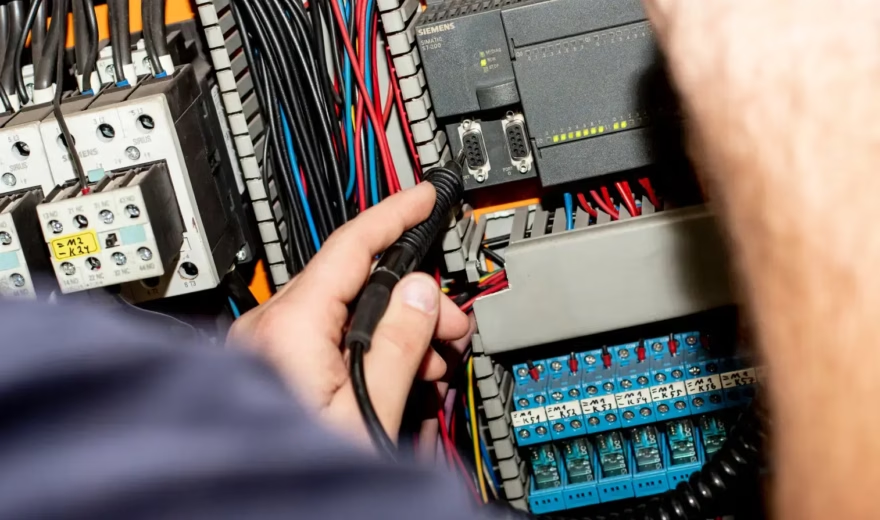
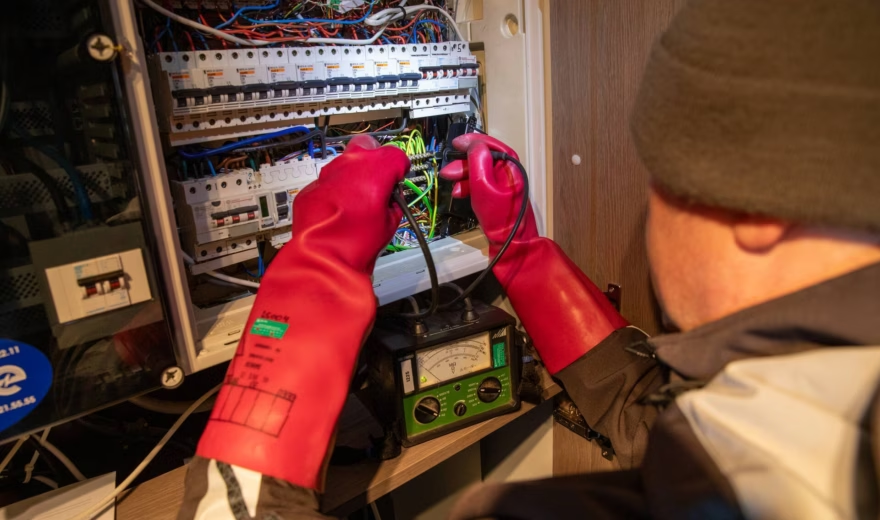
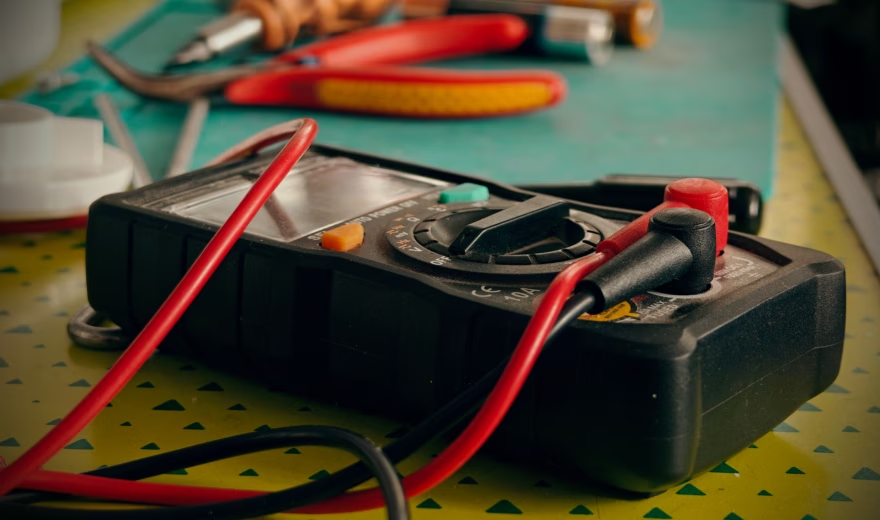
In a professional setting, a specialist would check whether the coil windings are properly insulated—that is, whether they are short-circuited to the housing. To do this, experts use special insulation testers or crank inductors. However, if you only have a digital or analog multimeter or a continuity tester on hand, you can still use it to test the three-phase motor.
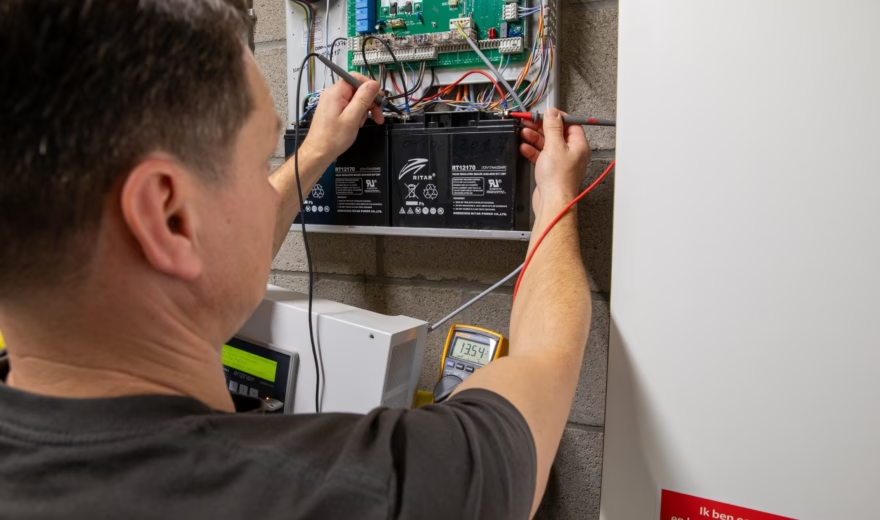
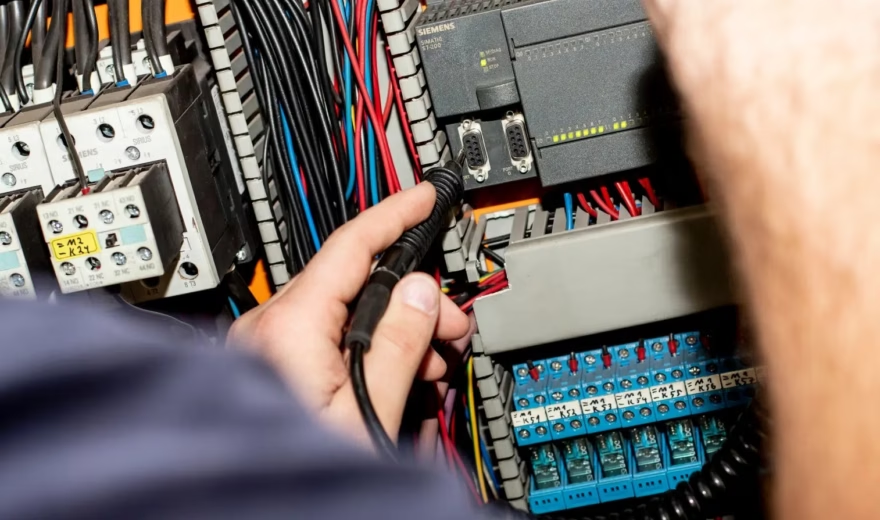
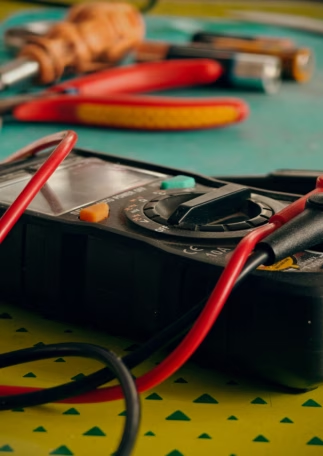
To do this, set the device to the continuity test function and use its highest measurement range. The tester places one probe of the test device on the contact in the motor terminal box and the other probe on the housing. It is a good sign if the meter does not display a reading. If, on the other hand, it indicates continuity—meaning the test current flows from the coil to the housing—this means the coil’s insulation is defective and it is in contact with the housing. The motor should be repaired by a professional. However, if the multimeter shows no reading, this does not necessarily mean that the motor is in good working order. In this case, further testing is recommended.
Is there damage inside the coil?
If the test in the previous step did not indicate any insulation damage, you can now compare the windings using a simple multimeter. When testing a three-phase motor, all windings should have roughly the same resistance. A deviation of three to four percent is acceptable, since resistance also depends on the number of turns, and even machine-wound coils may have one more or fewer turns.
Before measuring the resistance of an individual coil, we must remove any cross-wires, known as bridges. If the ohmmeter then reveals a significant difference when comparing the coils, damage to the coil is likely, and a professional should take a look at it.
However, measuring resistance with a standard multimeter—which uses only a weak, battery-powered test current—works only for low-power three-phase induction motors. For motors with a power rating of approximately 5.5 kilowatts or higher, a specialist must perform the test using specialized measuring equipment.
Are the bearings, fan, fuses, and control electronics in good condition?
As with other electric motors, you should also inspect the fan slots, the fan itself, and the bearings when checking the three-phase motor. Dirt, excessive play in the bearings, or a seized bearing can also cause problems with these motors. It’s also worth checking the fuses and control electronics. With the appropriate measuring tools and technical expertise, you can determine whether these components are still functioning properly. As with the entire inspection of the three-phase motor, the same rule applies here: Use your sense of smell! If it smells like something is scorched or burned, there may be a serious defect and the motor may be beyond repair.
Other Motor Types
In addition to the widely used and simply constructed three-phase induction motors with squirrel-cage rotors, there are other types of three-phase motors. Special types, such as linear motors—which drive linear motion rather than rotational motion—are relatively rare. Shaft-mounted motors, in which the stator is located on the inside and the rotating part on the outside, are also used relatively infrequently.
More common are commutator motors, which also belong to the category of induction motors, as well as induction motors with slip-ring rotors. Various synchronous motors, in which the rotational frequency is equal to that of the rotating magnetic field, are also widely used. These motors differ in design from cage-rotor motors mainly in that they have actively current-fed rotors. Their connections and windings can also be a source of faults that can be checked.
Save Costs in the Long Term with Professional Maintenance
Well-maintained motors play a crucial role in preventing malfunctions in industrial plants. Last but not least, professional maintenance also reduces the likelihood of failures during the DGUV V3 inspection. The experts at GP Prüfservice GmbH have many years of experience not only in inspecting electrical systems and equipment but also in providing industrial services. Contact us if you’d like to entrust your electrical inspections to experts. We’d be happy to advise you!